Summary
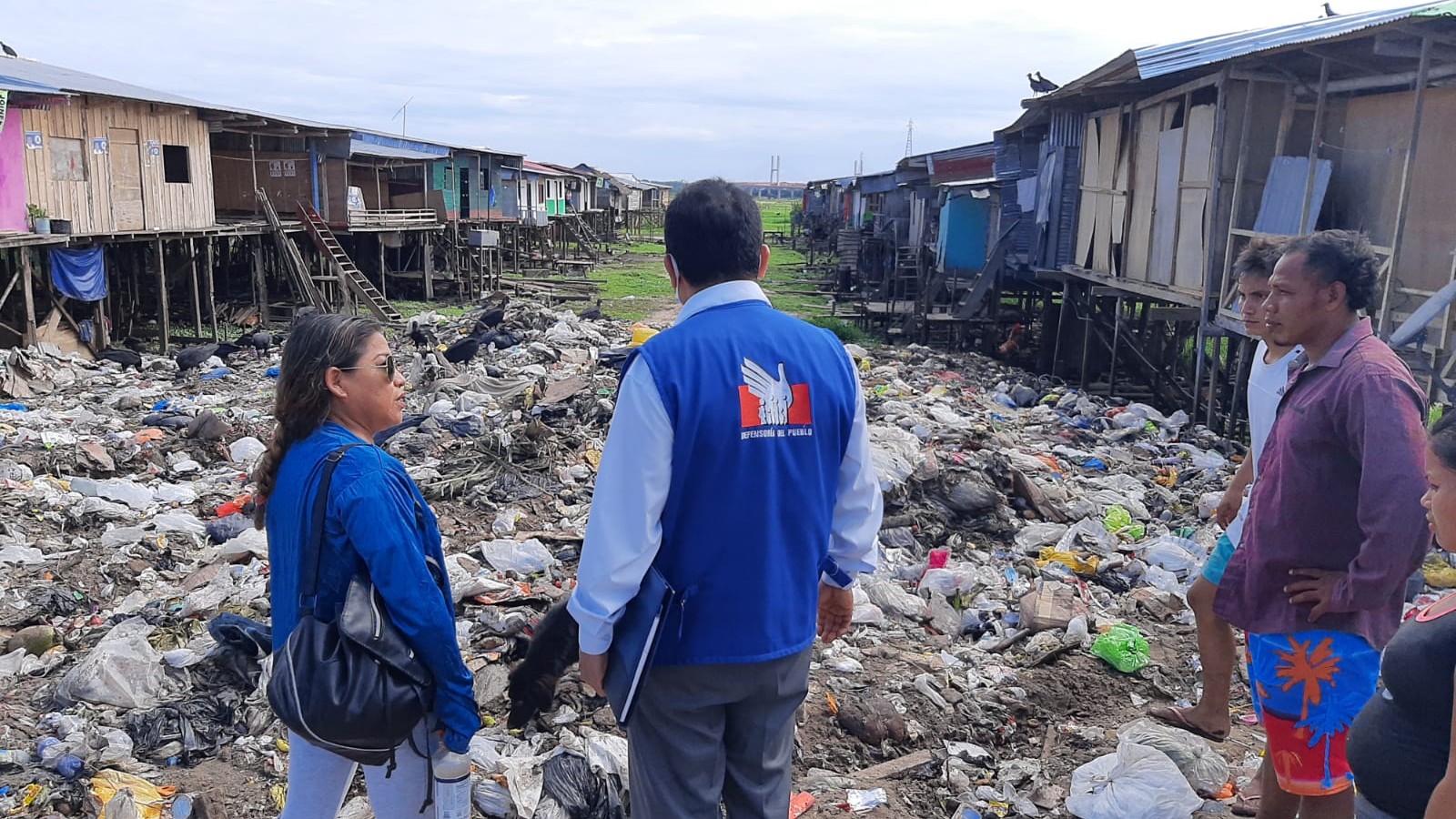
Residents of two impoverished residential communities filed a complaint against the regional government of Loreto, regional health department, provincial municipalities of Maynas and Punchana, and the social welfare agency of the region of Loreto. The complainants alleged that there was a lack of essential public services in the provision of potable water and trash collection, which had led to the proliferation of contagious disease. The Constitutional Tribunal found that the unsanitary situation violated the constitutional rights to: a balanced and adequate environment, potable water, life, health, and physical integrity, adequate housing, public services, and well-being.
The Tribunal relied on the following facts to analyze the alleged violations:
- Contaminated wastewater from a municipal slaughterhouse and nearby hospital not receiving adequate treatment.
- Untreated wastewater and solid waste emitting nauseating odors flowing into a canal with direct connection to people’s homes, attracting mosquitoes and scavenger birds.
- Domestic drainage from individual houses congregating in an open-air canal without any soil waterproofing, with drainage directly into the Nanay River, the body of water that is the source of potabilization and distribution to most houses in nearby Iquitos.
- The nauseating odor originating from the gas emitted by decomposing elements in the wastewater made it difficult for people in the communities to go about their daily lives.
- The problem had been ongoing for more than fifteen years; morbidities such as intestinal infections were found in older and younger individuals.
- Water samples contained fecal bacteria from humans and animals and e. coli at a concentration higher than WHO recommended safe levels: the WHO recommended that 200 microorganisms for every 100 milliliters of water was the maximum safe amount, but the laboratory sampling the water found 49 million.
- Most of the isolated microorganisms showed resistance to one or more antibiotics, possibly caused by the uncontrolled use of antibiotics that was discharged into the waterways from the hospital.
First, the Tribunal found a violation of the right to a balanced and adequate environment, which is recognized as a fundamental right in Article 22 of the Political Constitution of Peru. The Tribunal relied on Article 2, Subsection 22 to determine that the content of the right included the following elements: 1) the right to enjoy the environment, and 2) the right to the preservation of this environment.
Second, the Tribunal found a violation of the right to potable water. The Tribunal found this right by reading the content of Law 30588, which recognizes the right to access water as a constitutional right, in conjunction with Art. 58 of the Constitution, which obliges the state to provide public services. The Tribunal also referenced the General Observation 15 (2002) on the right to water by the Committee on Social, Cultural, and Economic Rights of the United Nations.
Next, the Tribunal began its analysis of the rights to life, health, and physical integrity under Article 12 of the International Covenant on Economic, Social and Cultural Rights. Article 12 requires that party states adopt a set of measures to full effectiveness of the right to health, since every person has the right to enjoy the highest possible level of physical and mental health. The State is obliged to adopt measures that prevent violations of the right by third parties, to satisfy the right by adopting measures that give it full effectiveness, and to provide goods and services effectively.
In finding that the plaintiffs’ right to housing and access to public services had been violated, the Tribunal referenced jurisprudence from the US and South Africa and noted that the Tribunal’s jurisprudence had previously recognized housing as a fundamental right, as indicated in the Universal Declaration of Human Rights and the International Covenant on Civil and Political Rights. For the right to housing to be satisfied, the following elements must be present: a) security of tenure, b) availability of services and infrastructure, c) reasonable expenses that do not compromise the satisfaction of other basic necessities, d) a habitable, affordable home that provides access to employment and social services, g) a home that permits expression of cultural identity.
Lastly, the Tribunal found a violation of the right to free development and well-being under Article 2 section 1 of the Peruvian Constitution. This right does not imply that the state must assure that all people accomplish what they desire; for the right to be fulfilled, the person must have attained a quality of life that permits them to assure their wellbeing and that of their family. The State, therefore, must at least promote minimum conditions necessary and assume the duty of removing obstacles to the fulfillment of this right. Here, the plaintiffs’ living conditions prevented them from exercising their right to well-being. Considering the risks and problems related to the lack of basic public services, plaintiffs were unable to attain a quality of life that assured their own wellbeing and that of their families.
Considering the rights that had been violated, the Tribunal declared an unconstitutional state of affairs. It noted that the violations to the Constitution constituted a structural problem that was present in different impoverished communities throughout the region. The gravity of the problem led the Tribunal to order that the defendants:
- Cease the discharge of organic untreated waste into the municipal sewage system that flows into the open air canal near the impacted neighborhoods;
- Establish the collection of solid waste in a sufficient and available manner;
- Cover the open-air canal and waterproof the surrounding soil to prevent the flow of wastewater into neighboring streets and houses;
- Coordinate among one another and provide the necessary means to reverse the violations, exhausting all available resources, and create a plan of action;
- Supply an accessible potable water system; and
- Construct a canal system integrated into the municipal sewer system.