Summary
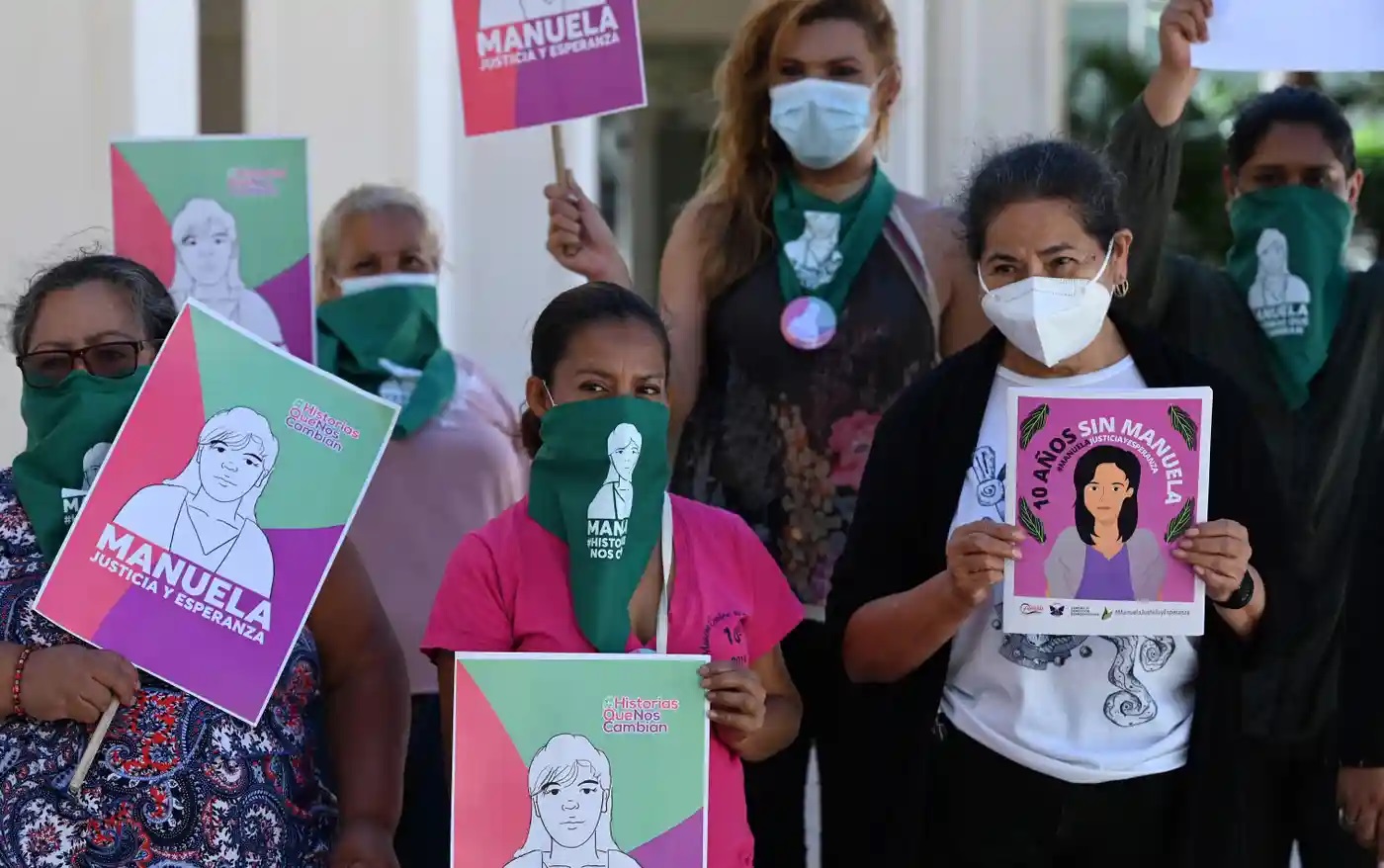
Manuela, a 33-year old woman and mother of two experiencing poverty in rural El Salvador, was charged with aggravated homicide after an obstetric emergency resulting in her pregnancy loss. When Manuela’s father took her to the hospital to address her medical emergency, medical personnel interrogated her for three hours upon arrival, delaying treatment. Medical personnel further delayed treatment by reporting Manuela for suspected abortion, which is a crime in El Salvador due to a blanket ban that criminalizes abortion under all circumstances, including obstetric emergencies and complications that arise during pregnancy, childbirth, and postpartum. The police arrived the following day to the hospital, detained Manuela without an arrest warrant, and hand-cuffed her to her hospital bed. She remained in the hospital in these conditions for seven days. Before her transfer to prison, no full medical check-up was conducted, despite Manuela’s repeated complaints and discomforts. To the contrary, while in the hospital, Manuela suffered ongoing ill-treatment, fielding insults from medical staff and police officers, who accused her of homicide.
As noted by the Center for Reproductive Rights, one of Manuela’s representatives in the case before the Inter-American Court, during the prosecution, “the Court indicated that ‘maternal instinct’ should have led her to seek medical care, even though she had passed out, was bleeding and unconscious.” As noted by the Center,, the proceedings were also “plagued with technical shortcomings.” Nevertheless, Manuela was sentenced to thirty years in prison for aggravated homicide.
Manuela died in 2010, while imprisoned, due to cancer. Before her obstetric emergency, Manuela had visited the hospital in 2007 and a painful lump was detected on her neck. In subsequent hospital visits, more lumps developed, which were visible and painful. During her 2008 visit due to the obstetric emergency, there was no attention paid to these painful lumps, and no medical check-up was performed before her transfer into prison. The medical report submitted to the prosecution office does not mention the lumps either. On the contrary, the medical examination report from her obstetric emergency visit notes Manuela had a “symmetrical neck” despite the visible tumor. These unchecked lumps turned out to be Hodgkin’s lymphoma, officially diagnosed in 2009. Due to the long unattended cancer, Manuela passed away in prison. According to an expert witness, a “more meticulous examination” would have diagnosed Manuela’s tumor and “could have changed the course of the treatment provided to Manuela.”
In March 2012, the Center for Reproductive Rights and Colectiva Feminista para el Desarrollo Local presented Manuela’s case before the Inter-American Commission on Human Rights, and in 2018, the Commission advanced the case to the Interamerican Court of Human Rights.
The Court examined four main issues: (1) the rights of personal liberty and presumption of innocence; (2) the rights to judicial guarantees, personal liberty and equality before the law; (3) the rights to life, personal integrity, health, privacy and equality before the law; and (4) the right to personal integrity of the family members.
The Court held that during Manuela’s treatment in the hospital and throughout the criminal proceedings, the State violated several provisions of the American Convention of Human Rights (the Convention). First, while Manuela was at Rosales National Hospital, she did not receive adequate emergency medical care. Manuela entered the hospital in a state of serious preeclampsia, but she did not receive treatment for hours. Rather, medical personnel took time to file a report with the prosecutor, thus violating their duty of medical confidentiality. Manuela never authorized that her medical condition be shared, yet it was disclosed in the report to the prosecutor. Here, the State violated Manuela’s right to personal integrity and right to health established in Articles 5 and 26 of the Convention.
Furthermore, the Court found several violations of Manuela’s right to a fair trial under Article 8. First, it held that Manuela was arbitrarily detained. Because the detention order did not have a reasonable, properly motivated judicial rationale, and because Manuela endured detention for more than five months without review, El Salvador violated Manuela’s right to the presumption of innocence. Another violation of Manuela’s right to a fair trial occurred when her public defender failed to be present during certain investigatory hearings, acting to the detriment of Manuela’s rights and interests. The agents charged with investigation also failed to investigate the possibility that the crime did not occur, instead letting stereotypes and prejudice affect the agents’ objectivity, leading them to close off possible lines of investigation about the factual circumstances of her emergency. Lastly, the Court also held that the thirty-year-sentence was disproportionate, violating Articles 5.2 and 5.6 of the Convention.
Manuela passed away on April 30, 2010, under the care of the State. Because the State did not meet its obligation to properly examine Manuela while she was hospitalized and then detained, it failed to account for a prior medical condition she had and take the actions necessary to keep her alive. If detected earlier, Manuela’s prior health concerns could not have evolved into the fatal case of Hodgkin’s lymphoma to which she succumbed. The Court held the State responsible for the violation of Manuela’s right to life in Article 4.1. Furthermore, Manuela’s identity as a rural woman experiencing poverty rendered her more vulnerable to discrimination. She was treated this way because the state actors involved believed that prosecuting for an alleged crime should prevail over respecting women’s rights, which the court found to be discriminatory and a violation of Articles 24 and 26.
In its ruling, the Court ordered the State to adjust its policies around medical confidentiality as well as its use of pre-trial detention. It ruled that health care staff should not refer women to law enforcement who come to the hospital seeking reproductive health services, including abortion care. It ordered the State to develop and implement a comprehensive sexual education and reproductive health program in educational institutions throughout the country. The Court also required that a capacity-building course about discrimination be provided for judicial functionaries and the medical personnel at Rosales National Hospital. Hand-in-hand with these reforms, the Court ordered El Salvador to remove legislation that provides for automatic detention of women who are denounced for having committed an abortion and to make sure that policies are adopted to ensure that full access to health care is guaranteed to women who suffer obstetric emergencies. Finally, the Court ordered that the State host a public event acknowledging its responsibility for its human rights violations, as well as its obligations under international law. Since the Court deemed El Salvador responsible for the death of Manuela, it also ordered monetary damages to Manuela’s family, medical and psychological care for Manuela’s parents, scholarships for Manuela’s children.
The Court determined that States under the Convention should (1) make sure doctor-patient confidentiality is specially protected in cases in which reproductive rights are a matter of concern, and as a consequence, that women are not denounced by their medical personnel for allegedly having committed abortion; and (2) ensure that adequate health treatment is given to women who suffer obstetric emergencies, free from any forms of gender violence.