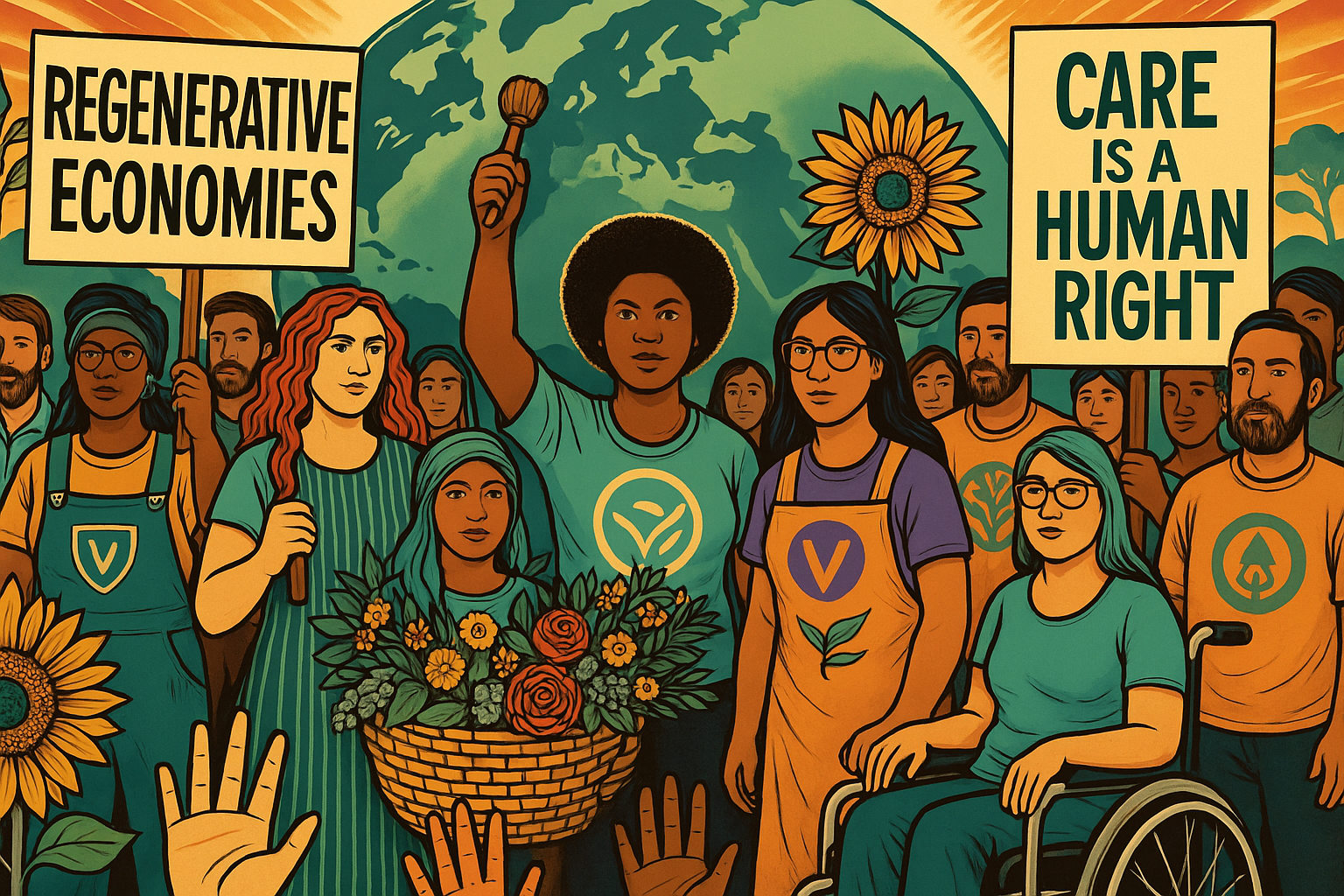
On October 28, one day before the International Day of Care and Support, a cross-regional group of over 40 members and allies came together for the webinar “Weaving Ecologies of Care”. Co-organized by members of the Women and ESCR Steering Committee and the Community-Led Research Hub, this was a space to explore how communities around the world are practicing transformative approaches to care that are fundamental to cultivating and imagining regenerative economies centering care of people and the planet.
Over the course of two hours, participants were able to engage in a rich dialogue around plural understandings, practices, and experiences of care. The webinar was also an opportunity to learn about the community-led care initiatives members and allies are advancing as part of ESCR-Net’s Feminist Participatory Action Research (FPAR) project on care-centered economies. Finally, we contemplated care as a form of resistance – to the injustices and harms perpetuated by colonialism, patriarchy, and economic systems that prioritize profit over people and the planet, and to these intersecting systems themselves. Through sharing diverse visions of care, members brought ESCR-Net’s Social Pact on Care to life.
“The work of building a truly caring society is also akin to transforming society, of changing the system.”
— Mae Buenaventura, Asian Peoples’ Movement on Debt and Development (APMDD)
Exploring Plural Understandings and Approaches to Care
The gathering opened with a powerful ritual led by Rosa Mamani from Red Chimpu (Bolivia) that grounded the space in an energy of connection – to one another, to those who came before us, and to our natural world. Rosa shared an altar honoring ancestors and their knowledge and practices rooted in a spirituality devoted to care.
Care as a Social Right
Valentina Contreras from the Global Initiative for Economic, Social and Cultural Rights (GI-ESCR) outlined what it means to advance care as a social right. As an example of a regional process involving several members, she highlighted the Economic Commission for Latin America and the Caribbean (ECLAC) initiative to build “care societies”, including the Tlatelolco Commitment emerging from the ECLAC Regional Conference on Women (August 2025).
Care as an Autonomous Human Right
Claudia Lazzaro from the Sindicato Obreros Curtidores de la Republica Argentina (SOCRA) addressed care as an autonomous human right, outlining the significance of the Inter-American Court of Human Rights’ landmark legal decision recognizing this right (Advisory Opinion 31/25). SOCRA was part of the cross-regional group of WESCR members that submitted a collective intervention to the IACtHR. Claudia also shared how the Cooperativa Delia Parodi is using this framework in their FPAR project focused on the recognition of community care work within public policy and the law.
Care as Healing of Body–Territory
Juana Toledo from the Consejo de Mujeres Ix Nab’il in Guatemala shared how Indigenous women in her community understand and live care as healing of body-territory. Juana highlighted that for Indigenous women, care is a spiritual, political, and collective act that unites the healing of the body with the healing of land as inseparable territories.
Care as Reparation in the Face of Debt and Climate Injustice
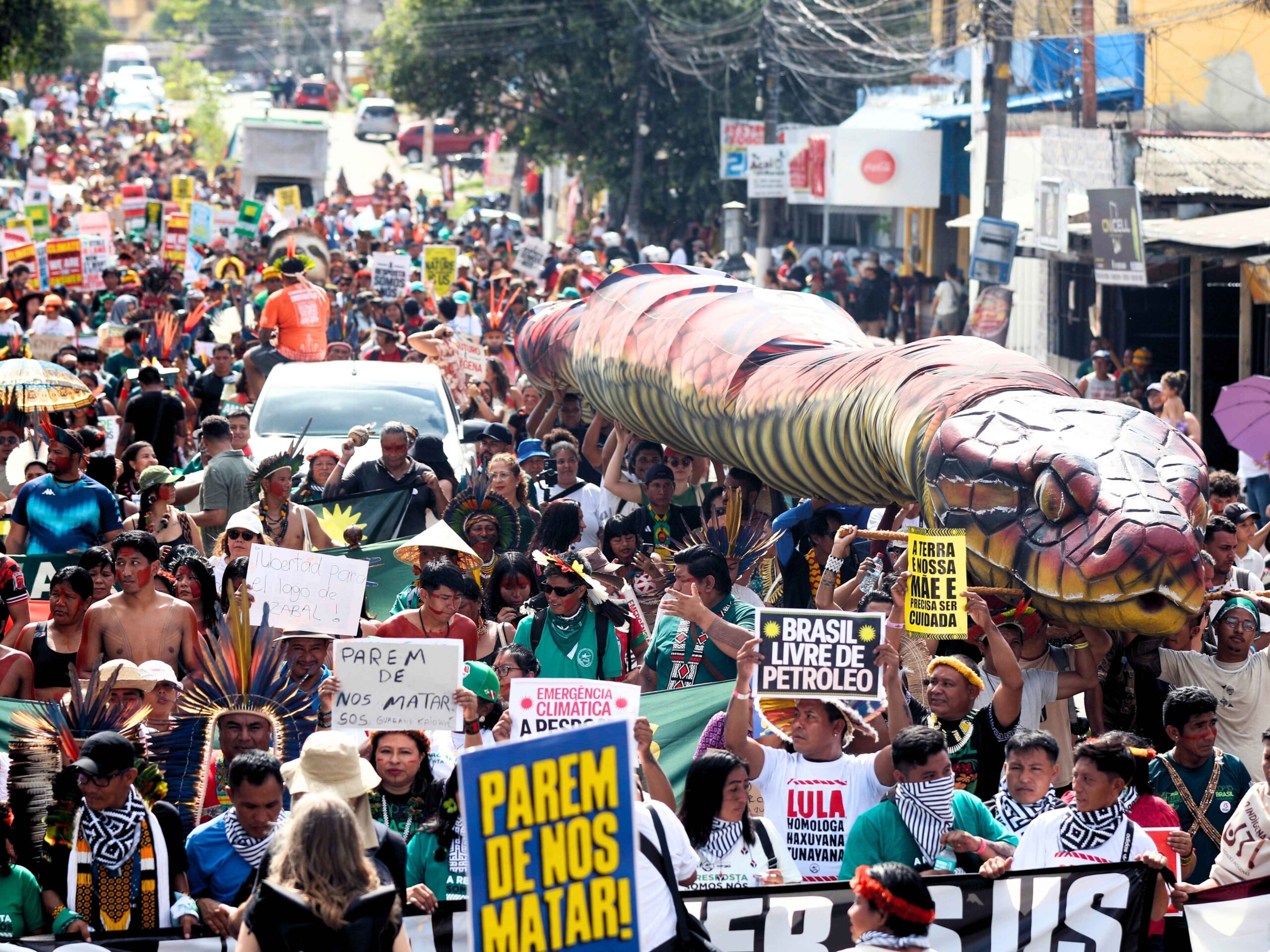
Maria Matui from Women Action Towards Economic Development (WATED) in Tanzania discussed care as reparation for debt and climate injustice, affirming that “if debt is what drains our future, then care is how we can reclaim it”. Via their FPAR project, WATED is exploring care as both ecological stewardship and reparative justice that restores dignity, heals ecosystems, and challenges the colonial and financial systems driving debt and climate injustice.
Care as Integral to Our Right to the Future
Mae Buenaventura from the Asian Peoples’ Movement on Debt and Development (APMDD) reflected on care as integral to our right to the future, also tracing the connections to debt and climate justice. She emphasized how these intersections are central to ESCR-Net’s emerging ‘Right to the Future’ campaign to confront the care-debt-climate polycrisis, insisting that “this mortgaging of the future should and must be stopped. Part of this is really resisting the fiscal austerity that the IMF imposes because this compromises the rights that are key to building caring economies and societies”.
Care as Resistance
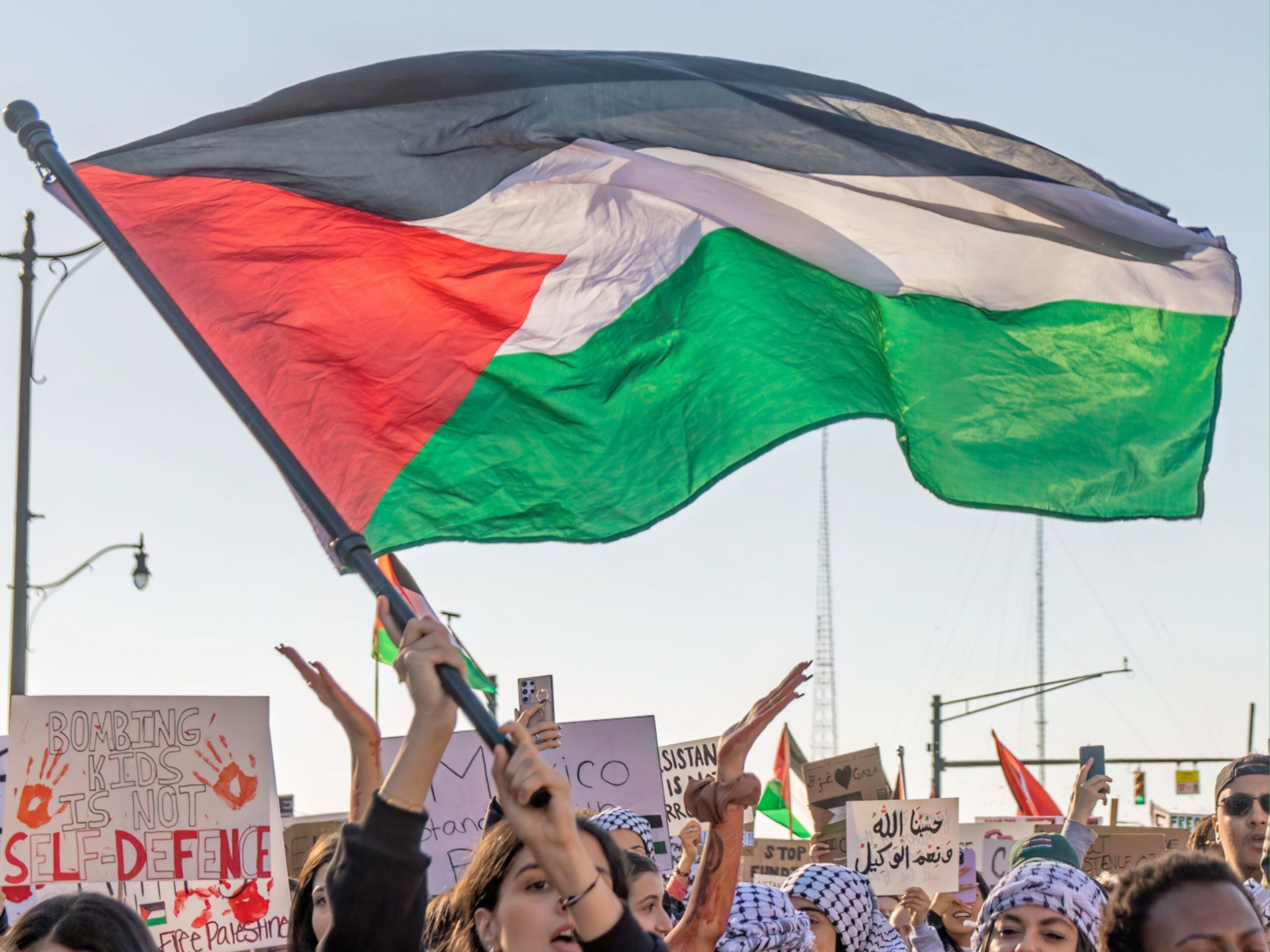
Aseel Tork from the Bisan Center for Research and Development in Palestine spoke powerfully of care as resistance within the context of the Palestinian struggle for liberation and self-determination. As Aseel described, Bisan’s FPAR project is exploring women’s leadership in mobilizing mutual aid and solidarity networks rooted in care and reciprocity. “Here care is more of survival and its defiance. Every act of care – feeding a family, helping a neighbor, keeping kids learning – is a way of saying we’re still here, we’re still connected, and we won’t be erased”.
Concluding as we started, Rosa from Red Chimpu invited words of solidarity with Palestine while sharing her screen to show us her landscape – the wind moving through grasses and trees in her territory, which she cares for and which cares for her.
What’s Next?
ESCR-Net is developing a political education resource on cultivating regenerative economies centering care, drawing on the diverse experiences highlighted in this webinar. This resource will support members and allies in advancing transformative approaches to care across movements and territories.
Stay tuned for more updates.