Summary
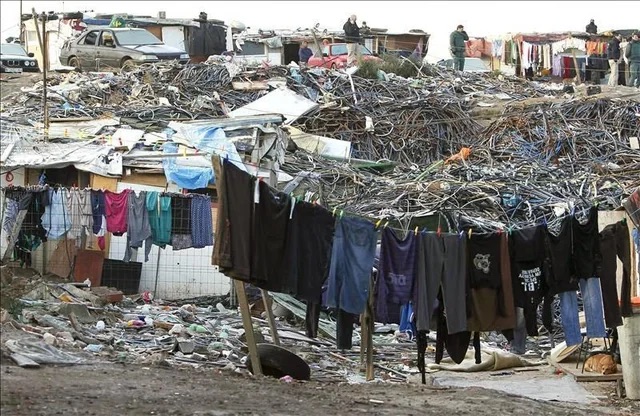
In March 2022, five international non-governmental organizations jointly filed a complaint against Spain with the European Committee of Social Rights (“Committee”) because of power outages in Cañada Real Galiana (“Cañada Real”), a shantytown in Madrid. The outages began in October 2020, when the private electric company in charge of providing electricity, Unión Fenosa Distribución/Grupo Naturgy, cut the electricity to two sectors, impacting at least 4,500 people. Energy was permanently cut from one sector of Cañada Real (Sector 6) and has been accessible only on an intermittent basis in another sector (Sector 5).
The complainant organizations alleged breaches of Articles 11, 15, 16, 17, 20(a), 23, 27§1(a), 30 and 31 taken alone or in conjunction with Article E of the European Social Charter (“Charter”) implicating a lack of adequate housing and detriments to the health of all residents, to children’s development, to gender equality, to vulnerabilities of the elderly and those with disabilities, as well as an increase of social exclusion and poverty.
Despite the Spanish government justifying the energy cuts for safety reasons, the Committee accepted the complaint in October 2022 and ordered the Spanish government to adopt immediate measures for access to electricity and heating in Cañada Real because of the potential irreparable harms that could come from the power outages. While Spain submitted information on the immediate measures in December 2022, the information primarily combatted the need for immediate measures. Spain claimed that there would be a safety problem with ordering immediate access to the power supply, that Sector 5 had continuous and stable electricity and Sector 6 was using alternative sources of energy, and that any areas where electricity could not be reinstated were a part of a seven-to-fourteen-year-long rehousing plan with substantial financing.
In their final 2024 decision, the Committee established that safe, stable, and consistent access to adequate energy is a prerequisite and important component to fulfill the rights in the Charter. For energy conditions to be considered “adequate,” uphold the Charter and pass scrutiny by the Committee, they must satisfy a number of conditions, including affordability and sustainability. There are also several pieces of Spanish legislation that promise access to energy and to resolve the current outages, such as Article 96 of their constitution and a 2017 Regional Pact.
Using prior case law, the Committee found that Spain, the State itself, is responsible for upholding the rights in the Charter, including in instances like this one where they have neglected to remedy a situation they did not directly cause. While States can use private companies to meet their duty of social rights delivery, it is still the State’s responsibility to regulate and supervise private sector involvement, ensuring that rights are continuously realized and not undermined.
The Committee emphasized that the State’s responsibility to uphold the rights in the Charter needs to be conducted in a practical and effective form, creating an understanding that the rights are not simply theoretical ideas. Despite the complexity that may be involved in resolving the issue and restoring power, the State must meet the rights-based goals set out in the Charter within a reasonable time, with measurable progress, and by employing available resources to their fullest extent.
In analyzing Spain’s commitment to uphold the Charter, the Committee not only found that Spain failed to take the immediate measures they were ordered to in 2022, but that the State had also violated seven articles of the Charter since the power outages began. First, Spain failed to take adequate measures to remediate and ensure an adequate standard of housing – adequate housing must include heating and electricity under Article 31 because of its importance for maintaining livable temperatures, lighting, washing, cooking, and refrigeration. The lack of energy also poses sanitation, health, and safety risks, and the Spanish government did not take the appropriate measures to remove the causes of health hazards and protect against diseases and accidents caused by the power outages as required by Article 11; for example, illnesses such as the flu and COVID-19 were prolonged, and many people sustained injuries in their attempts to self-help and install and use alternative energy sources. Spain was also found to have failed to protect families using those same housing standards, and did not rely on the participation of civil organizations representing the families to address the situation as required under Article 16. The Committee discussed Spain’s violation of Article 17, where they relied on their analysis of Articles 31, 11, and 16 to show that Spain failed to protect children from the inadequacies of their living situations. There was also an emphasis on the failure to guarantee access to education as part of Article 17 § 2, since electricity is crucial for using devices to study, maintaining hygiene to attend class, and being able to virtually attend class during pandemic times. Other vulnerable populations that Spain failed to protect from the impacts of the power outages included the elderly (covered under Article 23) and those with disabilities (covered under Article 15); the specific considerations necessary to ensure adequate health, employment, and participation in order for each population to lead decent lives in the community were not accounted for. Finally, the Committee found that Spain had violated Article 30 and failed to protect the residents of Cañada Real from poverty and social exclusion. Energy poverty exists when a household cannot meet its domestic energy needs and had become a commonality in the area, exacerbating the preexisting poverty in the area and harming other basic rights; meanwhile, social exclusion had been increased due to stigmatization and discrimination in the public eye since residents were likened to criminals as reasoning for the power cuts and the government appeared to have abandoned them.