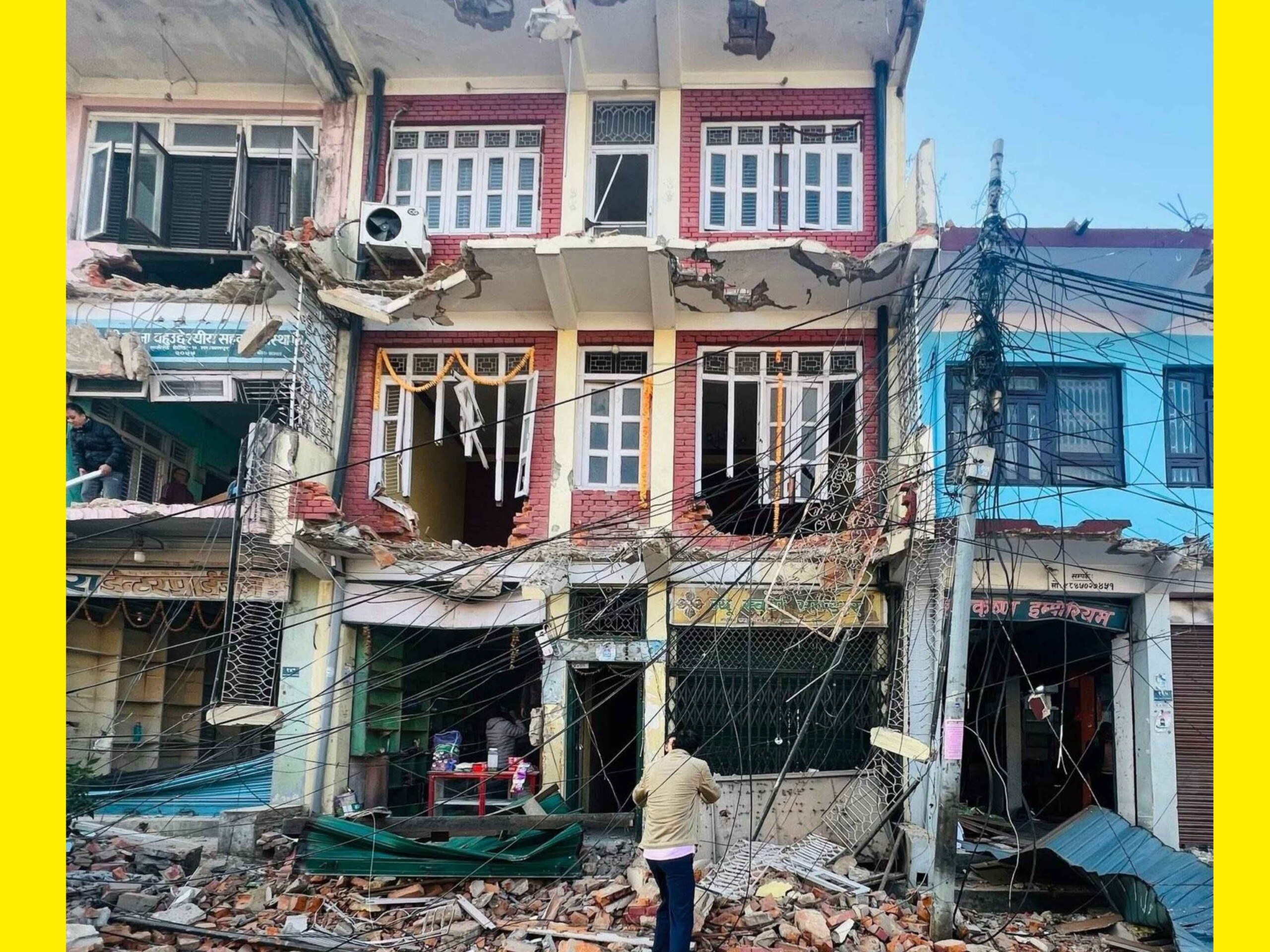
Testimonies describe families awakened by bulldozers, women pleading for demolitions to stop, and residents dispersed by security personnel restricting movement and assembly. Human rights defenders monitoring the situation have also faced threats, and a few have been arrested.
Of particular concern is that demolitions continued despite a stay order issued by the Supreme Court of Nepal on Friday afternoon, directing authorities to halt all eviction activities. Yet at 6:00 a.m. on Saturday, 6 December, houses in Hetauda were bulldozed in a direct breach of judicial authority. Communities report they were neither informed of the eviction notice from the Road Division nor allowed to exercise their right to challenge the eviction through lawful and peaceful means. The Road Division Office suspended the ‘road expansion work’ on Sunday afternoon, only after effectively destroying 531 houses and structures, arguing that the official written notice from the Supreme Court reached them only then.
These actions violate fundamental human rights enshrined in the Constitution of Nepal, including the rights to housing, property, equality, justice, due process, and dignity. The Supreme Court has repeatedly affirmed that evictions cannot proceed without proper notice, participatory consultation, rehabilitation, and compensation. The disregard for the rule of law, legal safeguards, and human dignity shown in Hetauda is incompatible with Nepal’s constitutional and democratic obligations.
Nepal is also bound by international human rights law, which prohibits arbitrary displacement and requires heightened protection for vulnerable groups. Under the International Covenant on Economic, Social, and Cultural Rights (ICESCR), Nepal must prevent homelessness, ensure meaningful consultation, and guarantee access to remedies before displacement. The Convention on the Elimination of All Forms of Discrimination against Women (CEDAW) and the Convention on the Rights of the Child (CRC) require protection against disproportionate harm to women and children. The UN Basic Principles and Guidelines on Development-Based Evictions emphasize that development must never render people worse off.
The situation in Hetauda raises an urgent moral and political question: if demolitions proceed without genuine consultation, compensation, resettlement, or livelihood guarantees, who will bear responsibility for the long-term harm inflicted on thousands of residents? And who is benefiting from this harm?
Proper development is measured not by widened roads and industrial parks but by respect for human rights, preservation of communities, and equitable distribution of resources and wealth. Any development project must align with Nepal’s constitutional and international human rights obligations, and be subject to human rights, gender, and environmental impact assessments with the participation of affected communities.
ESCR-Net urges Nepalese government authorities to immediately implement the Supreme Court’s stay order, immediately halt all evictions, guarantee just and fair compensation and resettlement, and ensure communities’ meaningful consultation. We further call on the government to refrain from intimidation or criminalization of residents and human rights defenders, as well as hold those who executed demolitions against the Supreme Court’s order to account.
ESCR-Net unites more than 300 social movements, grassroots groups, Indigenous and community organizations, NGOs, and academics across over 80 countries, committed to advancing justice and defending economic, social, cultural, and environmental rights. For more than two decades, the Network has accompanied communities facing land dispossession, forced evictions, ecological destruction, and criminalization of human rights defenders.
Submission of a Formal Letter to Nepalese Authorities
On 8 December 2025, ESCR-Net formally submitted a detailed Letter of Concern to the Government of Nepal, addressed to the Minister of Home Affairs, the Minister of Urban Development, and the Chief District Officer of Makwanpur. The letter documents the human rights violations occurring in Hetauda, outlines Nepal’s constitutional and international legal obligations, and urges immediate action to halt evictions, protect affected residents, and investigate the breach of the Supreme Court’s stay order.
The submission of this letter reflects ESCR-Net’s ongoing commitment to supporting communities facing displacement and to holding governments accountable to human rights standards. We will continue to monitor the situation closely, engage with our members and allies in Nepal, and advocate for the full protection of the rights and dignity of all affected families.