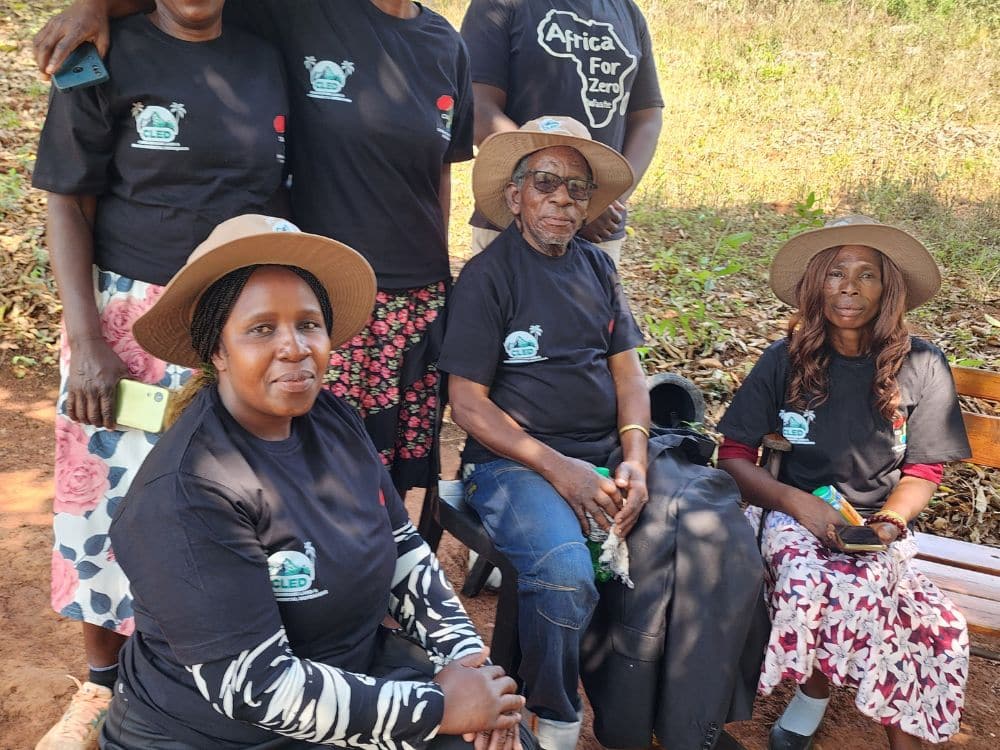
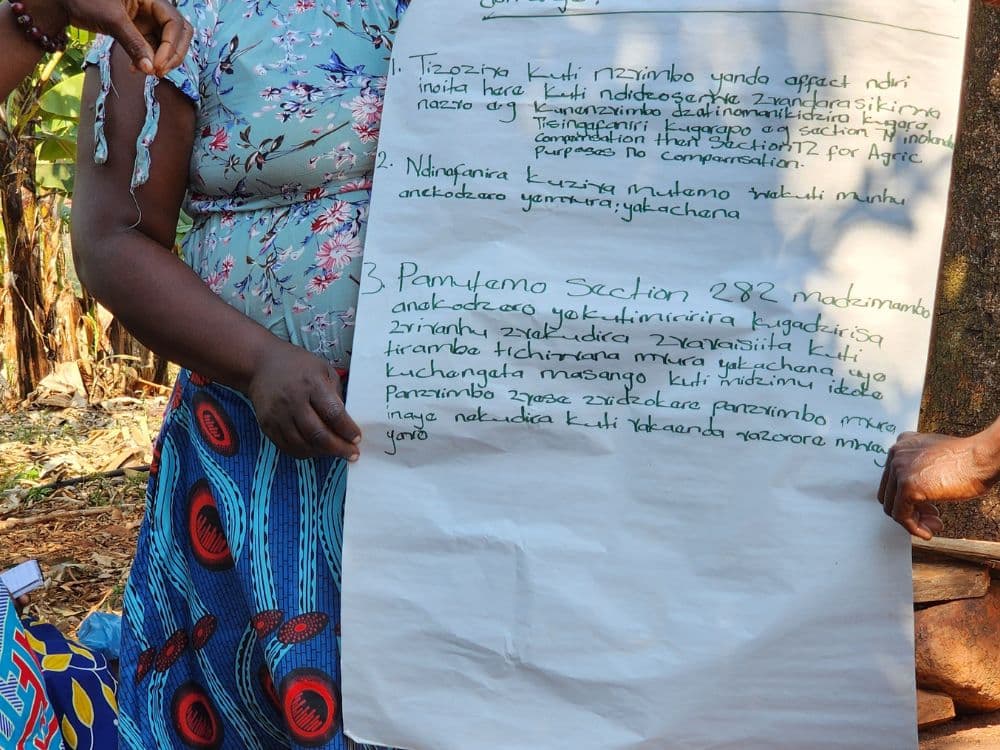
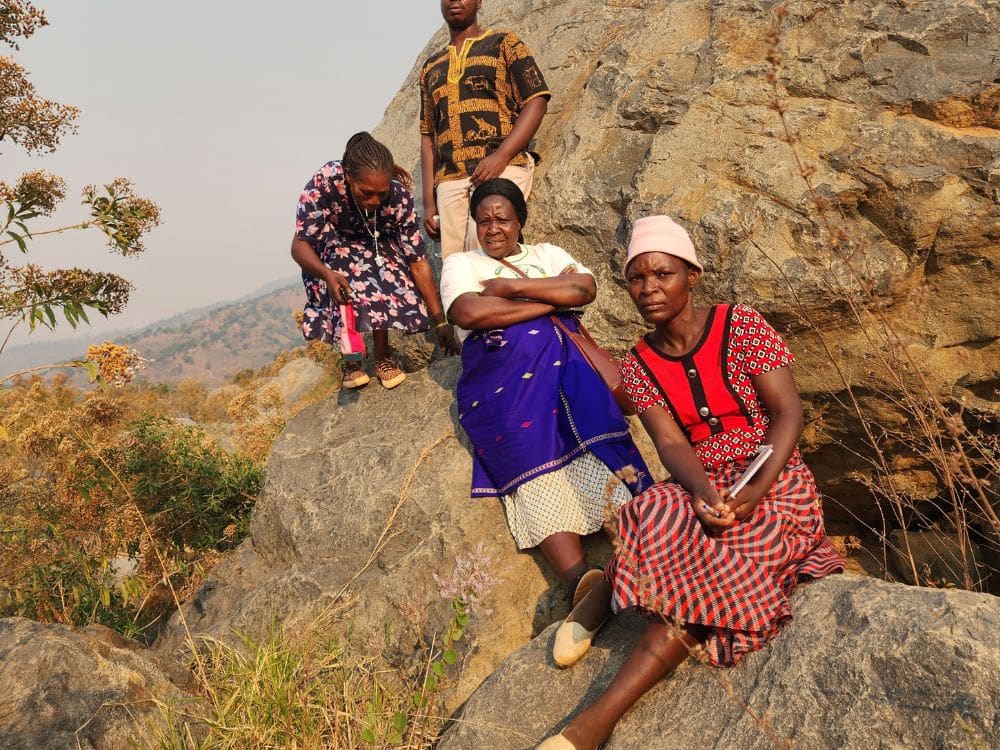
This project set out to break that cycle through Community-Led Research, using tools of the Participatory Action Research (PAR) approach. Fifteen community members from Ndima, Dzingire, and Chimanimani Village led every stage of the process, defining research questions, collecting testimonies, and analyzing the meanings of loss and damage from their own lived experience.
The project involved residents from three villages: Dzingire, Ndima and Chimanimani Village.
Dzingire and Ndima, home to the Indigenous Ndau and Manyika peoples, were the epicenters of destruction during Cyclone Idai. Their geographical contours—mountain slopes, riverbeds, and steep valleys—made them highly vulnerable to flash floods and landslides. These villages also suffer from poor infrastructure, limited access to government services, and long-term neglect.
Chimanimani Village, although affected, had better infrastructure and benefited from early warning systems due to its proximity to government offices. The difference in impact across these three sites speaks to—and exposes—the inequalities that shape disaster vulnerability in Zimbabwe.
Climate in Chimanimani is distinct, with generous rainfall and fertile soils that support fruit cultivation and small-scale agriculture. Most families farm pineapples, bananas, mangoes, and pawpaws, while others run small shops or market gardens. But heavy rainfall regularly damages roads and disrupts communication, isolating families during emergencies.
Since 2019, fear has become part of daily life. Community members cite not only climate threats but also municipal decisions—including land sales, environmental violations, and the sidelining of traditional leaders—that intensify risks and erode cultural authority.
Research objectives
The project aimed to:
- Document the scale and forms of loss following Cyclone Idai—from livelihoods and food systems to psychological trauma.
- Apply the global loss and damage framing to Chimanimani’s experience to produce community-rooted evidence.
- Analyze post-disaster interventions and identify gaps in government and NGO responses.
- Develop a community-driven recovery framework grounded in local knowledge.
Methodology & process
Using the PAR approach, the team held:
- An inception meeting with 30 community members and traditional leaders,
- focus group discussions in all three villages,
- and a community-designed survey.
These spaces allowed residents to document their experiences and articulate concerns about land governance, environmental destruction, and the unresolved trauma of Idai.
Key findings
1. Hundreds of missing people remain unrecognized
Families cannot access documents or benefits because missing persons have not been declared deceased, despite Idai being a national emergency. This has left many without closure or financial support.
2. Fear of forced displacement
The government has threatened to relocate villagers to Biriviri, a plan widely viewed as displacement. At the same time, the municipality is acquiring and selling land to private businesses without the consent of traditional leaders, including in areas officially designated as disaster-prone, and converting it to commercial use – further deepening mistrust.
3. Traditional leadership undermined
Local authorities routinely bypass traditional leaders in land and environmental decision-making, weakening community governance and contributing to conflict.
4. Expansion of artisanal mining
Unregulated mining in rivers and sacred sites is causing severe environmental damage. Despite repeated community complaints, authorities have taken lminimal action to stop it.
Learnings
The CLR process strengthened community ownership and ensured the research reflected local priorities. Residents organized themselves effectively across dispersed villages, demonstrating that community-led approaches produce deeper engagement and more relevant findings than externally driven studies.
Conclusion
Chimanimani’s experience shows how climate-induced loss and damage is compounded by weak governance, land conflicts, and environmental degradation. Community-Led Research has allowed residents to document these realities on their own terms, highlight urgent gaps—including recognition of missing persons—and outline their vision for recovery.