In a new collective submission to the UN Committee on Economic, Social and Cultural Rights (CESCR), ESCR-Net members from across regions urge the Committee to adopt a strong and transformative General Comment on ESCR in situations of armed conflict.
The submission argues that wars are not only fought on battlefields. They are also enabled through corporate boardrooms, financial systems, fossil fuel infrastructures, military industries, debt regimes, and extractive economic models that profit from violence and dispossession.
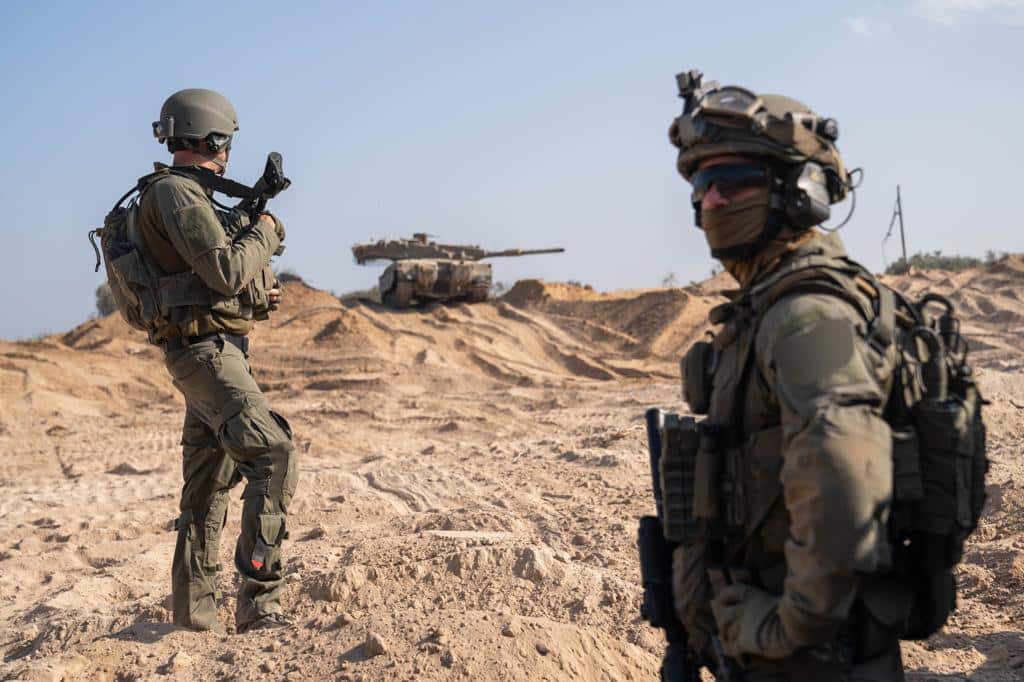
Rather than treating armed conflict as a temporary humanitarian emergency, the submission calls on CESCR to confront the structural roots of violence, including colonialism, patriarchy, militarization, racial capitalism, and corporate capture.
Armed Conflict Is an ESCER Crisis
The submission emphasizes that ESCER does not disappear during war. States remain bound by their obligations under the International Covenant on Economic, Social and Cultural Rights, including the duties to respect, protect and fulfill rights such as health, food, water, housing, education, work, and self-determination.
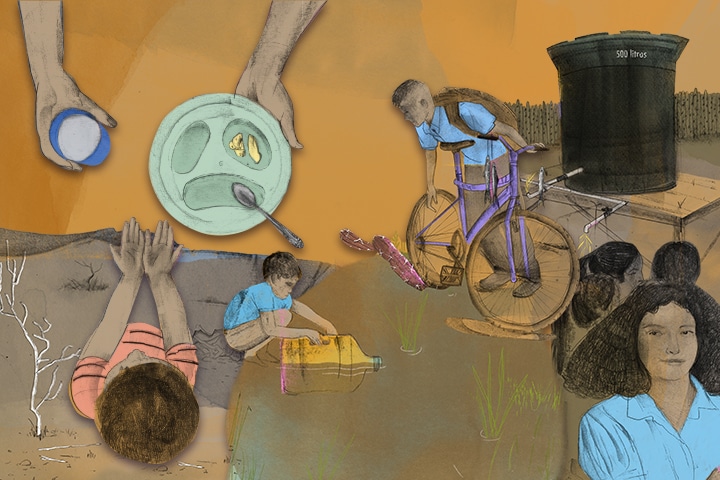
ESCR-Net members call on the Committee to explicitly condemn attacks on hospitals, schools, water systems, housing, cultural sites, and humanitarian infrastructure, while recognizing the use of starvation, food blockades, and destruction of agricultural systems as grave violations of international law.
We also underscore the importance of international solidarity efforts in contexts where populations are deliberately isolated from humanitarian assistance. The submission points to civilian flotillas attempting to deliver aid to Gaza as examples of collective action responding to the systematic denial of food, medicine, fuel, and humanitarian relief. Members urge the Committee to affirm the right of civilian populations to receive humanitarian assistance and to recognize that attacks on humanitarian aid and solidarity missions constitute serious violations of international law.
The submission also highlights how conflicts are increasingly used to dispossess communities of land, minerals, water, forests, and other essential resources. ESCR-Net members urge the Committee to affirm that armed conflict must never justify forced displacement, land grabbing, or the destruction of ecosystems and livelihoods.
Exposing Corporate Complicity and the War Economy
A central contribution of the submission is its analysis of corporate complicity in armed conflict. Members argue that contemporary wars are inseparable from economic systems that profit from extraction, militarization, surveillance technologies, fossil fuels, and arms production.
The text draws attention to how corporations benefit from occupations, supply chains linked to military violence, and financial systems that sustain war economies while shielding profits from accountability. It calls on States to regulate corporations, impose sanctions and divestment measures against companies complicit in war crimes and genocide, and strengthen binding international accountability frameworks for transnational corporations.
The submission also echoes growing global calls for energy embargoes and corporate accountability in the context of Palestine, while connecting militarization to broader systems of fossil capitalism and ecological destruction.
Militarization Is Undermining ESCER Worldwide
ESCR-Net members warn that rising global military expenditure is directly undermining States’ ability to guarantee rights. The submission notes that global military spending reached US$2.88 trillion in 2025 — the highest level ever recorded — while investments in health, education, food systems, and climate justice continue to fall short.
Members call on CESCR to reaffirm that States must prioritize the maximum available resources for the realization of rights rather than military expansion. The submission urges the Committee to address the social and environmental impacts of global rearmament, military technologies, and war-related extractivism, including their intergenerational consequences.
Centering Global South Experiences
Drawing from experiences across Asia, Africa, the Pacific, and Southwest Asia, the submission documents how armed conflict disproportionately impacts communities in the Global South, particularly Indigenous Peoples, women, workers, displaced communities, and historically marginalized groups.
The submission includes case studies from West Papua, Manipur, Myanmar, Timor-Leste, Sri Lanka, India, and the Northern Mariana Islands, among others. These testimonies document patterns of militarization, forced displacement, attacks on schools and hospitals, criminalization of Indigenous defenders, internet shutdowns, destruction of food systems, and gender-based violence.
From Myanmar, members document systematic attacks on healthcare workers, schools, religious sites, workers, and humanitarian aid, alongside the targeting of trade unionists, women human rights defenders, and LGBTQI+ communities.
In India, Indigenous Kandha Adivasi communities resisting a proposed bauxite mining project in Tijmali describe how militarization, criminalization, and corporate mining interests threaten land rights, self-determination, water systems, and food sovereignty.
A Call for Reparative Justice and Demilitarization
The submission concludes by urging CESCR to place reparative justice, redistribution, self-determination, ecological restoration, ESCER, and community-led peacebuilding at the center of post-conflict reconstruction.
Members stress that peace cannot be reduced to ceasefires or institutional stability while inequality, dispossession, debt, occupation, and extractivism remain intact as deliberate consequences of armed conflicts. Instead, the General Comment should recognize that lasting peace requires transforming the systems that make violence profitable and normalized.
As governments continue to expand military budgets while millions face hunger, displacement, debt, and climate collapse, ESCR-Net members are calling for a clear message from the UN system: economic, social, cultural, and environmental rights are not secondary during war: they are essential to resisting it and building just futures beyond it.
The submission reflects a collective effort by ESCR-Net members and movements working across struggles related to corporate accountability, climate justice, feminist organizing, self-determination, and strategic litigation. Contributors include ALTSEAN-BURMA, Asia Pacific Forum on Women, Law and Development (APWLD), Franciscans International, and IBON International, among others participating through ESCR-Net’s Corporate Accountability, Environment and ESCR, and Strategic Litigation Working Groups.