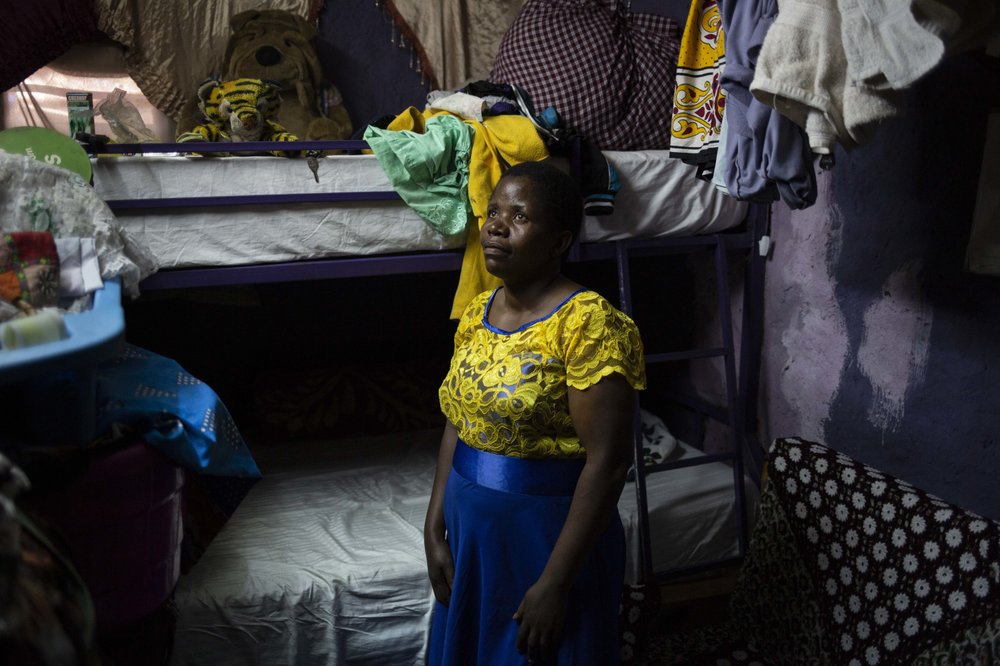
In 2010, expectant mothers Millicent Awuor Omuya and Margaret Anyoso Oliele planned to deliver their children in clinics with affordable maternity fees. However, due to possible complications, both women were transferred to Pumwani Maternity Hospital, East Africa’s largest referral maternity hospital. In Ms. Awuor’s case, even though the complications did not materialize, she was still charged 3,600 Kenya Shillings (Kshs). She unsuccessfully sought assistance with these fees from a hospital social worker and the hospital matron. Because she was unable to pay the fees, she was detained for 24 days and only discharged after the city mayor paid her bill.
The second petitioner, Ms. Oliele, did experience complications. She was referred to Pumwani for immediate surgery. However, since beds were full, she waited for two hours, still bleeding, on a reception bench, before eventually receiving surgery. While she recovered, nurses ignored her repeated requests for assistance going to the toilet. Due to this neglect, her bladder ruptured, causing bleeding and requiring doctors to rush her into surgery. Ms. Oliele was not informed of what she required surgery for. She was operated on, but the wound became infected and the petitioner “noticed…the stitches were badly done.” She was discharged five days later but was unable to pay. Ms. Oliele offered to pay part of the 12,300 Ksh bill, but the hospital rejected her insurance card and detained her until her relatives paid six days later.
Both petitioners averred that during their hospital stays, they were monitored by guards and hospital staff and subjected to poor treatment. They had to sleep on the floor without bedding and were not given enough food. Ms. Awuor indicated that she left the hospital with pneumonia, probably because she was forced to sleep on the floor next to a flooding toilet. After Ms. Oliele complained about sleeping on the floor, the nurses refused to treat her surgical wound, which eventually became septic. During their stays, both women were separated from their other children at home.
The court considered whether the respondents have violated the petitioners’ rights to: (1) liberty and security; (3) freedom of movement; (3) freedom from torture, cruel and degrading treatment; (4) dignity; (5) health; and (6) non-discrimination. It found violations of the all of the above rights, including cruel, inhuman and degrading treatment, except for torture.
The court found that the detention of Ms. Awuor and Ms. Oliele amounted to arbitrary deprivation of liberty and a violation of the right to freedom of movement. It relied on case law as well as on the United Nations Human Rights Committee General Comment No. 35, which states that “[S]tates parties… must … protect individuals against wrongful deprivation of liberty by lawful organizations, such as employers, schools, and hospitals”.
While the court found that Defendants’ conduct did not satisfy the elements of intentionality and with the “consent of public officials” in order to amount to torture, it did find that Defendants treated Mr. Awuor and Ms. Oliele in a cruel, inhuman, and degrading way. It compared their situation to that of female prisoners in the case Miguel Castro-Castro Prison v. Peru (Inter-Am. Ct. H.R. (ser C) No. 160 and noted that while Pumwani was not a prison, the conditions it kept the new mothers under “were akin to that of prisoners.” The court also reasoned that their detention created mental and physical anguish: mental anguish because they were constantly humiliated by the hospital staff, they worried about their bills rising with each day they were kept there, comments by one of the petitioners who expressed they were in a “small prison” and the fact that they were kept away from their other children, “for whom they solely provided”; physical anguish because Ms. Oliele was in pain from her septic wound, because they received inadequate medical attention and insufficient food and were forced to sleep on the floor with improper bedding, with even the bedding on the beds being dirty and one petitioner being forced to sleep next to a flooding toilet.
The court also found the “deplorable conditions” amounted to a violation of the right to dignity. The court noted that “the right to health and the right to dignity are inextricably related … when patients are not given care that affords them the right to dignity, it can negatively affect their well-being.” This was the case at Pumwani Hospital, where Ms. Awuor was treated rudely by nurses and subjected to verbal abuse from them, and Ms. Oliele was forced to sit on a bench while bleeding, was rushed to the operation room without being informed what procedure she was about to undergo; and post operation, needed to go to the bathroom but was “treated with contempt” by the nurses. “The purpose of that treatment,” reasoned the court, “was only to humiliate her and strip her of her self-worth.” Indeed, the court noted that Pumwani’s director, Dr. Kumba, admitted himself to the nurses’ poor treatment when he testified that “…cases of abuses of mothers have tremendously reduced…”. Nonetheless, the court found his characterization of “managing ‘stubborn’ and ‘rogue mothers,’” to be “a clear indication of the attitude that the hospital had towards its patients.”
The court found a violation of the right to health. Petitioners relied on the United Nations Committee on Economic, Social and Cultural Rights General Comment No. 14, which establishes that minimum core obligations include ensuring “the right of access to health facilities, good, and services on a non-discriminatory basis, especially for vulnerable or marginalized groups” and characterizes health as a “cross-cutting right, including right to provide public sexual and reproductive health services.” Respondents argued that their ability to implement this right under the constitution depends on the available resources to do so and that while the Kenyan government is “committed to attaining the right to health, and intends to employ a human rights based approach in health care delivery”, such as through the creation of the 2013 policy that introduced free maternity services, it just did not have the funds to actually carry out that service. In turn, the petitioners argued that “progressive realization should not be interpreted as depriving states parties’ obligations of all meaningful content.”
The court relied on two cases to reach its conclusion on the right to health issue. First, Laxmi Mandal vs. Deen Dayal Harinagar Hospital & Others, W.P. (C) Nos. 8853 of 2008 in the High Court of Delhi and Alyne da Silva Pimentel Teixeira v. Brazil at the United Nations Committee on the Elimination of Discrimination against Women (CEDAW). In Laxmi, the petitioner died after prematurely giving birth to her sixth child, choosing to give birth at home because during her previous pregnancies, she was denied hospital care from four different hospitals due to the fact that she could not pay admission. In Alyne da Silva, CEDAW found a violation of the right to health, rejecting the state argument that the Brazilian health care system’s policies sought to address the specific needs of women, because the system resulted in a lack of access to quality medical care, in violation of the rule that “policies for elimination of discrimination must be action-and-results oriented as well as adequately funded”. In the present case, the court analogized to these two cases, and found that: “It is clear that the only reason that petitioners underwent this treatment, particularly the detention, is because they were unable to pay their bills, which served as a barrier to their access to health care services, and a violation of their right to health”.
Finally, the court found Respondents violated the right to non-discrimination. The court found authority on the right to non-discrimination in CEDAW General Comment No. 18, Article 2 of the International Covenant on Civil and Political Rights, and the International Covenant on Economic, Social and Cultural Rights, among multiple other international instruments, as well as from the Kenyan Constitution, which requires protection of vulnerable groups, which in the court’s reasoning, includes “poor expectant women who are in labour”. The court relied on principles under CEDAW which require “acceptable [health care] services” to include “those that are delivered in a way that respects the dignity, and are sensitive to the needs and perspectives of, women.” The court also pronounced that “denial or neglect to provide interventions that only women need is a form of discrimination against women.” Thus, it found that “[p]etitioners were clearly discriminated against because of their economic status. They were denied access to health care facilities due to their inability to pay. When they were, very grudgingly, given treatment, they were denied basic provisions such as beds, bedding, and the food they were given was insufficient.”