Summary
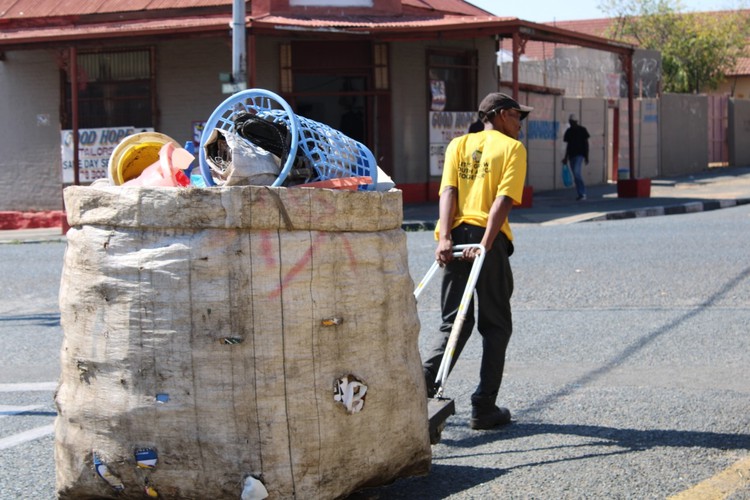
“Occupiers” earn a living as “waste pickers” who extract recyclable materials from industrial sites, transport it on flat-bed trollies, and sort, clean, and store the materials in industrial bags which they then sell to recycling companies. This work is the Occupiers’ sole source of income, and they must live in proximity to industrial sites to be able to earn a living. The Occupiers had built shacks inside the Farm Randjiesfontein, which is owned by Rycloff-Bellegings Ltd. Because the shacks built by the Occupiers posed an impediment to Rycloff’s planned development of an adjacent property, Rycloff launched an application for the eviction of the Occupiers on 22 May 2019.
Following three years of litigation and disputes about what would be a suitable relocation site for the Occupiers, the City identified specific areas as a relocation site that was acceptable to all parties. However, the City imposed a condition where the Occupiers would not be able to conduct waste-picking activities, to which the Occupiers objected. The Gauteng Division of High Court granted an eviction order against the Occupiers, ordering that the City provide temporary emergency accommodation for the occupiers by no later than 4 March 2023, subject to certain conditions such as that the land chosen by the City shall be land where the occupiers can live at night, lawfully and safely sort the reclaimed waste, and from where they can reasonably go during the day to use their flatbed trollies lawfully and safely to collect waste. The City’s appeal focuses on the High Court’s condition that the waste pickers be permitted to continue their waste-picking activities.
The issue considered by the Supreme Court of Appeals was whether a court ordering an eviction must, as part of a just and equitable enquiry, consider an occupier’s “right to earn a living.” The Court dismissed the City’s appeal, ruling that the right of an occupier to earn a living is a factor to be considered in an eviction proceeding. The Court found: (I) that the City misconstrued the Occupiers as recyclers, when they are actually reclaimers who collect and sell waste material to recyclers (bringing their conduct into the purview of the PIE Act); that (II) the municipal zoning of the areas where Occupiers where relocated does not prohibit the waste-picking activities of the Occupiers; and (III) that the City’s condition prohibiting the waste-picking is unsupported by any law or policy and is therefore arbitrary and unreasonable.