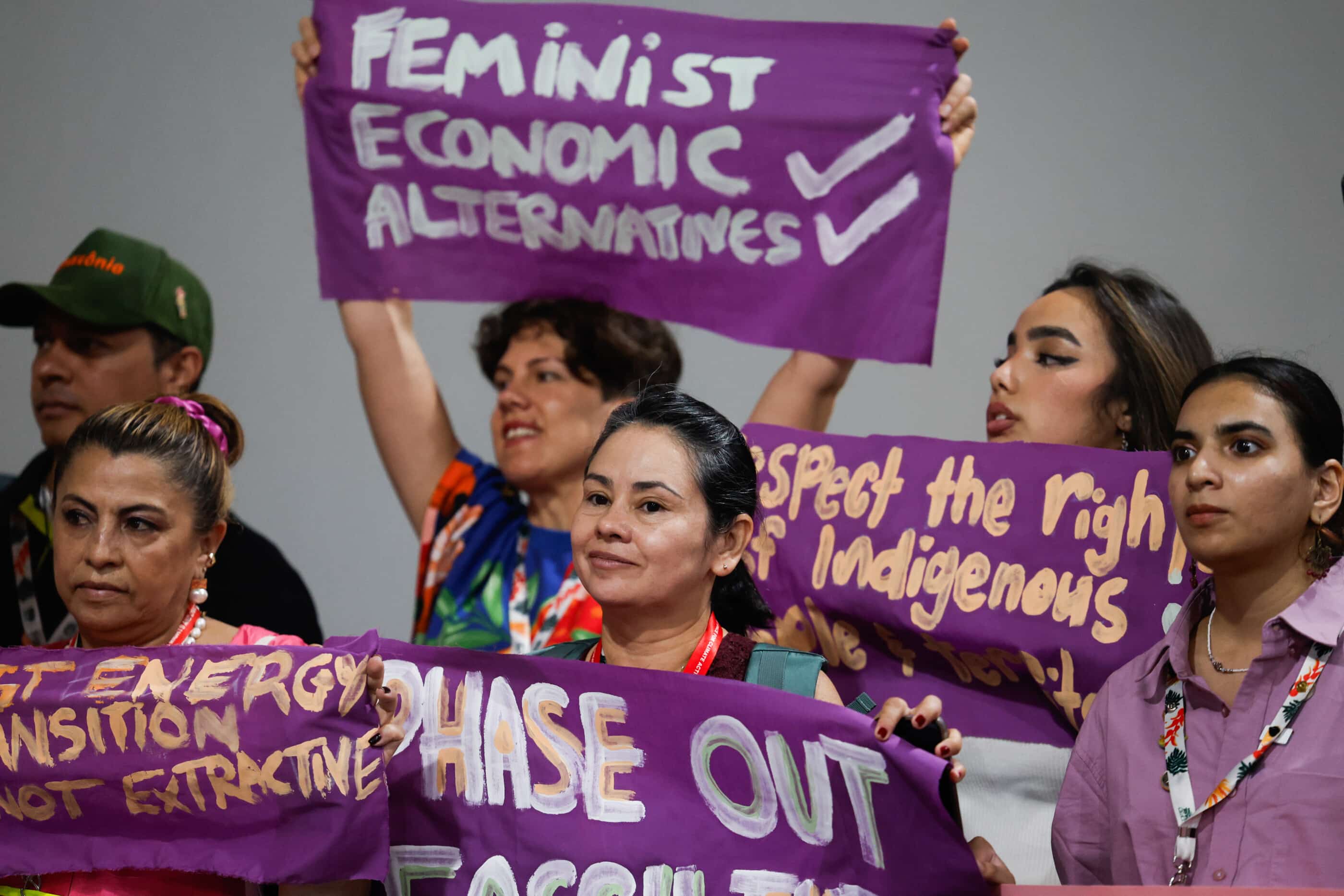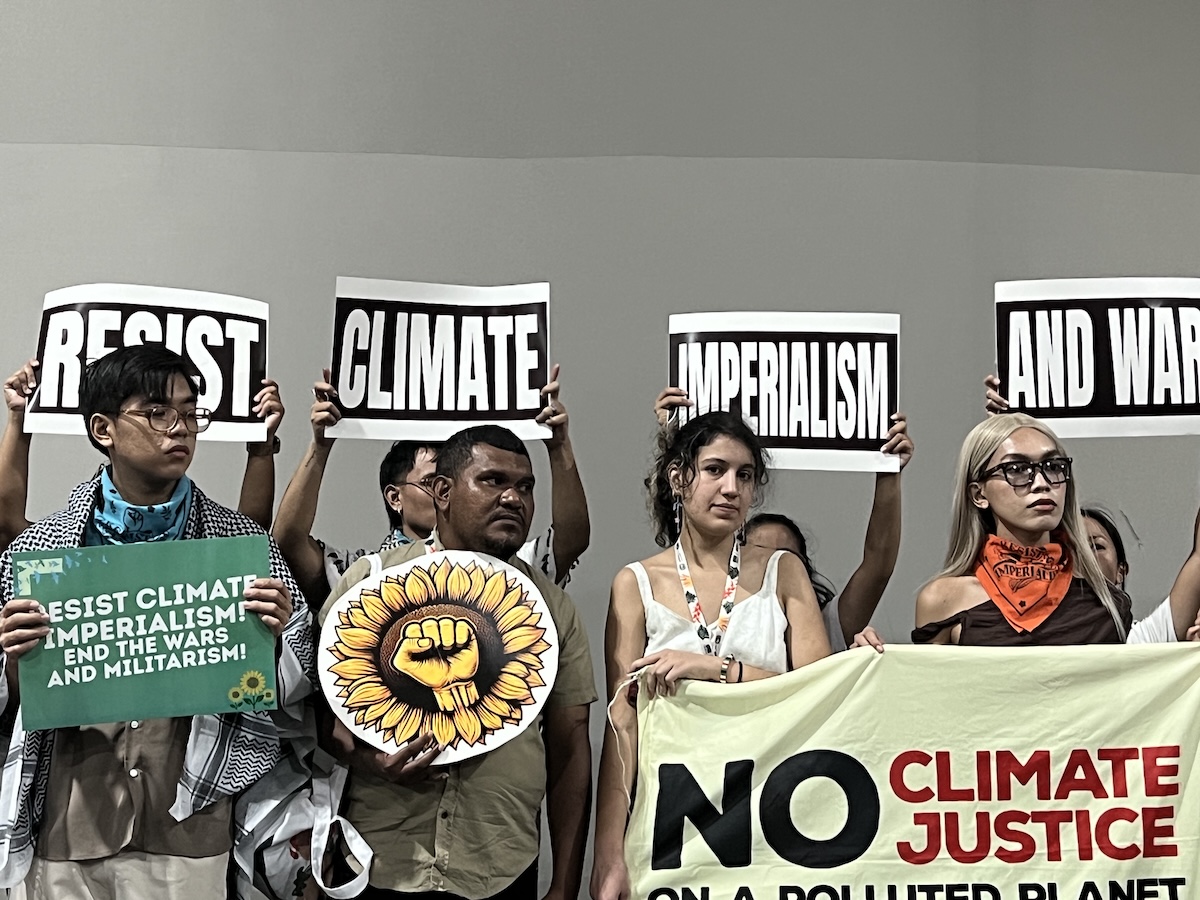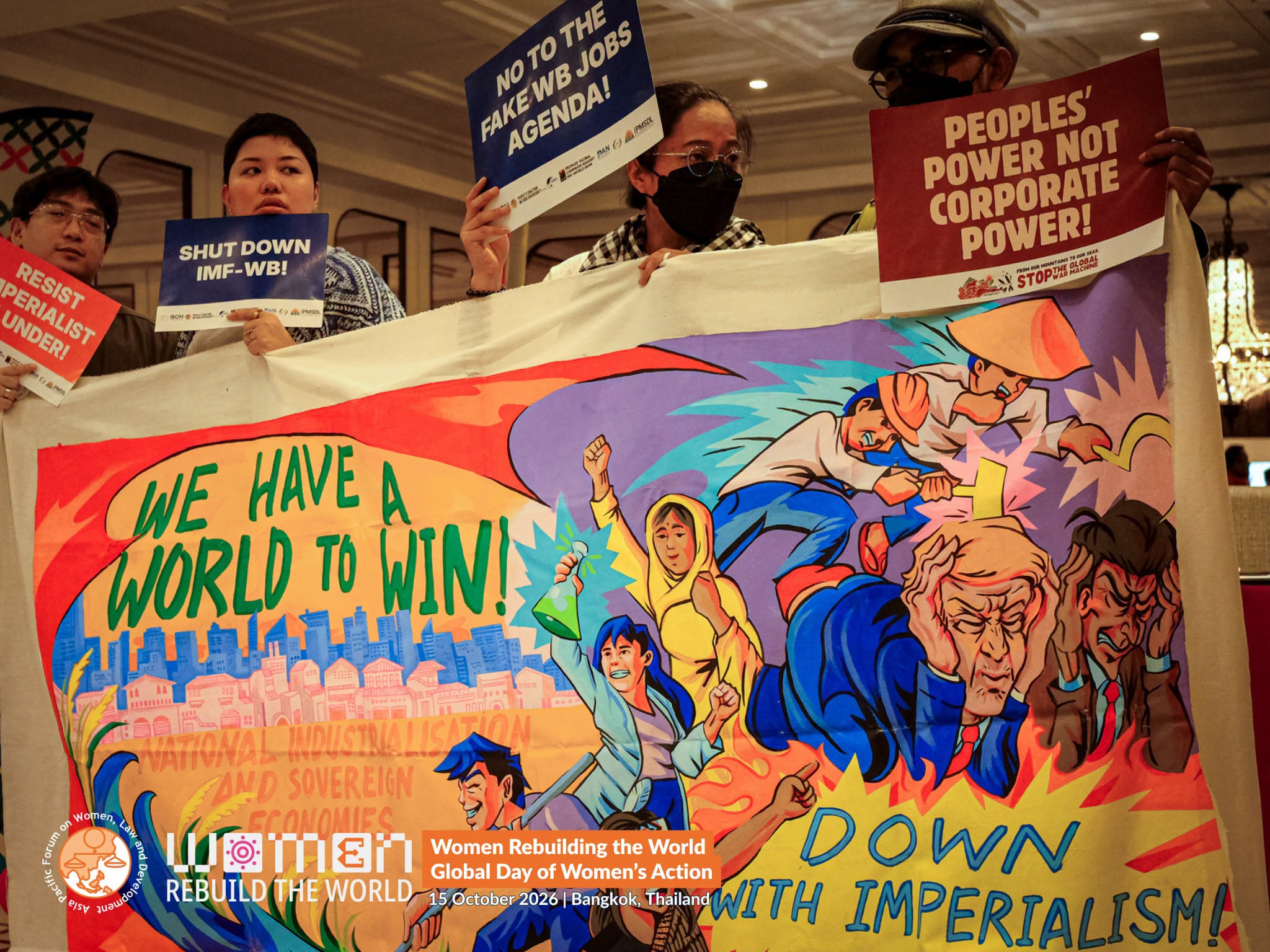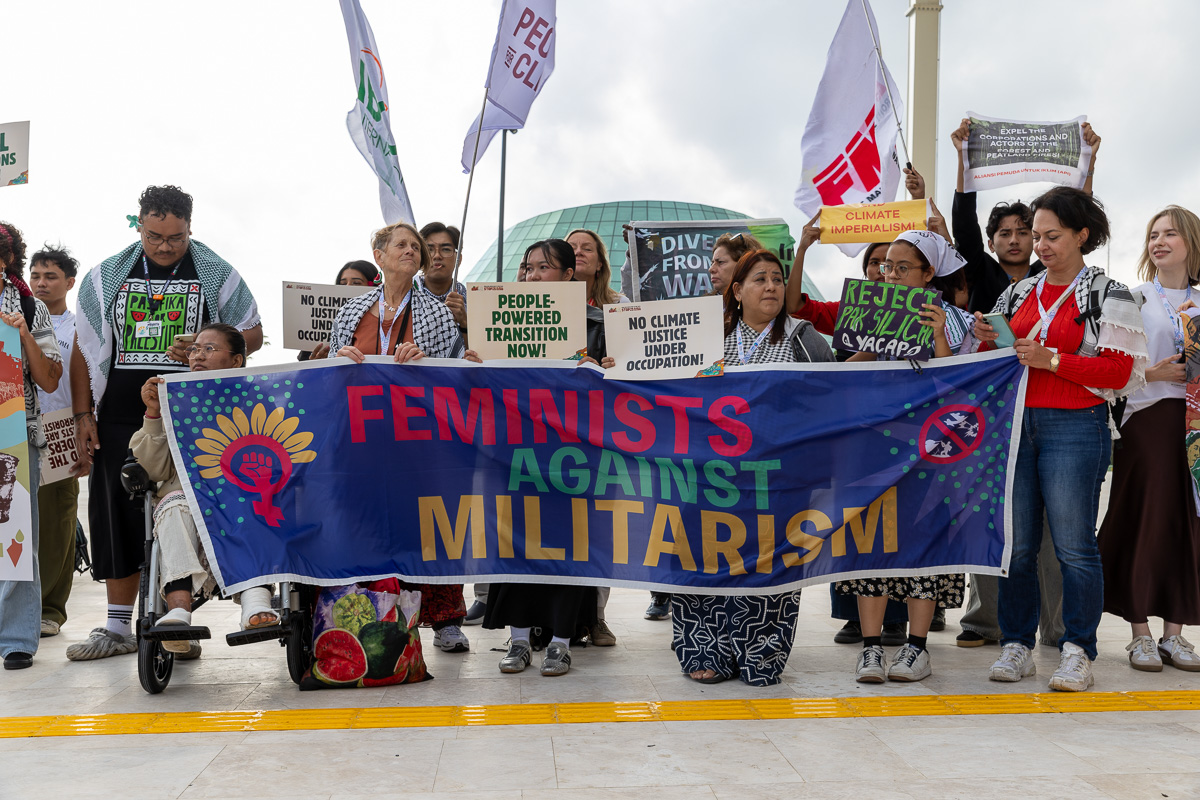
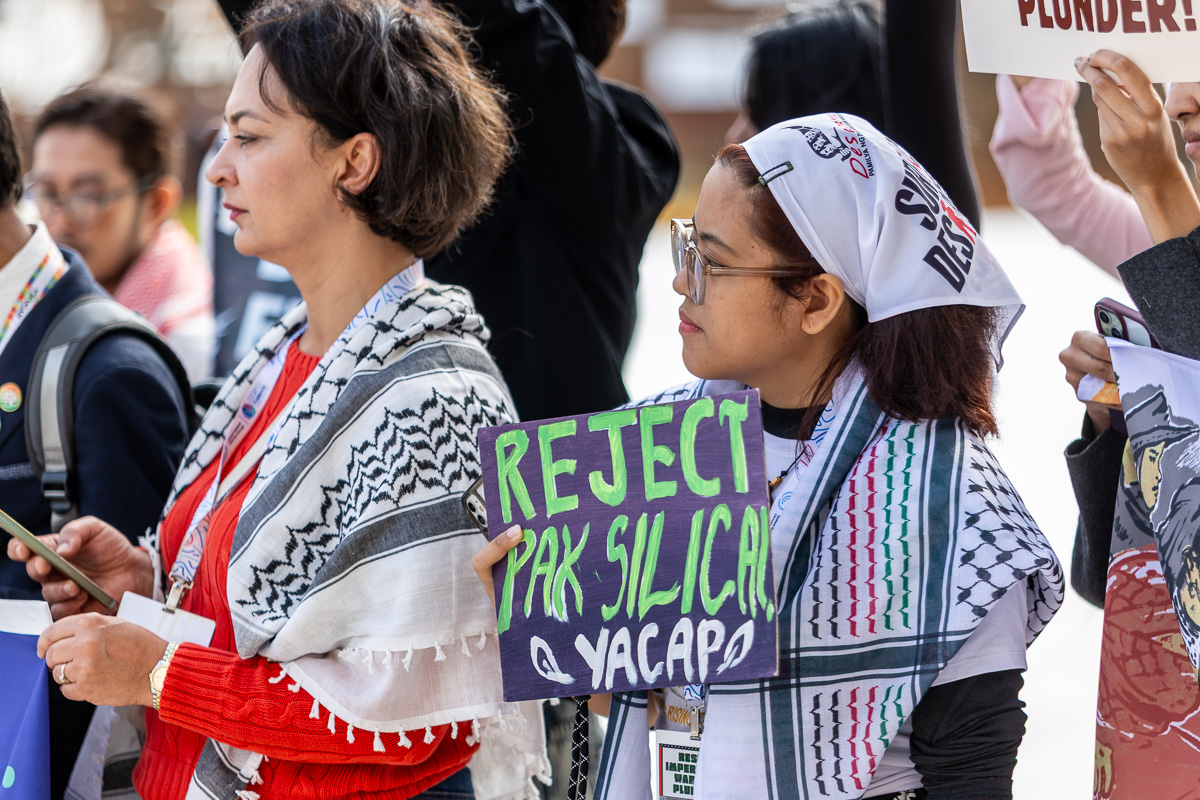
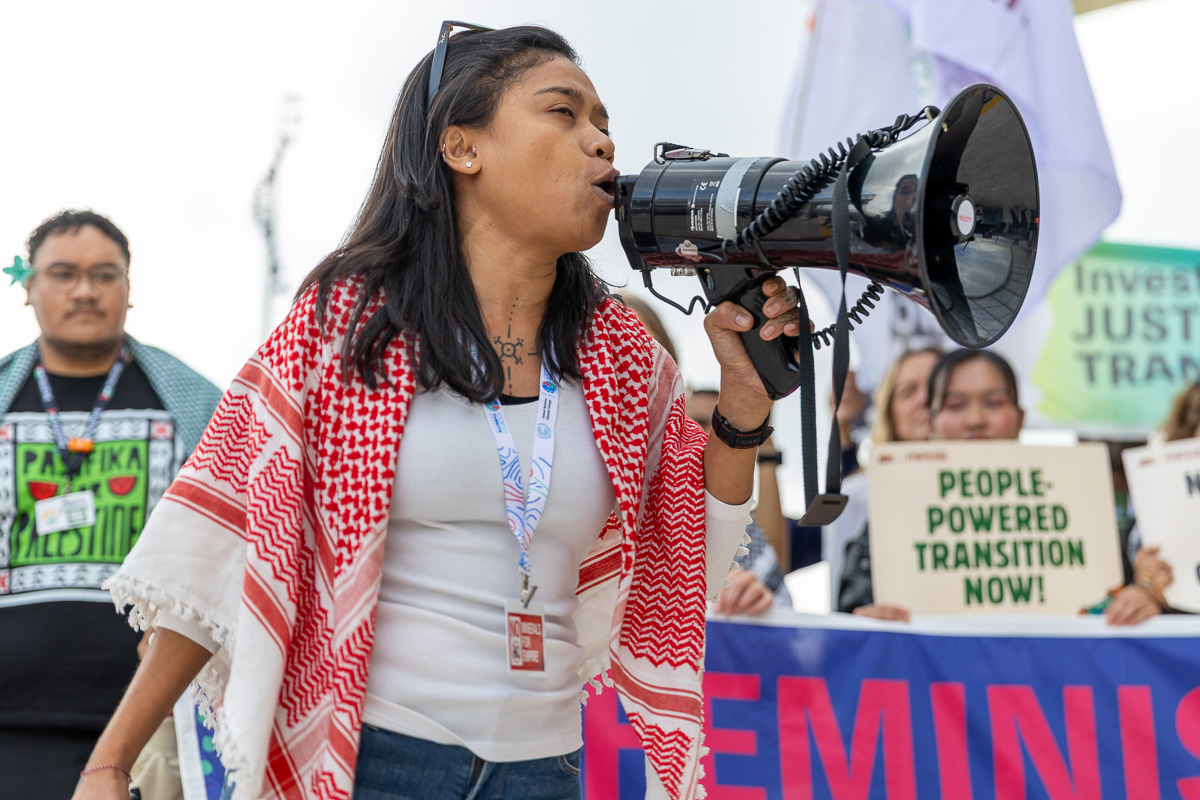
As governments negotiate in Antalya, Türkiye, movements are exposing the systemic injustices driving the climate crisis: from rising military spending and inadequate climate finance to the expansion of artificial intelligence infrastructure, communities are warning that projects presented as climate action and technological progress threaten their lands, livelihoods, and fundamental rights.
These concerns were at the center of two press conferences held on 11 November at COP31. ESCR-Net convened “Reparations and Demilitarization: Peoples’ Demands for a Just and Equitable Transition.” The Network also participated in “Reject Pax Silica! No to Wars and Ecocide!”, convened by ESCR-Net member IBON International. Across both press conferences, movements demanded climate reparations, demilitarization, corporate accountability, and a transition shaped by affected communities.
Militarization and the growing threat of extractivism
Movements denounced the role of military and security forces in protecting extractive industries, securing strategic resources, and repressing communities defending their territories.
Patricia Wattimena, ESCR-Net’s Environment and ESCR Program Coordinator, warned:
The military-industrial complex consumes enormous resources, expands surveillance, secures energy corridors and protects corporate access to community land and so-called critical minerals.”
View this post on Instagram
Haneen Shaheen, from the MENA Movement for Economic Development and Ecological Justice, challenged the lack of adequate climate finance amid rising military expenditure. She also denounced the destruction of homes, agricultural land, water systems, and ecosystems associated with Israeli military operations in Gaza and southern Lebanon, calling for accountability for environmental damage and military emissions. Challenging the use of climate action to justify dispossession, she warned: “A solar panel does not cancel a land grab.”
These concerns extended to Pax Silica, a U.S.-led initiative aimed at strengthening supply chains for critical minerals, energy, semiconductors, and artificial intelligence infrastructure.
At the press conference convened by ESCR-Net member IBON International, movements warned that the initiative could deepen extraction, militarization, and corporate control over resources across the Global South.
Rachelle Junsay, from Peoples’ Rising for Climate Justice, described the initiative as: “This is imperialism wearing the language of technological innovation.”
Melanie Feranil, from IBON International, highlighted the unequal distribution of the costs and benefits of extraction:
Across the Global South, extractivism and militarism are acutely felt, siphoning resources away from local communities to feed the profits of imperialist powers and their corporate elites.”
Triana Wardani, from Serikat Perempuan Indonesia and APWLD, expressed solidarity with Filipino communities resisting Pax Silica and called for collective struggle against foreign domination and extractive economic arrangements.
Climate reparations and peoples’ self-determination
Hilary Zulu, from the Zimbabwe People’s Land Rights Movement, denounced the militarization of extractive projects and the repression of communities defending their lands. “Reparations are not charity. Demilitarization is not an optional extra. Both are preconditions for a just and equitable transition.”
Zulu referred to the International Court of Justice’s July 2025 advisory opinion on states’ obligations in respect of climate change, which affirmed that breaches of international climate obligations can entail state responsibility and, where legal conditions are met, obligations to provide reparation.
He demanded accessible and enforceable mechanisms for affected communities to seek remedies, including restitution, compensation, and guarantees of non-repetition.
Wara Condori, from Indigenous Peoples Rights International (IPRI), challenged development models that exclude Indigenous Peoples from decisions affecting their territories:
I want us to recognize Indigenous Peoples as peoples who have knowledge, political agency, and their own visions for the future.”
Condori stressed that Indigenous Peoples have protected territories, biodiversity, water, seeds, and food systems for generations, yet decisions affecting their lands are frequently made without their consent or meaningful participation.
Rejecting false climate solutions and corporate influence
Shahira Adel, from the Egyptian Foundation for Environmental Rights, warned that the Just Transition Mechanism under discussion at COP31 must not reproduce the extractive economic model driving the climate crisis.
She challenged carbon markets, offsetting schemes, and large infrastructure projects that displace communities, calling instead for grant-based public climate finance, binding accountability, and meaningful participation by affected communities.
Adel insisted that safeguards and consultation processes cannot substitute for enforceable legal responsibility, consent, or access to justice.
Yağız Eren Abanus, from the Center for Spatial Justice in Türkiye, denounced the exclusion of civil society and trade unions from climate decision-making while fossil fuel and mining corporations maintain influence over the process.
He also challenged Türkiye’s climate commitments. Under its 2035 nationally determined contribution, the country aims to limit emissions to 643 million tonnes of CO₂ equivalent by 2035, a reduction relative to a projected business-as-usual scenario rather than an absolute reduction from historical emissions.
Abanus called for meaningful public participation, an end to new coal investments, and a binding coal phaseout roadmap.
Beyond official negotiations, grassroots organizations are mobilizing through the People’s Climate Summit in Antalya, bringing together demands for energy democracy, food sovereignty, ecological justice, peace, and demilitarization.
No climate justice without systemic change
The demands raised at COP31 reflect the vision behind ESCR-Net’s six pillars for climate justice: a just and equitable transition requires transforming the systems of extraction, militarization, and corporate power driving the climate crisis, and putting peoples’ rights, sovereignty, and collective well-being at its center.
As ESCR-Net’s Patricia Wattimena made clear:
You cannot bomb people, contaminate their land and water, destroy their homes, and then arrive at a climate conference talking in the language of just and equitable transition.”
Watch the press conferences
- Reparations and Demilitarization: Peoples’ Demands for a Just and Equitable Transition — Convened by ESCR-Net, 11 November 2026.
- Reject Pax Silica! No to Wars and Ecocide! — Convened by ESCR-Net member IBON International.