By Collins Liko
Coordinator of the Economic Policy and Human Rights Working Group, ESCR-Net
Debt, austerity and unjust economic policies imposed by international financial institutions continue to deepen inequality, undermine public services and restrict economic sovereignty across the Global South. Yet the communities bearing the consequences of these decisions remain largely excluded from shaping them.
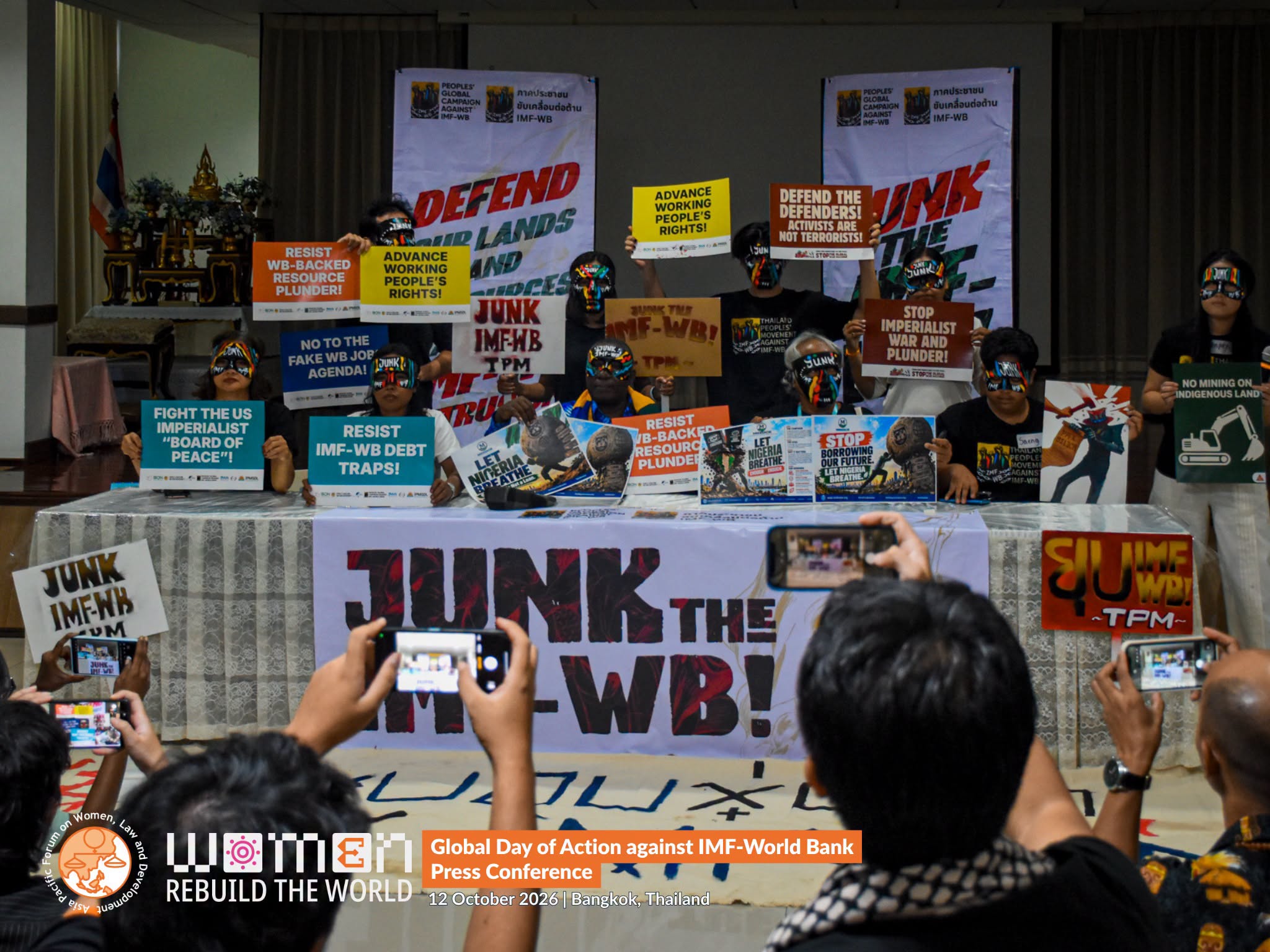
This power imbalance came under scrutiny during the International Monetary Fund (IMF) and World Bank Annual Meetings, held in Bangkok, Thailand, from 12 to 18 October 2026. ESCR-Net and its members joined social movements, feminist organizations and human rights advocates to challenge a global financial system that prioritizes debt repayment and corporate interests over people’s sovereignty, human rights and well-being.
From grassroots mobilizations and feminist organizing to direct confrontations with IMF and World Bank representatives, their interventions exposed the human rights costs of unfair, discriminatory, colonial and neoliberal financial policies and advanced demands for economic sovereignty, meaningful participation, accountability and systemic change.
Debt, Austerity and the Struggle for Economic Sovereignty
The growing debt crisis emerged as a central concern in Bangkok, where movements challenged the power of international financial institutions to shape national economic priorities while restricting countries’ ability to pursue independent development.
At the Southern Caucus, led by ESCR-Net member IBON International, participants denounced the extractive global financial system and its role in perpetuating economic subjugation across the Global South. ESCR-Net highlighted how mounting debt undermines economic sovereignty, industrialization and development, while the Caucus also challenged growing militarization and demanded structural transformation and reparative justice for the enduring harms of colonialism and imperialism.
These concerns also shaped the People’s Assembly, where social movements and civil society organizations examined how structural adjustment programs, austerity measures and harmful loan conditionalities deepen inequality and undermine the delivery of public services. Drawing on Thailand’s 1997–1998 Asian Financial Crisis and Argentina’s debt crises, participants challenged economic reforms that shift the burden of financial crises onto ordinary people while protecting powerful financial and corporate interests.
Demands for debt, tax and fiscal justice were central to the People’s Assembly, where ESCR-Net and its members co-organized two workshops examining strategies to hold international financial institutions accountable for human rights violations linked to their policies, programs and projects. These discussions reinforced calls to end harmful economic conditionalities, secure effective remedies for affected communities and reclaim democratic control over economic policymaking. Participants went further, calling for an end to the IMF and World Bank and a fundamental restructuring of the global financial order rooted in people’s sovereignty and historical justice.
Read the Southern Caucus statement and the People’s Assembly statement.
Beyond Consultation: Holding the IMF and World Bank Accountable
On 13 October, ESCR-Net joined other civil society networks, organizations and social movements in a roundtable with World Bank Board members to challenge the Bank’s role in supporting and financing projects and programmes that have harmed communities, their lands, natural resources, the environment and human rights. Participants raised concerns about the Bank’s accountability mechanisms and their failure to provide timely and effective remedies to affected communities.
The roundtable offered an opportunity to communicate civil society demands directly to the Bank, but whether such engagement will lead to meaningful changes in its policies and practices remains deeply uncertain. The lack of interpretation support also created barriers to the participation of directly affected communities, raising questions about how inclusive these spaces are.
A central concern was the World Bank’s involvement in the Board of Peace (BoP) and Gaza’s reconstruction. ESCR-Net conveyed its members’ concerns about the risk of the Bank becoming complicit in war crimes and crimes against humanity, alongside the exclusion of Palestinians from decisions affecting their future. According to participants, a Board member provided unsatisfactory responses and proposed further dialogue, leaving these concerns without substantive answers.
Civil society organizations called for the World Bank’s withdrawal from the Board of Peace and reaffirmed the Palestinian people’s right to self-determination. Palestinians must be able to shape decisions about Gaza’s reconstruction and their own economic, social and political future. These demands underscore the need for concrete accountability, meaningful participation and respect for human rights beyond institutional dialogue.
Feminist Movements Challenge Financial Injustice and Advance Alternatives
Feminist movements brought a critical perspective to the debates in Bangkok, connecting debt and austerity to broader struggles against militarization, occupation, extractivism and corporate capture, while challenging the exclusion of grassroots communities from global economic decision-making.
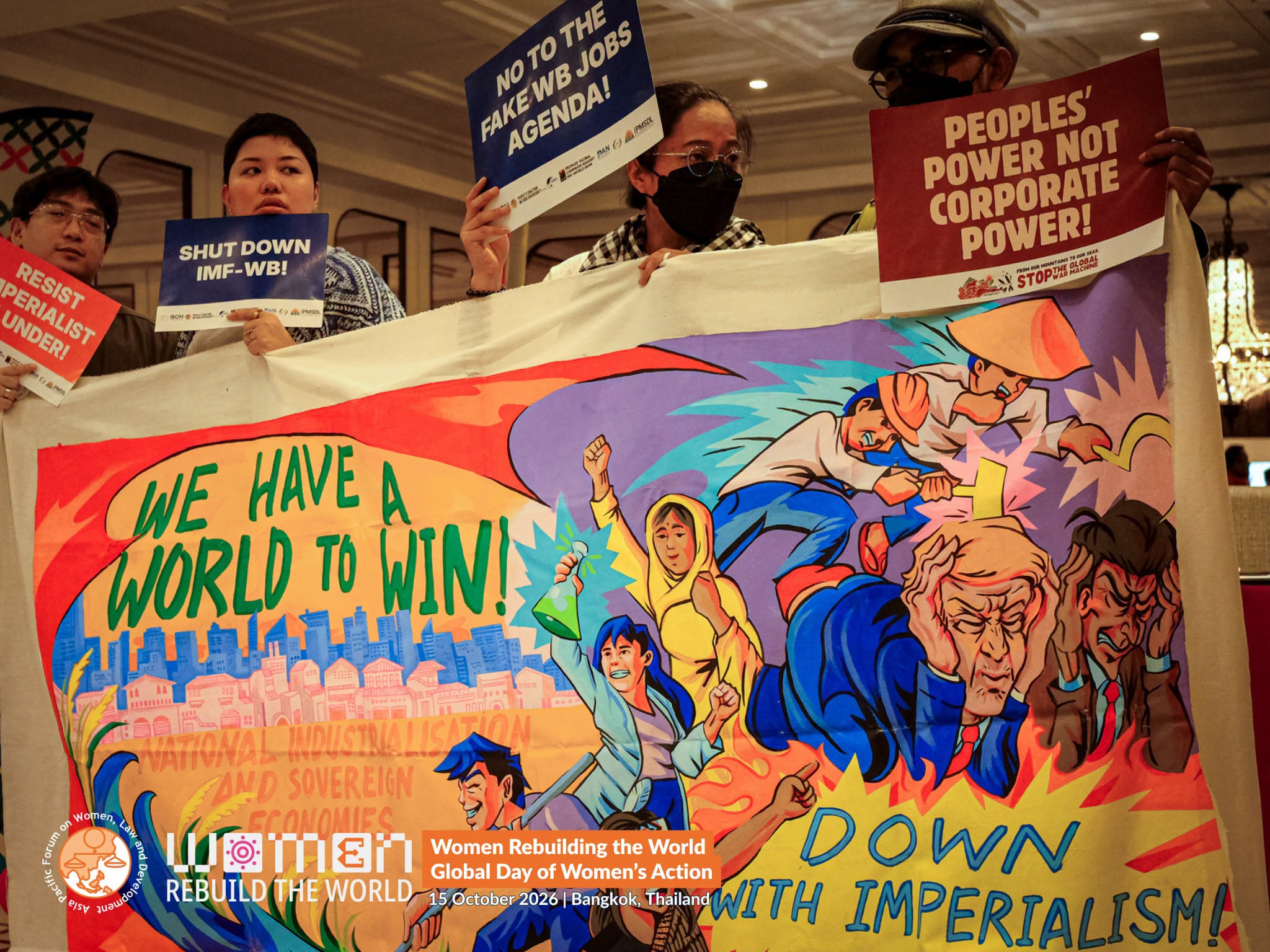
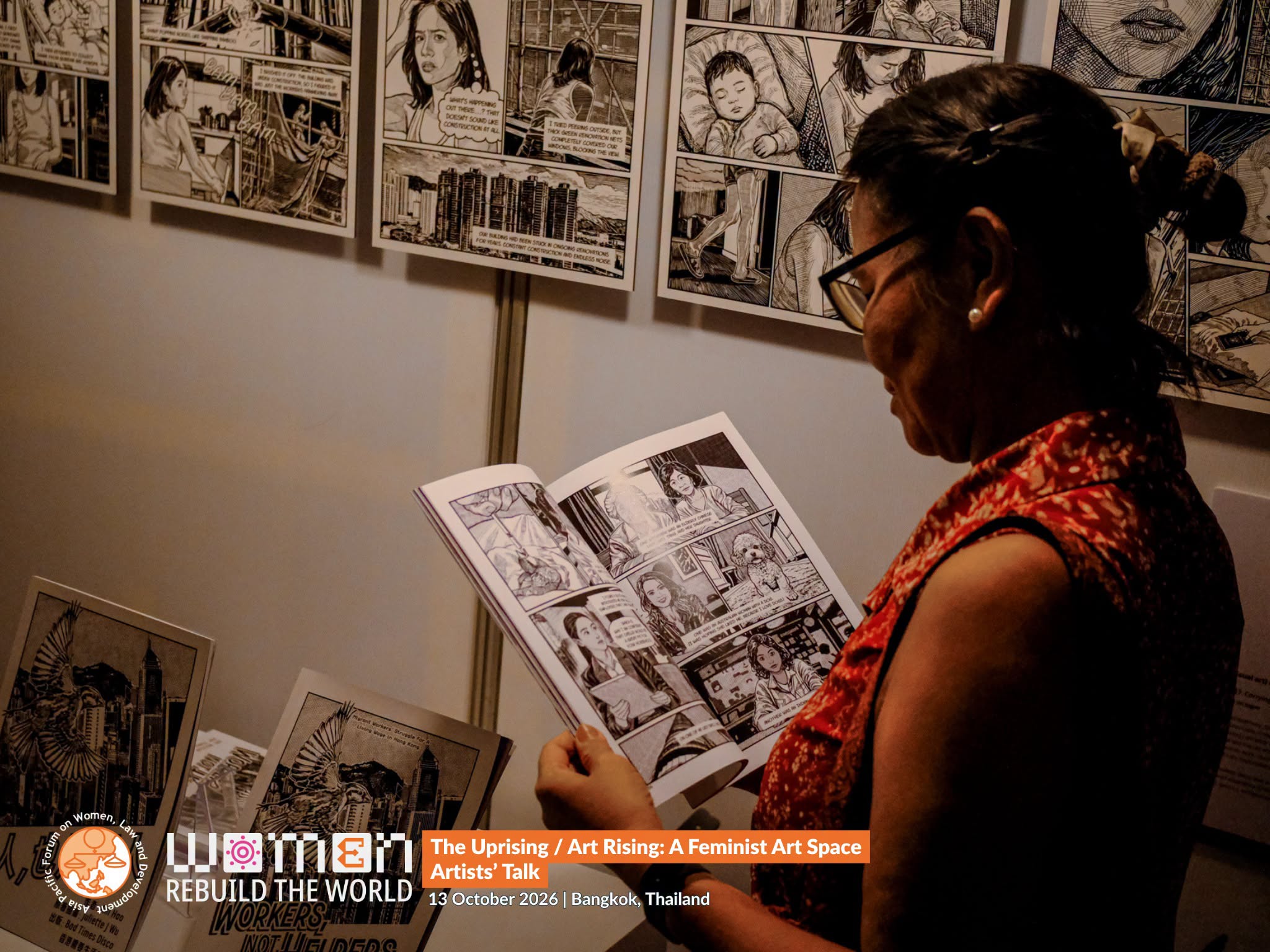
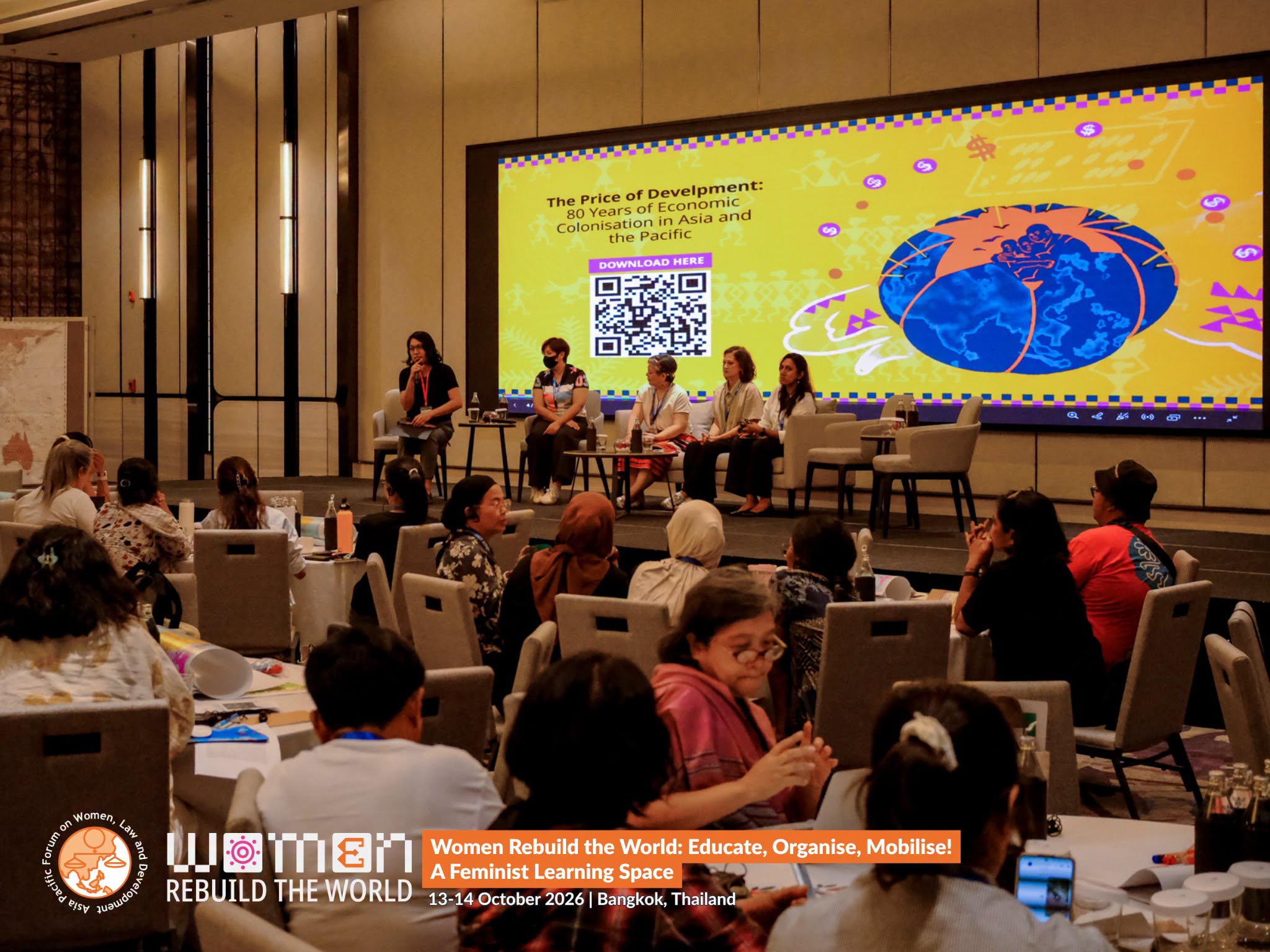
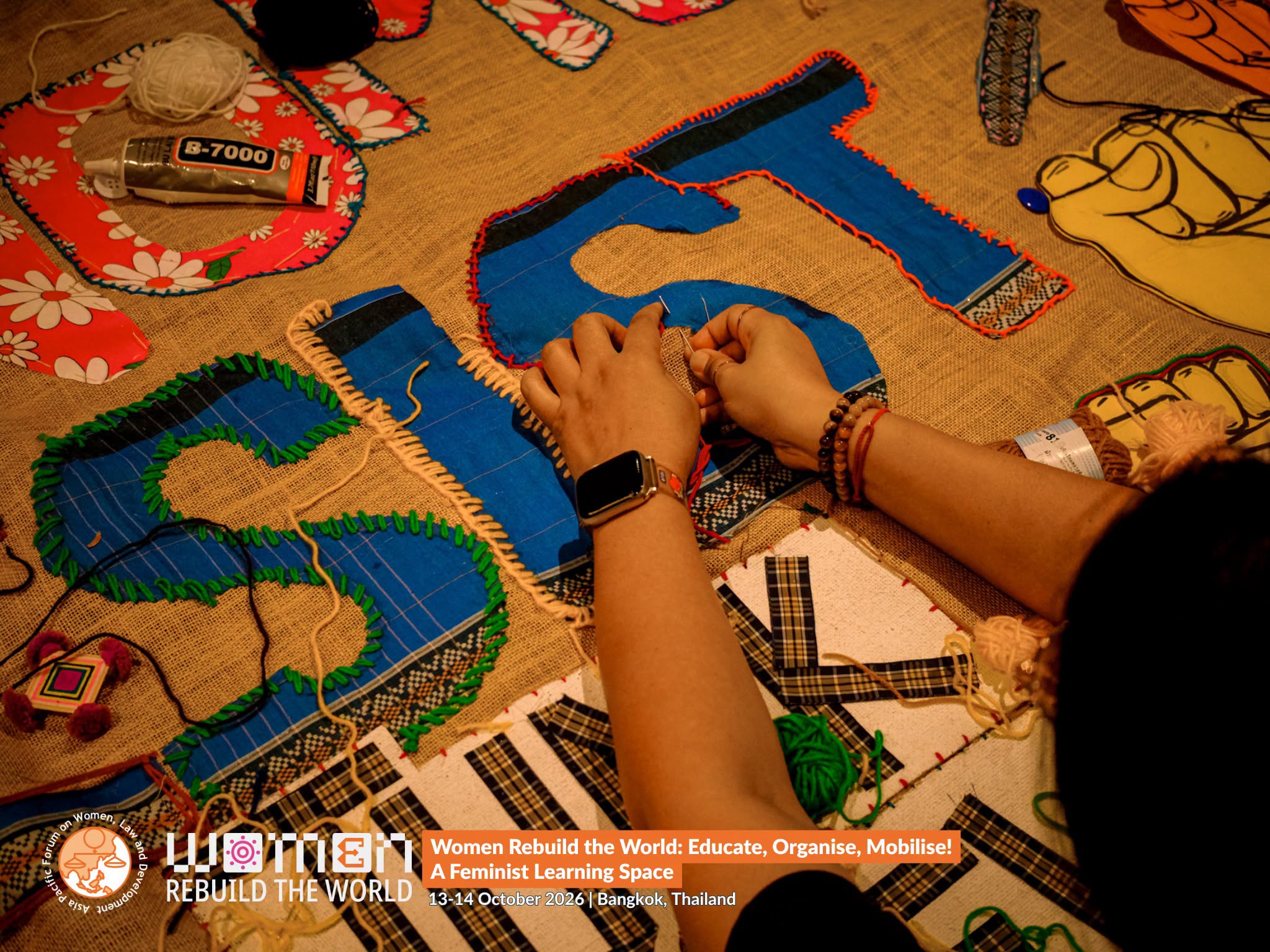
On 12 and 13 October, ESCR-Net members MENAFem Movement, IBON International, the Asia Pacific Forum on Women, Law and Development (APWLD), Just Associates (JASS) and other organizations convened the Feminist Festival for Resistance and Alternatives. Bringing together grassroots activists, researchers, artists, trade unions and feminist movements, the festival challenged the exclusion of feminist perspectives from mainstream economic debates and advanced demands for debt justice, climate justice and the immediate transformation of global financial governance.
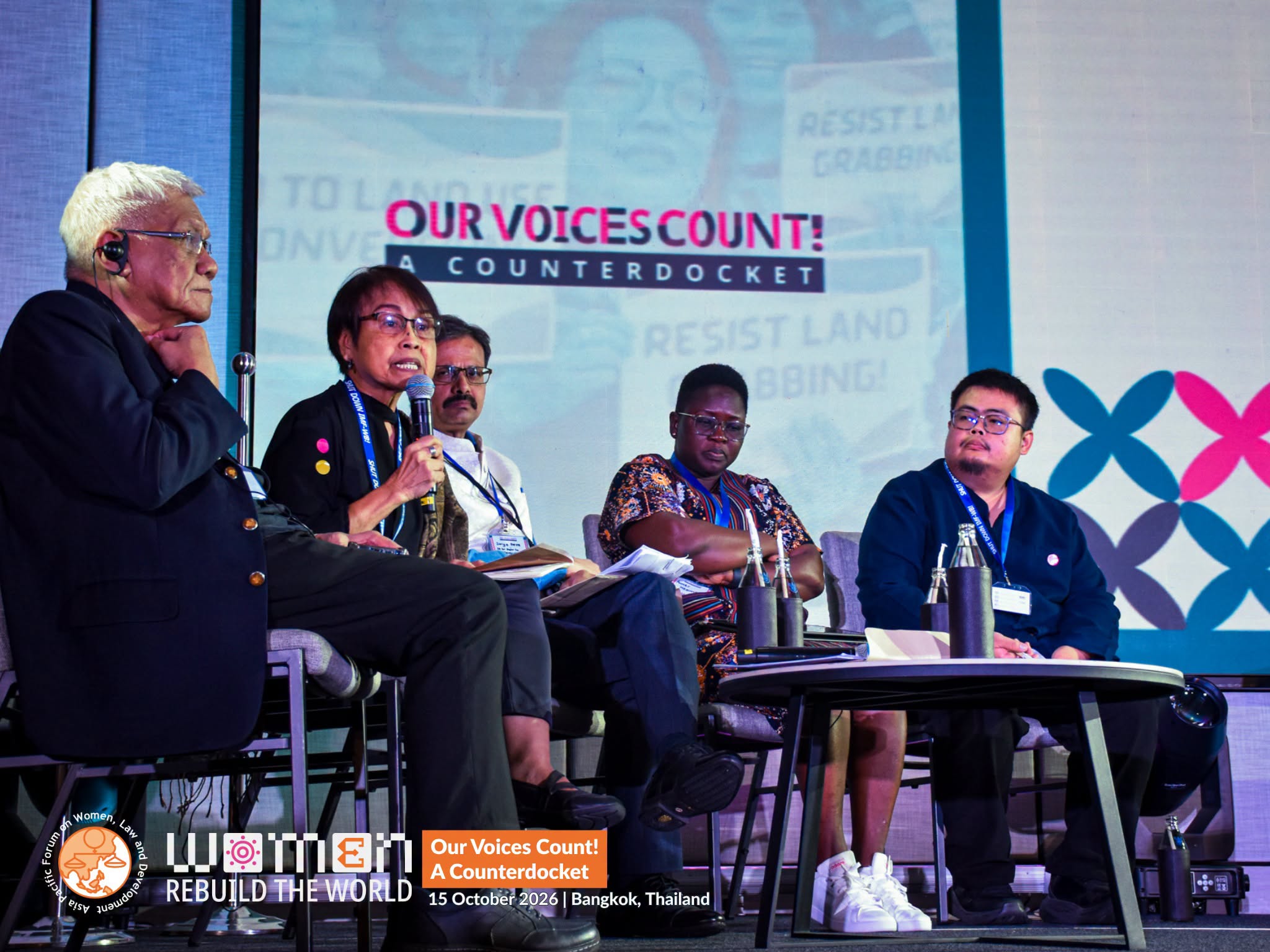
Through the Feminist Learning Space and the Counter Docket, ESCR-Net members JASS, APWLD, AIP and others combined political education and collective organizing with a feminist process for exposing human rights harms linked to international financial institutions. Grounded in the lived experiences of affected communities, the Counter Docket brought forward testimonies of threats, repression and violations associated with World Bank-financed projects and IMF-imposed economic policies across the Global South.
Women and grassroots communities described the challenges they face while defending their territories, protecting ecosystems and organizing for their rights. After hearing their testimonies, a panel of experts participating in this informal justice process delivered a verdict finding the IMF and World Bank responsible for human rights violations. A World Bank representative acknowledged historical and continuing harms and expressed openness to further dialogue about institutional change.
By bringing community experiences into a process of collective scrutiny, the Counter Docket challenged the lack of accountability for the consequences of international financial policies. Together with the Feminist Festival, it reinforced demands for economic alternatives rooted in solidarity, collective rights and the experiences of those most affected by financial injustice.
Read the Feminist Festival joint statement.
Beyond Bangkok: The Demand for Structural Change
The mobilizations surrounding the IMF and World Bank Annual Meetings brought together movements confronting different dimensions of global financial injustice, from debt and austerity to the human rights consequences of development financing and the exclusion of affected communities from economic decision-making.
Across the Southern Caucus, People’s Assembly, feminist organizing spaces and direct engagements with the IMF and World Bank, participants advanced interconnected demands for economic sovereignty, reparative justice, democratic participation and institutional accountability. Their interventions challenged not only specific financial policies but also the structures that allow international financial institutions to directly influence national economic priorities without accountability to affected communities.
For ESCR-Net members and allied movements, the discussions in Bangkok reinforced the importance of collective organizing to confront economic inequality and advance alternatives grounded in human rights, redistribution and self-determination.
International financial institutions must be held accountable for the consequences of their policies, and economic decisions must prioritize the human rights and well-being of people and communities over debt repayment and corporate interests.