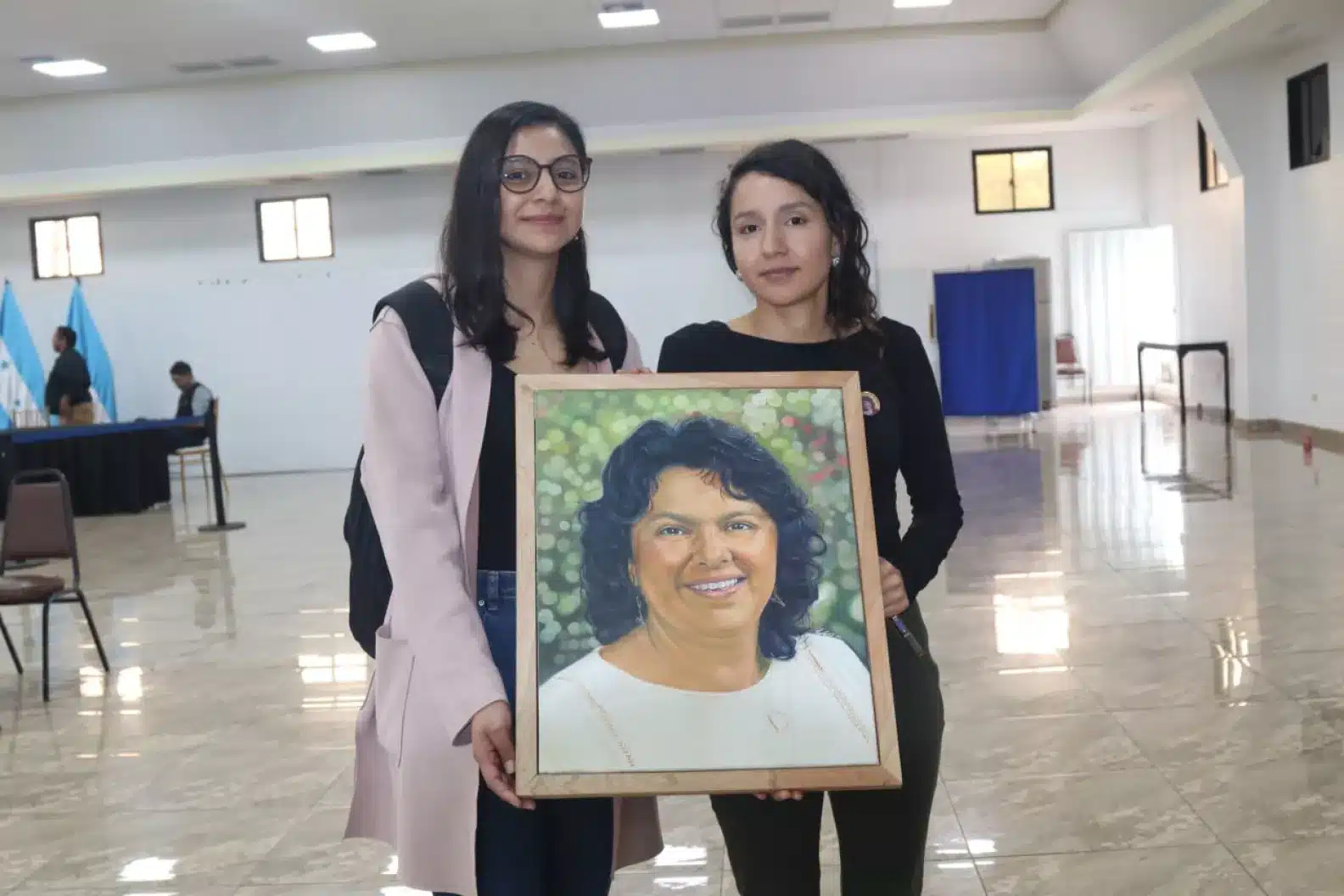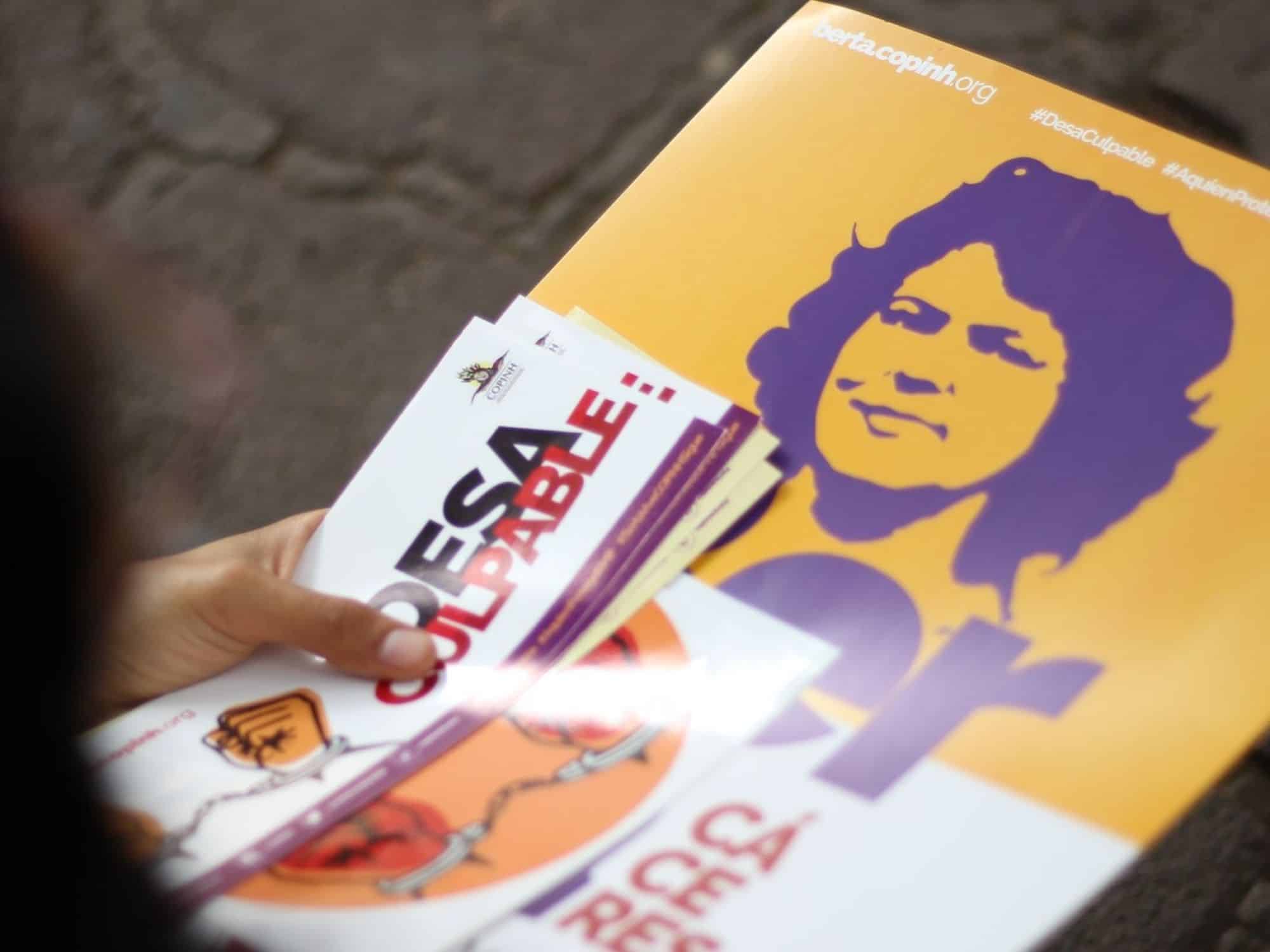
On the occasion of the presentation of the Final Report of the Interdisciplinary Group of Independent Experts (GIEI), held on January 12 in Tegucigalpa, ESCR-Net expresses its firm and unwavering solidarity with the family of Berta Cáceres; with the Civic Council of Popular and Indigenous Organizations of Honduras (COPINH), a member of the Network; with the Lenca community of Río Blanco; and with Gustavo Castro, community leader and survivor of the attack in which Berta Cáceres was assassinated. We honor her memory and reaffirm our commitment to her struggle and that of her people in defense of life, territory, and collective rights.
We recognize and fully support the sustained legal accompaniment provided by the Center for Justice and International Law (CEJIL), also a member of the Network, whose work has been fundamental in advancing the pursuit of truth, comprehensive justice, and reparation, as well as in confronting the structural patterns of impunity that persist in this case. ESCR-Net urges the Honduran State to fully comply with its international human rights obligations, guarantee justice for Berta Cáceres and COPINH, and adopt effective guarantees of non-repetition, including an end to the criminalization and violence against those who defend human rights and territories.
The GIEI Final Report establishes that the assassination of Berta Cáceres was not an isolated act, but rather the result of a deliberately planned and executed criminal operation, embedded within a broader context of structural patriarchal violence, militarization, corruption, and impunity. The investigation confirms that the crime was directly linked to the imposition of the Agua Zarca hydroelectric project and to the economic interests of the Atala Zablah family and its corporate network. It identifies the involvement of corporate executives, hired gunmen, members of State security forces, as well as the use of complex financial structures to channel and conceal resources associated with the crime.
As reported by InSight Crime in its article “Report Puts International Banks, Honduras Elites at Center of Berta Cáceres Murder” judicial proceedings stemming from the crime have resulted in the conviction of eight individuals for their direct participation. Among them is Roberto David Castillo Mejía, who served as Chief Executive Officer of Desarrollos Energéticos S.A. (DESA), the company responsible for the Agua Zarca hydroelectric project and linked to the Atala Zablah business group. The company’s former head of security was also convicted for his role in planning and facilitating the murder. However, the State’s response to the case has been subject to strong criticism due to the lack of substantive progress in investigating and sanctioning those who allegedly acted as the intellectual authors of the crime.
Information incorporated into judicial case files in subsequent years, including the analysis of private communications, revealed coordination between the group that carried out the murder and high levels of DESA’s management structure. These communications involved Roberto David Castillo Mejía; Daniel Atala Midence, the company’s financial director; as well as members of its board of directors, José Eduardo Atala Zablah and Pedro Atala Zablah. To date, Castillo Mejía is the only individual at this hierarchical level who has been convicted.
In response to the release of the report, ESCR-Net has gathered the voices of members and allies who have consistently accompanied the case and continue to critically analyze its advances and ongoing challenges.
As stated by Gerald Staberock, Secretary General of the World Organisation Against Torture (OMCT),
the horrific murder of Berta Cáceres in 2016 shocked the world and exposed the failure of the Honduran State to prevent the crime, safeguard her life, and create a safe environment for human rights defenders. The case continues to demand truth, justice, and full accountability, as well as real policy change to protect rights and those who defend them.”