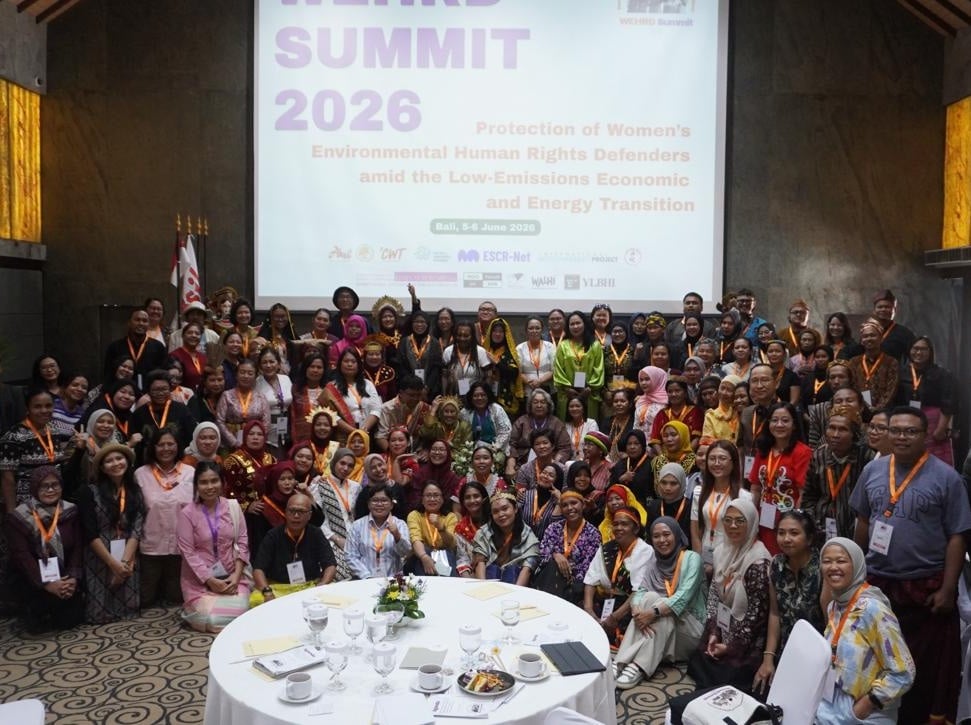
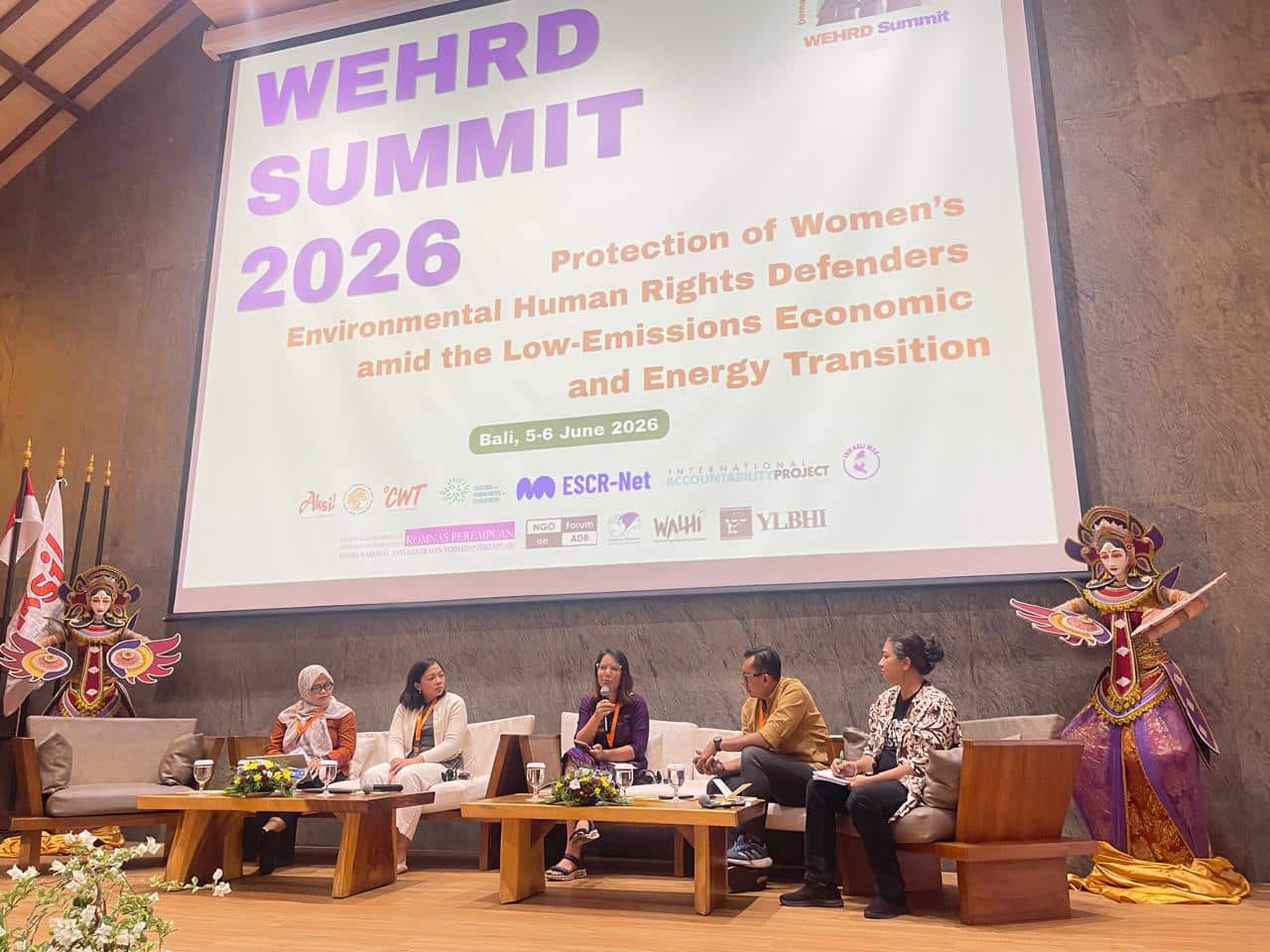
The Summit created an important space for collective reflection, strengthening solidarity, and strategizing at a time when grassroots and feminist movements across Indonesia are facing escalating threats, in particular state and corporate violence and culture of impunity, while standing on the frontlines of struggles for environmental and gender justice.
Across Indonesia, grassroots women particularly testified about what these extractive projects and so-called energy transition look like in their communities. While governments, corporations, and international financial institutions present these projects as solutions to the climate crisis, women described a different reality including land taken without consent, forced displacement, rivers polluted, livelihoods destroyed, and communities divided. They highlighted how National Strategic Projects continue to vastly expand, concentrating power and wealth in the hands of corporations while shifting the social and environmental costs onto women, Indigenous Peoples, peasants, fisherfolk, and other frontline communities amid the worsening climate catastrophe.
A central focus of the Summit was exposing the role of development banks, investors, and corporations in enabling these harms. Participants of the Summit denounced how institutions such as the World Bank, the Asian Development Bank (ADB), and the Asian Infrastructure Investment Bank (AIIB) continue to finance projects that contribute to forced displacement, environmental destruction, and human rights violations.
Grassroots women particularly challenged a climate finance system that treats communities as sacrifice zones and nature as a commodity while allowing perpetrators to continue profiting from it. They reaffirmed that climate finance cannot be considered just when it facilitates land grabbing, environmental destruction, and the criminalization of women defending their territories, while advancing top-down, profit-driven development models that sideline communities’ own visions and priorities for development.
The Summit also examined the protection mechanisms available to women defenders. Participants reaffirmed that protection must move beyond reactive responses and address the structural conditions that place Women Environmental and Human Rights Defenders (WEHRDs) at risk. Grassroots women emphasized the importance of community-based protection, feminist solidarity, collective care, and stronger accountability measures to prevent attacks before they occur.
As Ranjana Giri, Programme Officer at APWLD, noted, protecting WEHRDs also means guaranteeing the rights that enable them to continue defending their territories.
“Protecting Women Environmental and Human Rights Defenders means recognizing the specific risks they face and ensuring they can defend their lands, access gender-responsive climate finance, seek effective remedies, and meaningfully lead climate action. Strengthening their rights is essential to achieving climate justice.”
Just and equitable transition must address historical inequalities rooted in the realization of women’s human rights, self-determination, and Free, Prior, and Informed Consent (FPIC). It must confront corporate capture and reject false solutions that prioritize profit while reproducing social and environmental harm.
The Women’s Summit concluded with a collective reaffirmation that protecting WEHRDs is inseparable from confronting the root causes of the climate crisis, challenging impunity, and holding states, corporations, and financial actors accountable for the harms they cause. In the face of escalating attacks and deepening climate injustice, grassroots women emphasized that their resistance, feminist solidarity, and collective power are central to advancing gender and climate justice.
“When women organize, lead, and build solidarity across struggles, they create lasting systems of protection grounded in collective care, justice, and the right of communities to shape their own futures.” Carlo Manalansan of the International Accountability Project (IAP).
The Summit was convened by Aksi! for Gender, Social and Ecological Justice (Aksi!), together with national, regional, and international allies, including ESCR-Net, the International Accountability Project (IAP), and the Asia Pacific Forum on Women, Law and Development (APWLD).