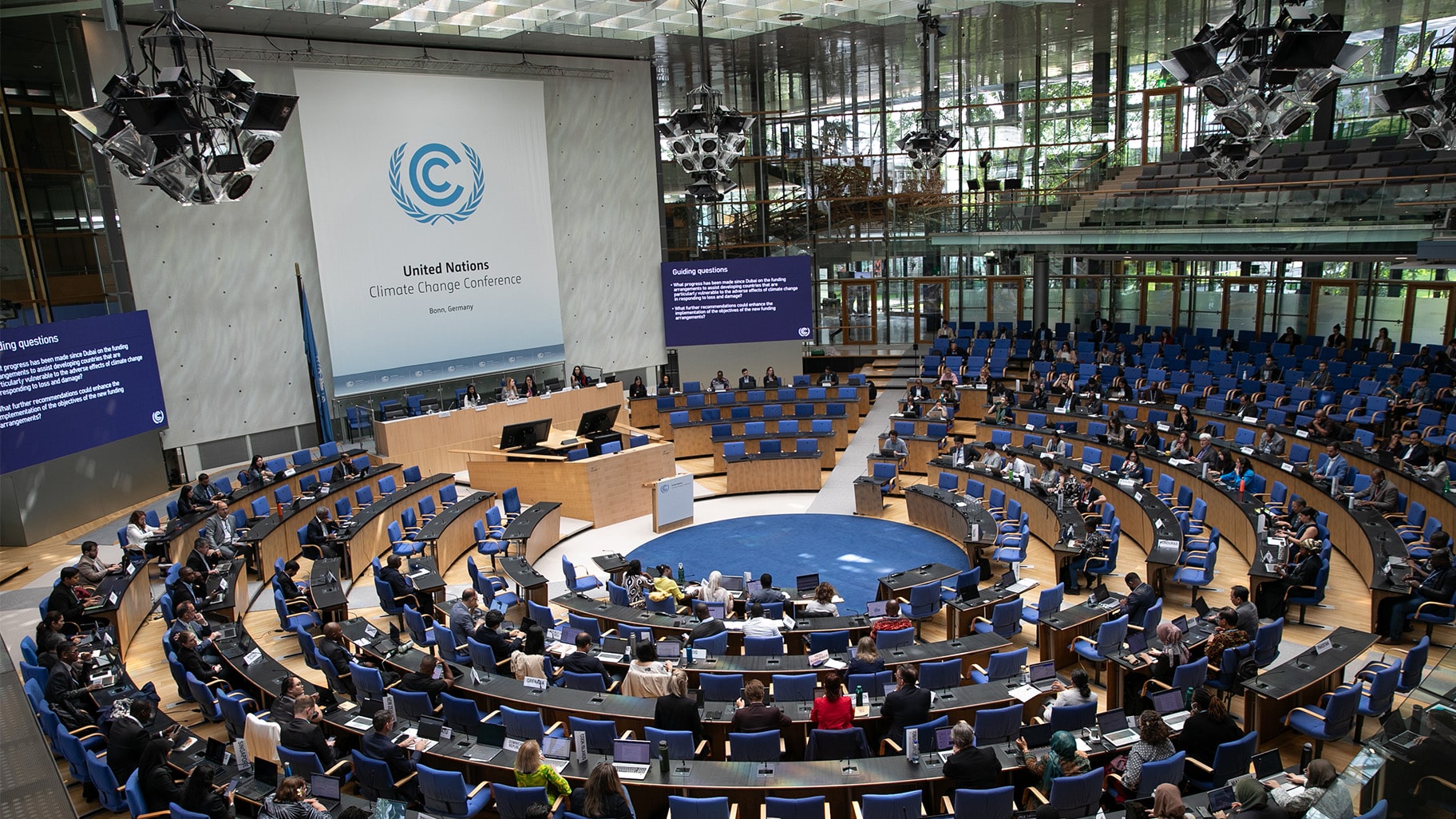
Across discussions on climate finance, just transition, and implementation, longstanding disagreements over historical responsibility, accountability, and the role of corporate power remained unresolved. Rather than narrowing these divides, the negotiations once again exposed the political shortcomings of the UN climate process, with Global North countries resisting efforts to confront the structural drivers of the climate crisis, including extractivism, militarism, and corporate capture.
Reparative Finance Beyond Militarism and Corporate Impunity
Climate finance remained the central fault line running through the entire Bonn session as Global North countries continue to refuse to treat finance as an obligation rooted in historical responsibility and reparative justice. By pointing to the reported USD 136 billion mobilized in 2024, Global North countries attempted to project fulfillment of their obligations. This narrative rang hollow against the inadequate USD 300 billion annual NCQG target by 2035, let alone the USD 1.3 trillion annual scale-up figure demanded by Global South countries wrapped in the Baku package which should not even mark the ceiling of ambition. The climate justice movements demand USD 5 trillion annually in public finance flowing from Global North countries. This is not a utopian figure but entirely within reach when measured against the wealth and fiscal capacity of Annex II countries alone.
The continuing Bonn deadlocks show that Global North countries continue to evade their obligations, particularly under the Article 9.1 of the Paris Agreement to provide just, adequate and non-debt-creating finance to Global South countries. Global North countries resisted progress whenever discussions moved from general promises to the concrete question of who must provide real financial flow and institutional backing needed to make adaptation, just transition and climate action possible.
Across the negotiations, many Global North countries, especially Canada, Japan, the United Kingdom, Norway, and the European Union resisted centering Article 9.1 as the legal anchor for finance and instead emphasizing on “streamlining” the existing climate-finance agenda, and mobilizing resources from “various sources”. In contrast, Global South country groups such as AOSIS stressed the quality, accessibility and predictability of finance, as well as the obligation of Global North countries to provide it.
As Ranjana Giri of the Asia Pacific Forum on Women, Law, and Development (APWLD) reflected:
SB64 failed to hold the Global North accountable for the reparative climate finance. In all the negotiation rooms, whether it is Global Goal on Adaptation, Belem Antalya Mechanism, Belem Gender Action Plan or Food and Agriculture, Global North countries were silent on means of implementation while hiding behind aid, investment and private finance. This is ultimately shifting the burden of climate action on global south countries with more debt trap. It is unfortunate that each year global climate talks become mere talk shows rather than delivering their promises of climate finance.”
At the same time, we cannot allow the narrow debate on finance alone to define reparations. ESCR-Net members have consistently argued that in addition to real finance flow from the Global North to the Global South, reparative justice must inherently acknowledge the right to reparations in its fuller sense. This includes restitution, remedy, guarantees of non-repetition, protection of peoples and defenders, and recognition of the non-economic and irreversible harms that cannot simply be monetized and compensated.
As part of the Anti-Militarism Subgroup, ESCR-Net also contributed to develop the Joint Anti-War Statement and recommendations that guided the collective work of the Human Rights and Climate Change Working Group (HRCC WG) throughout SB64. The statement sought to amplify demands for accountability from states and the military-industrial complex, whose violence, emissions, and systems of impunity are inseparable from the climate emergency. These are the same states that continue to pour public money into fossil fuel expansion, weapons industries, and illegal occupations while shielding military emissions and the military-industrial complex from accountability.
There is no just transition built on the fuel of genocide. Bonn once again treated energy trade as technical and unavoidable while states shielded the military-industrial complex and the corporate supply chains powering Israel’s genocide, apartheid and occupation. A transition that protects the traders, refiners, shippers and weapons industries profiting from dispossession is impunity rebranded. What reparative justice demands is binding regulation that subordinates energy governance to human rights and self-determination and an embargo on the energy sustaining genocide.” Ana Sánchez, Coordinator for the Global Energy Embargo for Palestine (GEEP)
ESCR-Net members stressed that meaningful climate action also depends on protecting civic space and ensuring the safe participation of those on the frontlines of the climate crisis. As Camilla Pollera of the Center for International Environmental Law (CIEL) noted:
Another round of climate talks has concluded, while too many critical voices remain absent from SB64. The shrinking of civic space, attacks and arbitrary detention of Indigenous Peoples and defenders around the world, including Daria Egereva and Natalia Leongardt, are deliberate attempts to silence those demanding climate justice and accountability. Protecting those on the frontlines of climate action and ensuring their safe participation are legal obligations and prerequisites for credible climate action. The UNFCCC must reflect this reality across its work.”
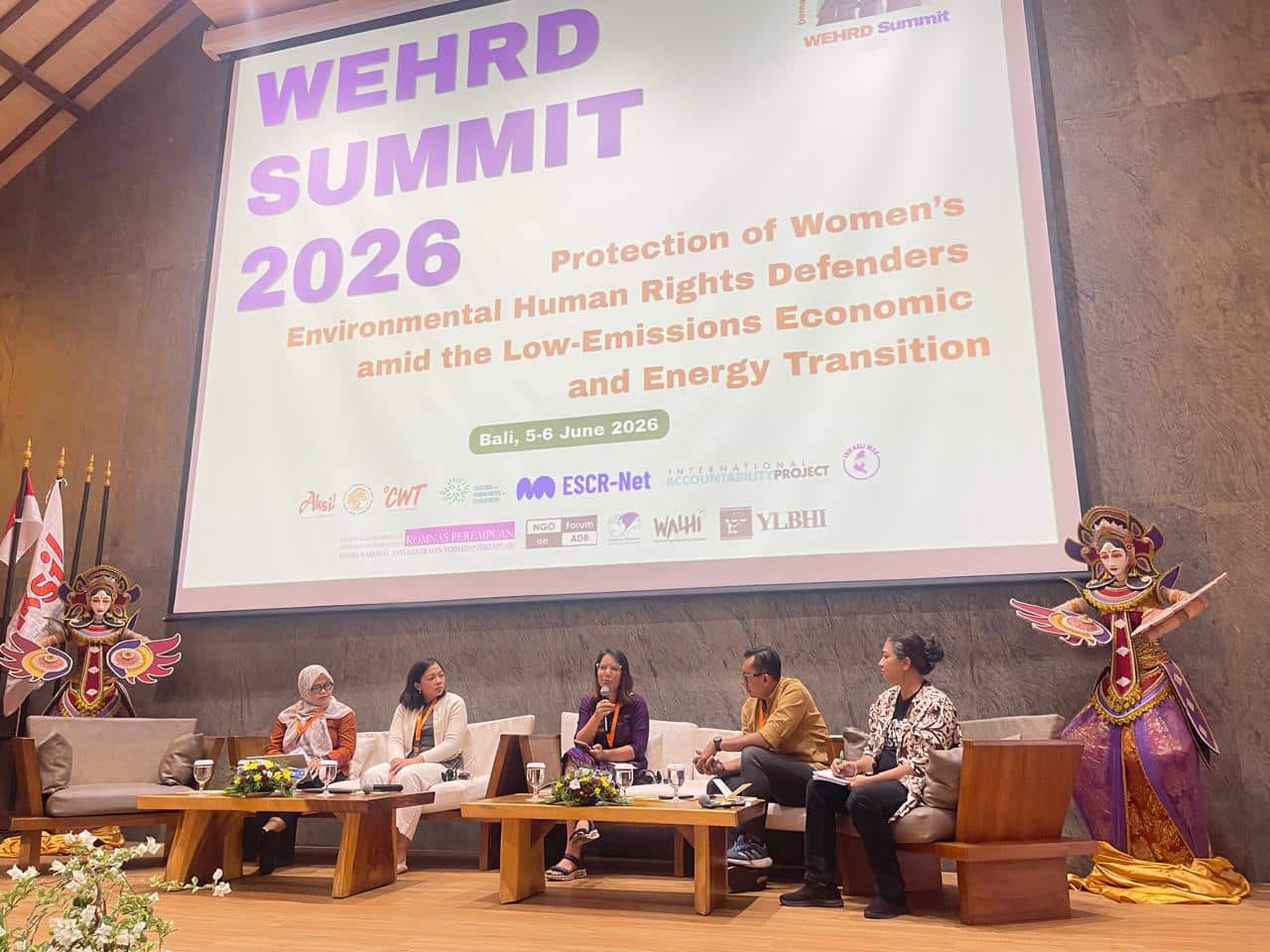
ESCR-Net members and allies also reaffirmed their political analysis across a range of events, including a side event held in the final hours of the negotiations addressing accountability through feminist lens on reparative finance and just transition. “What we need is to expand democratic control over resources and create the conditions under which peoples can exercise their right to self-determination and development” Jax Bongon, Ibon International at the ‘Demanding Accountability for Gender-Just Reparative Climate Finance and Just Transition’ side event at SB64
Just Transition Mechanism (JTM) at a Crossroads: Accountability or Corporate Capture
While the SB64 advanced text on the operationalization of the JTM, the outcome stopped short of securing the political substance required for a genuinely just and equitable transition. After securing one of the strongest operational human rights language ever at COP30, parties failed to resolve the central political question of whether the JTM will become a rights-based instrument grounded in accountability or whether it will be hollowed out into another technocratic UNFCCC process.
Global South country groups, including the LMDCs, G77 and China, and the African Group, consistently pushed for a JTM that moves beyond dialogue and voluntary cooperation. They stressed that the JTM must mobilize new, additional, predictable and public finance; support nationally determined and locally grounded just transition plans; and remain firmly anchored in equity and CBDR-RC. In its closing statement, Uruguay, speaking on behalf of the G77 and China, called specifically for an implementation-focused mechanism aligned with the needs, priorities and development realities of Global South countries. By contrast, Global North countries, including Canada, Japan and the United Kingdom, sought to reduce the JTM to a coordination mechanism operating within existing resources, while resisting proposals that could establish new financial obligations, dedicated support, or stronger accountability.
The JTM text further talks about inclusivity in general terms but does not institutionalize meaningful participation and decision-making power for workers, Indigenous Peoples, peasants, fishers, women, and other frontline communities in its governance. In its current shape, the emerging mechanism risks being another process-heavy UNFCCC platform unless it is anchored in binding commitments to public, accessible, grant-based and non-debt-creating climate finance, and reparations.
Once again the Global North fails to give their commitment to contribute for a robust financial instrument, leaving the Just Transition Mechanism underfunded and at risk of being symbolic. The human rights safeguards language is weak, raising concerns that vulnerable communities will continue to face disproportionate risks.” Budi Tjahjono, Franciscans International.
Bonn left unresolved peoples’ struggle for a just and equitable transition that does not reproduce the same systems of exploitation driving the worsening climate catastrophe. As we move toward the next battleground, ESCR-Net reaffirms our political analysis and demands set out in the joint submission to the UAE Just Transition Work Programme (JTWP) on the operationalization of the Just Transition Mechanism (JTM). JTM must be anchored in the guiding principles and must not cross the redlines identified by social movements as highlighted in the submission. This is essential to ensure that countries and communities in the Global South can pursue transitions that uphold human rights and are shaped by their own development priorities, rather than by corporate profit, debt, militarism, and geopolitical power.