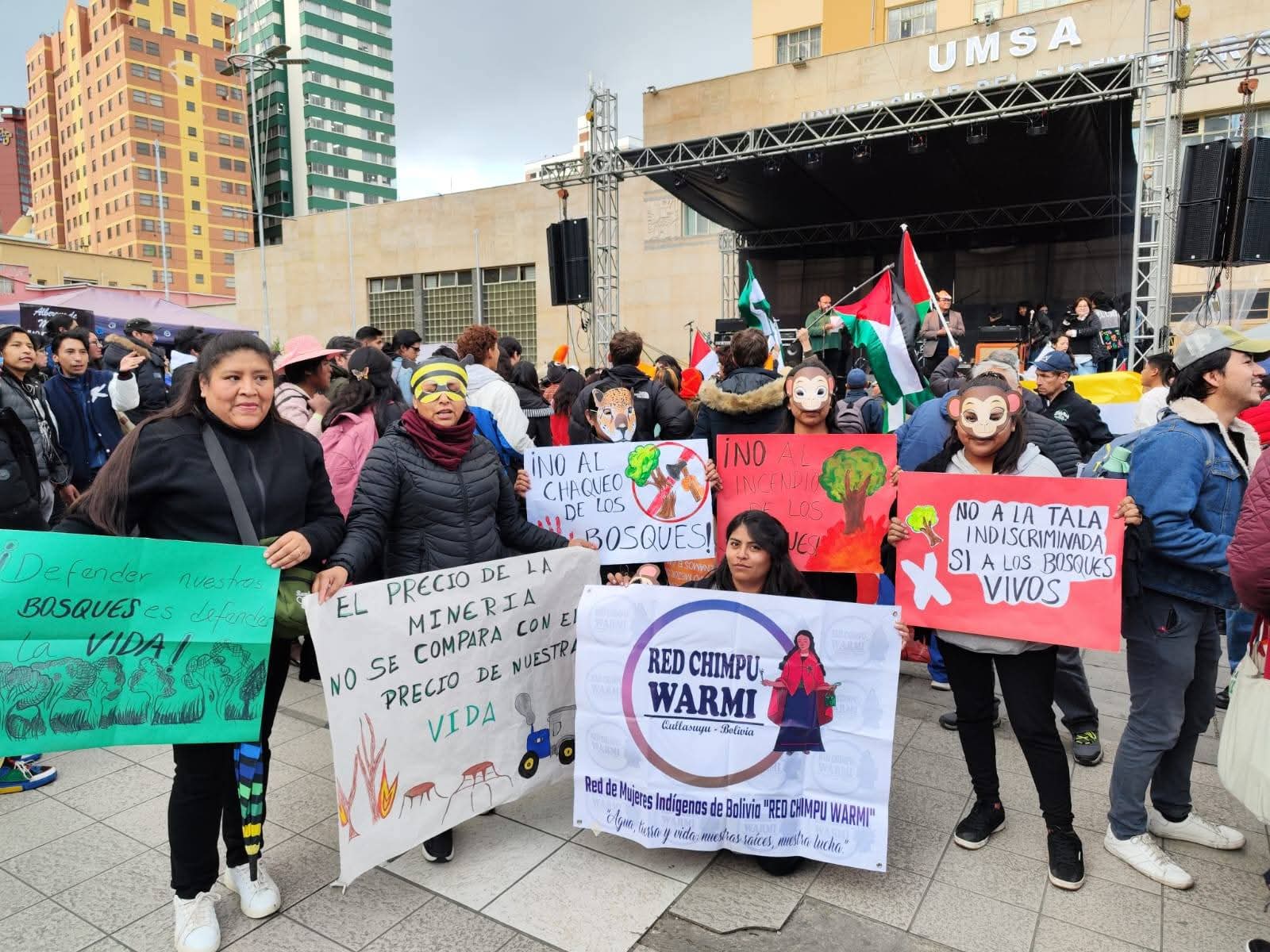
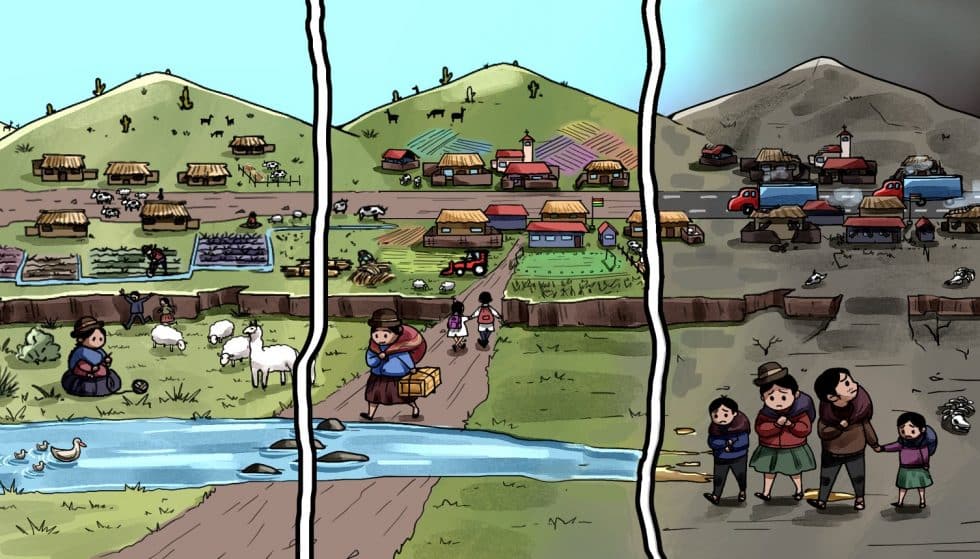
When the Chimpu Warmi Network joined the initiative, communities in the Jach’a Marka Tapacarí Cóndor Apacheta (JMTCA) Indigenous Territory, in Bolivia’s Oruro department, were facing increasing pressure from mining activities that threatened their natural resources, livelihoods, and systems of community governance.
At the same time, limited access to information, widespread misinformation, and alliances between corporate actors and political power holders made it increasingly difficult to defend collective rights. Decisions affecting the territory were often made without the meaningful participation of communities, while Indigenous women’s voices remained largely absent from decision-making spaces.
In response, women leaders from the Chimpu Warmi Network launched a research process led by the community itself.
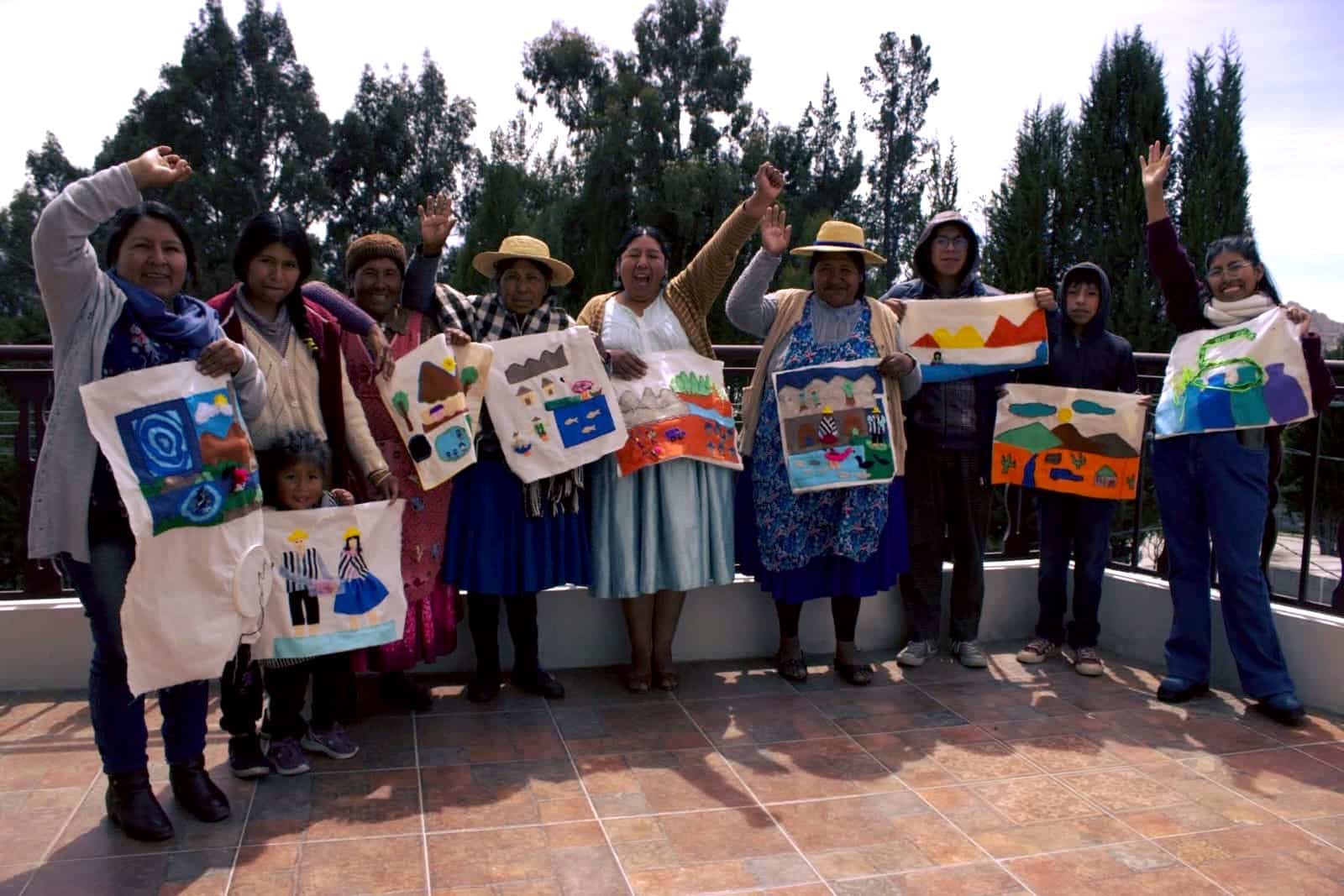
Using participatory action research methodologies promoted by ESCR-Net’s Community-Led Research Hub, women, youth, girls, and boys actively participated in every stage of the process. Together, they developed research questions, gathered information, analyzed findings, and built strategies to use the evidence generated to defend their rights.
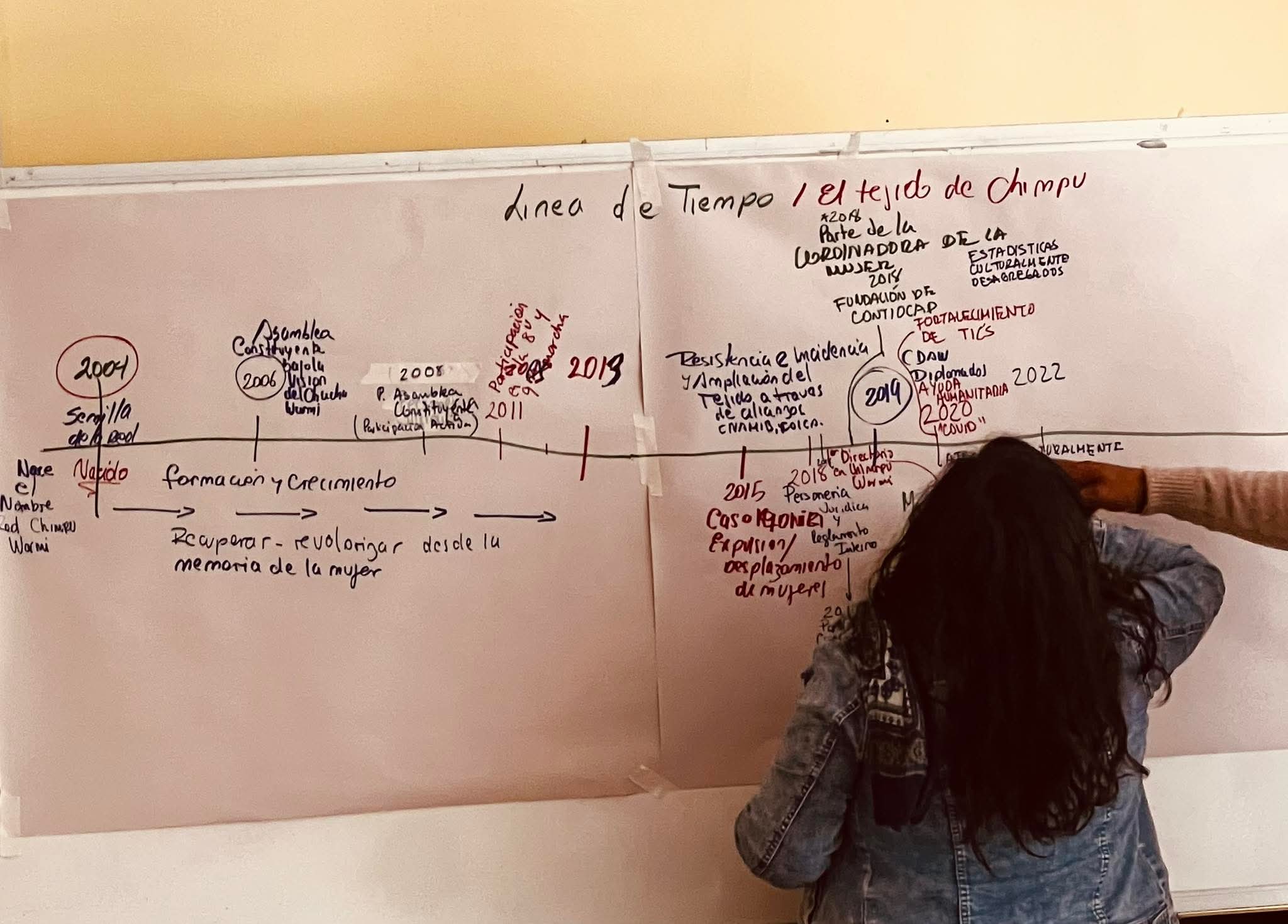
The research combined historical archives, community mapping, focus groups, testimonies, and audiovisual materials to reconstruct the history of the territory and document the impacts of mining activities. The process helped organize years of scattered information, recover collective memory, and challenge the historical erasure of Indigenous women’s knowledge and experiences. It also generated community-owned evidence about the patterns of dispossession and corporate capture affecting the territory.
The findings were significant. The research documented the illegal occupation of part of the territory by the mining company NILZER SRL, identified violations of the right to free, prior and informed consultation, and exposed how certain institutional decisions favored the expansion of extractive activities over the rights of Indigenous Peoples.
Yet one of the most important outcomes was less tangible: a transformation in the community’s relationship with knowledge itself.
By recovering historical documents, systematizing information, and producing their own evidence, the women leaders of the Chimpu Warmi Network strengthened the community’s collective capacity to understand what was happening in their territory and respond in an organized way. In a context where external actors controlled information and shaped dominant narratives about the territory, community knowledge, memory, and lived experience became powerful tools for movement building, collective action, and self-determination.
The process also helped make visible the historical role of Indigenous women in defending their territories and strengthened their leadership within the community.
As Betty Villca, a member of the Chimpu Warmi Network, explains:
This has been a historic milestone in the Indigenous emancipation movement. The territory is stronger and more aware of the need to defend our land. The resistance continues and the struggle goes on. Women, youth, and children have become decisive actors in this defense.”
The evidence produced during the research was later used to support legal actions promoted by the organization and Indigenous authorities. In this context, the Chimpu Warmi Network filed a Popular Action before Bolivia’s Constitutional Court, which ordered the suspension of mining activities and mandated a process of free, prior and informed consultation. The suspension remains in force and extractive activities have not resumed in the territory.
Materials produced during the process — including community maps, timelines, videos, and educational resources — continue to be used to strengthen community organizing, counter misinformation, and pass knowledge on to younger generations.
Over time, the experience extended beyond the local level. The Chimpu Warmi Network brought its findings to national advocacy spaces, shared lessons with other communities affected by extractive activities, and contributed to broader debates in Bolivia on territorial rights, free, prior and informed consultation, and corporate accountability.
The community also expanded its strategy into the political sphere, participating in municipal elections and securing Indigenous representation in local government, where community leaders have been able to prevent new mining authorizations.
These actions helped halt mining activities and strengthen demands for respect for the community’s collective rights. The experience demonstrates that community-led research can be far more than a tool for producing knowledge. It can strengthen leadership, consolidate organizing processes, and expand communities’ capacity to influence decisions that affect their lives and territories.
The experience of the Chimpu Warmi Network reflects the transformative potential of co-creating knowledge with those who directly experience human rights violations. Beyond producing evidence, Reclaiming Our Stories helped strengthen collective capacities, recover memories of resistance, and create new tools to defend the rights of peoples and communities.
Today, several years after the project concluded, the experience and lessons of the Chimpu Warmi Network continue to inspire movements and organizations across ESCR-Net. Their journey demonstrates that when communities’ ancestral and contemporary knowledge is centered and connected to political action, it can become a source of collective power that strengthens and opens new pathways for territorial defense and social justice.