The first article in this series explored how the post-Cold War international order is giving way to a more fragmented and unstable global landscape. As geopolitical competition intensifies, neoliberalism faces mounting political, ecological, and economic crises, reshaping the conditions under which communities defend their rights. Building on that analysis, this article asks a central question: what role does violence play in sustaining today’s political and economic order? Rather than treating violence as the consequence of instability or conflict, ESCR-Net members have developed a framework that examines how violence functions within broader systems of power and accumulation.
Across the Network, members understand attacks on human rights defenders, militarization, forced displacement, xenophobia, gender-based violence, and shrinking civic space not as isolated or purely national phenomena, but as interconnected expressions of a global political and economic system facing a profound crisis of legitimacy. Looking beyond individual acts of repression reveals the structures of power that sustain them. It is through years of collective analysis, movement exchange, and political education that ESCR-Net has developed what we call the Political Economy of Violence (PEV) as a shared framework for understanding these dynamics.
What is the Political Economy of Violence?
The Political Economy of Violence challenges the idea that violence is simply the result of war, political instability, or institutional failure. Instead, it understands violence as a constitutive feature of capitalist development. From colonial conquest and slavery to contemporary extractive industries, organized violence has long been used to dispossess communities, discipline labor, and secure access to land, natural resources, and markets. As Basma Eid, ESCR-Net’s Campaign and Membership Director explains, “violence has always been fundamental to accumulation, to the project of capitalism.”
As the neoliberal model enters deeper political, ecological, and economic crises, violence is becoming an increasingly central tool for sustaining extraction and preserving the existing order.
Drawing on years of collective reflection across regions and movements, ESCR-Net members have developed the Political Economy of Violence as a shared analytical framework. It defines the Political Economy of Violence as the violent exercise of power—physical, institutional, or symbolic—by non-state actors, often acting in collusion with the state, to secure economic benefit within the capitalist system at the expense of working people and impoverished communities.
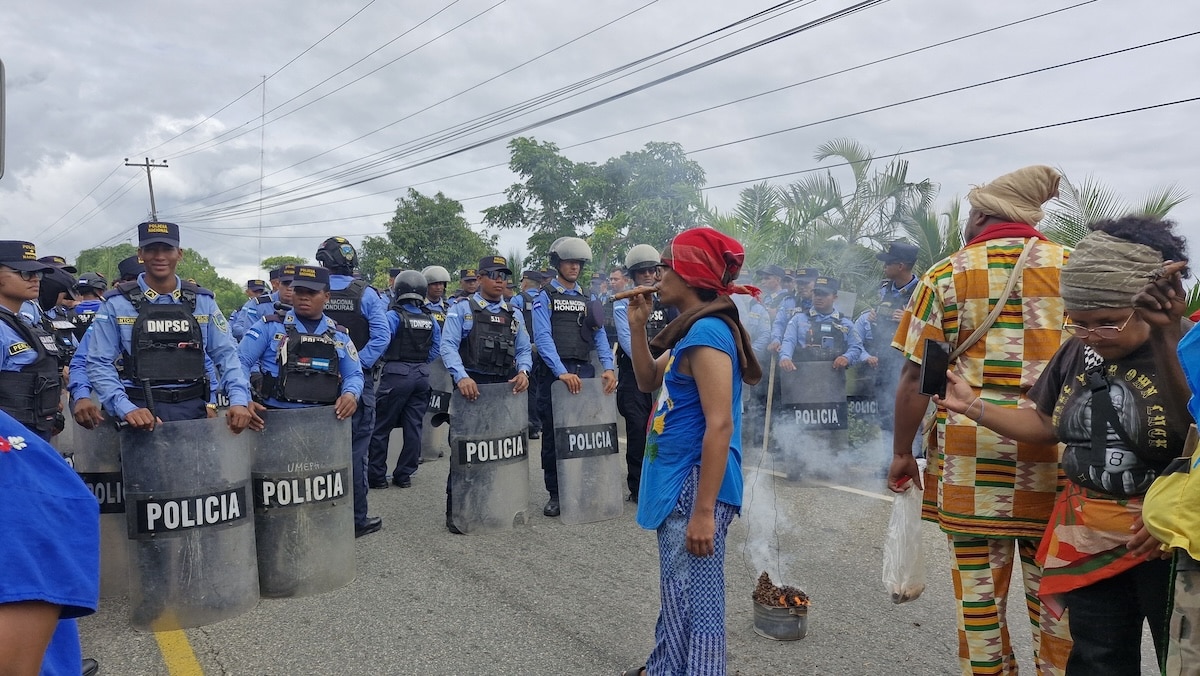
Rather than asking only how violence occurs, the framework asks who benefits from it. It shows how states, corporations, private security companies, armed groups, criminal organizations, and other non-state actors increasingly work together to protect systems of extraction and accumulation. Across the Network—from Palestine and Sudan to Mexico and Honduras—members have documented how these interconnected actors suppress resistance while defending political and economic power.
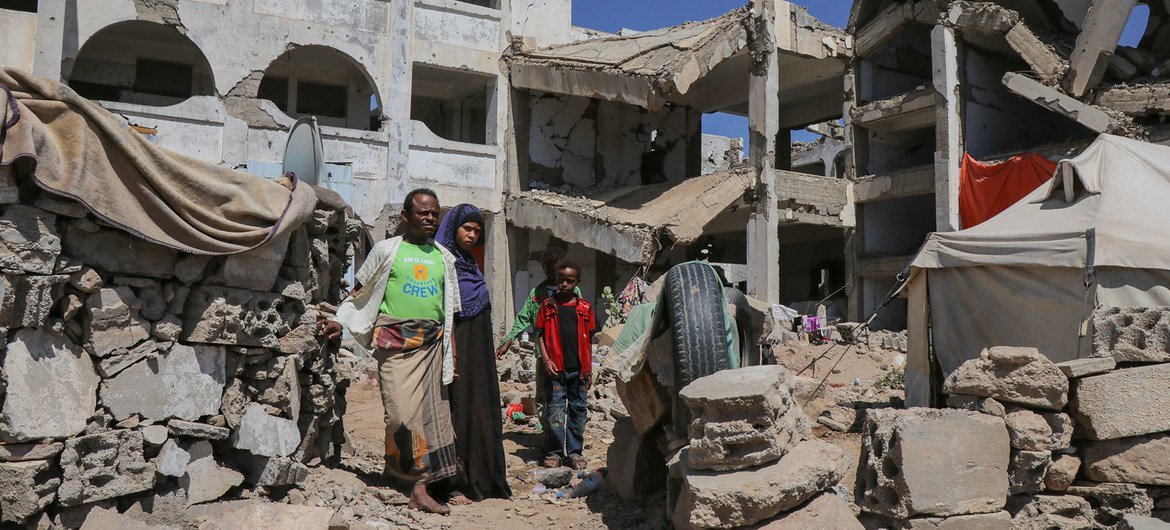
The framework also reveals violence as a system rather than a series of isolated events. In Yemen, Rasha Jarhum of Peace Track Initiative, described how political concentration, competition over natural resources, international intervention, and war economies reinforce one another, making violence both a driver and a consequence of conflict. As she observed, “The Political Economy of Violence was one of the triggers of the conflict in my country, but it is also one of the reasons why the conflict continues.”
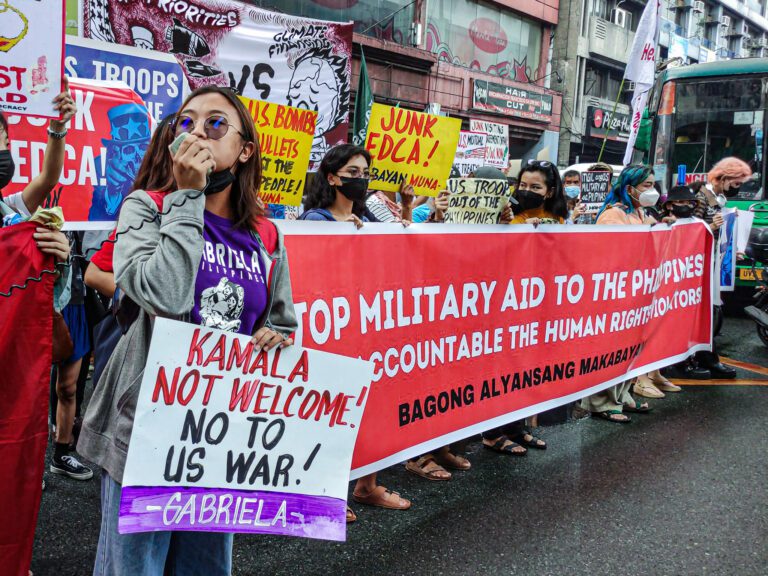
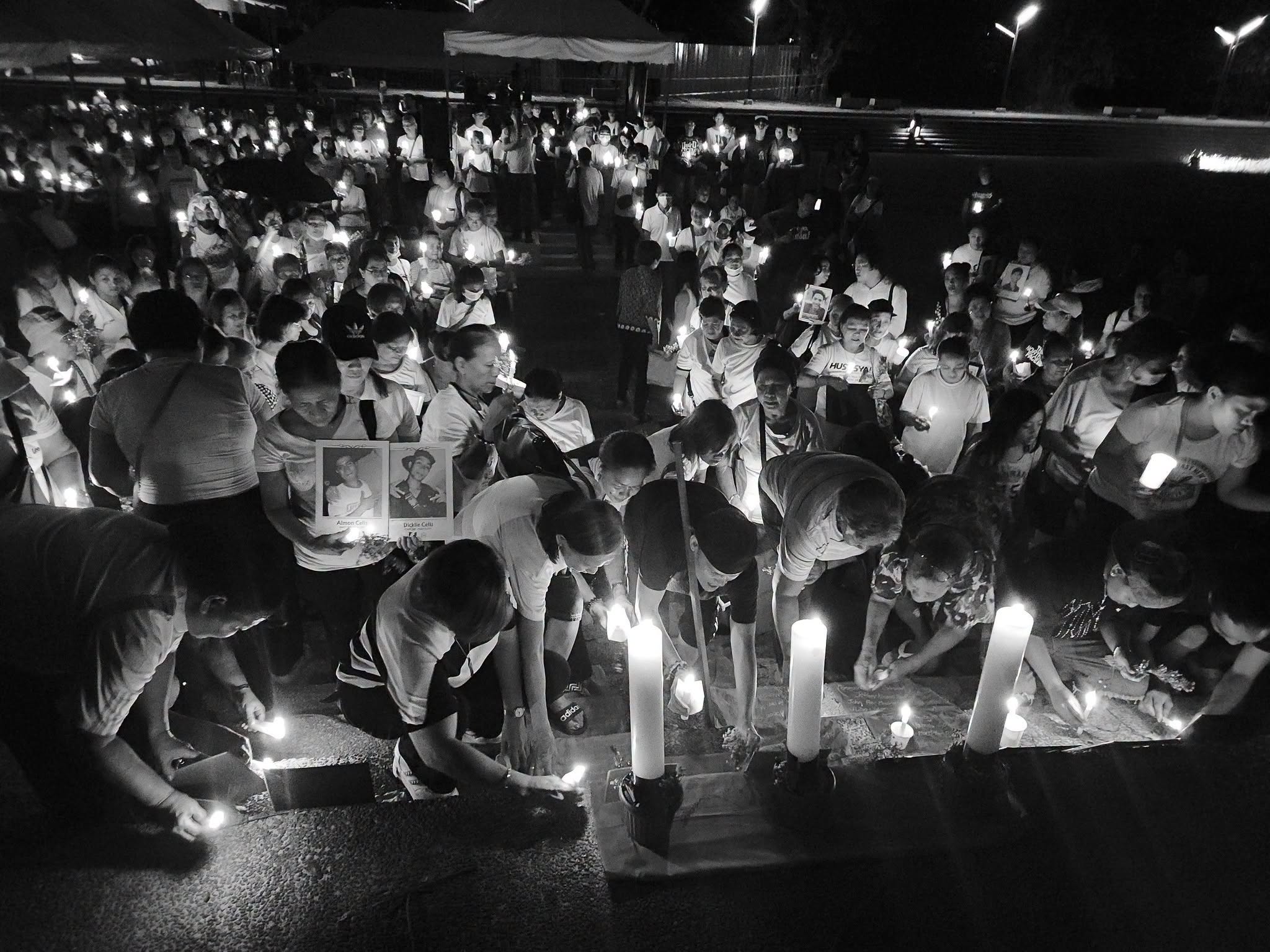
This systemic perspective also highlights historical continuity. Cristina “Tinay” Palabay, Secretary General of Karapatan (Philippines), argued that contemporary militarization cannot be understood apart from colonialism or today’s geopolitical struggles. Counterinsurgency, surveillance, anti-terror laws, and the criminalization of dissent continue to protect political and economic interests while reproducing unequal power relations. As she noted, “In many ways, our present is also our past.”
Read: Our Present Is Our Past: Documenting the Political Economy of Violence in the Philippines
Finally, the framework emphasizes that violence is sustained through intersecting systems of oppression, including racism, patriarchy, militarism, religious fundamentalism, and dominant media narratives. As Damilola Idris, BAOBAB for Women’s Human Rights (Nigeria), argued, patriarchy is not a parallel form of oppression but a central mechanism through which the Political Economy of Violence is organized and reproduced.
Manufacturing Consent for Violence
The Political Economy of Violence also examines how violence is made to appear legitimate and necessary to maintain national security, public order, development, or economic growth. These narratives conceal the political and economic interests that violence ultimately serves.
Across the Network, members have identified similar patterns in very different contexts. Red-tagging, anti-terror legislation, and media campaigns portraying social movements as “anti-development” or “extremist” normalize repression while legitimizing attacks against communities defending land, labour, housing, and collective rights.
Reflecting on xenophobic violence in South Africa, S’bu Zikode, Founding President of Abahlali baseMjondolo, rejected the idea that such violence emerges spontaneously. “People did not wake up one day hating migrants,” he argued. Instead, political and economic elites cultivate xenophobia to redirect public frustration away from structural inequality and toward migrants. His intervention shows that violence depends not only on coercion, but also on narratives that manufacture consent for exclusion and repression.
Collective Action to Respond to the PEV
The Political Economy of Violence offers more than a framework for interpreting contemporary crises. For ESCR-Net members, it also provides a shared political language for understanding how struggles that often appear disconnected are shaped by common structures of power, extraction, and accumulation. By making these connections visible, the framework helps movements build solidarity, strengthen collective strategies, and respond to violence as a shared political challenge rather than as a series of isolated crises.
This shared analysis also transforms how movements document violence. Héctor Berríos, member of MUFRAS-32 (El Salvador), emphasized that documentation is not simply about recording abuses. Its political value lies in exposing the relationships between corporations, state institutions, financial interests, and other actors that benefit from violence, making visible the structures that sustain repression and dispossession.
Recognizing these shared structures also strengthens international solidarity. Communities resisting militarization, extractivism, forced displacement, criminalization, and xenophobia increasingly recognize that they are confronting interconnected systems rather than isolated national problems. Building a common analysis enables movements to learn from one another, coordinate strategies, and strengthen collective resistance across regions.
As S’bu Zikode, President of Abahlali baseMjondolo, reflected, escalating repression should not always be interpreted as evidence that authoritarian forces are becoming stronger. In many places, violence intensifies because communities are becoming better organized and more capable of challenging entrenched systems of power. “Our ability to organize and resist has provoked an intensification of repression across the world… If we remained passive, there would not be this escalation of violence.”
Ultimately, the Political Economy of Violence helps movements understand not only how violence operates, but how to confront it collectively. By revealing the structures that connect struggles across regions, it lays the foundation for stronger solidarity and collective action to challenge the systems that produce violence.