Share
Thursday, July 16, 2026

As shifts in global power reshape the international order, movements are confronting new forms of militarization, extraction, and corporate power. The first in a series emerging from ESCR-Net’s Political Education Learning Series, Power, Repression, and Collective Struggle in a Changing World System, this article draws on collective reflections to explore what these transformations mean for struggles for economic, social, cultural, and environmental justice across regions.

Share
pic-by-altm-03-768×576-1
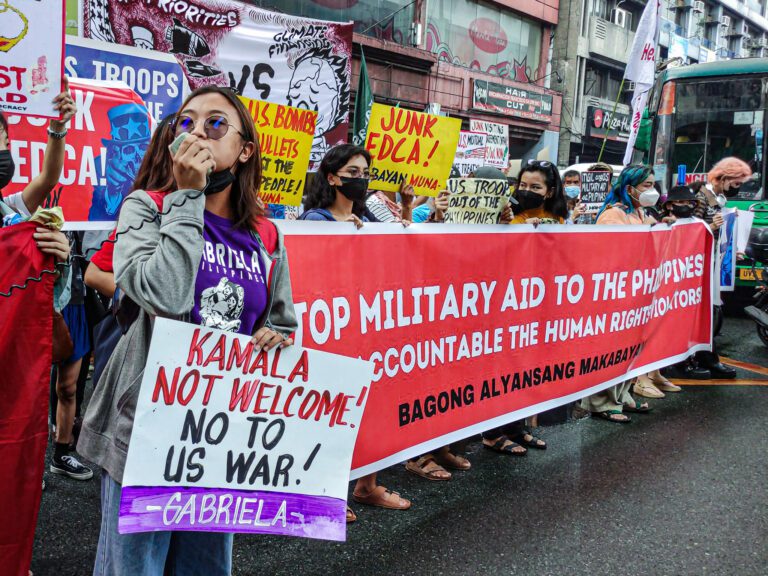
Protesters demonstrate during U.S. Vice President Kamala Harris's visit to the Philippines in 2022. Photo: Altermidya.

For much of the post-Cold War period, the international order was shaped by a unipolar system dominated by the United States. Today, that order is becoming increasingly unstable. The relative decline of U.S. global dominance, the rise of China, growing geopolitical competition, regional conflicts, and the weakening of multilateral institutions are reshaping the global political landscape.

These developments are often understood as separate crises. Yet together they point to something more profound: the world is undergoing a period of systemic transition that is reshaping the conditions under which communities defend their territories, exercise their rights, and organize for justice.

Violence, displacement, militarization, corporate capture, extractive development, and democratic erosion are interconnected manifestations of these broader political and economic shifts.

A Crisis Beyond Neoliberalism

Much of today’s political debate explains global instability through familiar diagnoses: the failures of neoliberalism, growing geopolitical competition, democratic erosion, or the accelerating climate crisis. Each captures an important part of the present moment. Together, however, they point toward a broader transformation.

Gustavo Castro Soto, founder and coordinator of Otros Mundos Chiapas, argues that the current moment cannot be understood simply as another economic crisis or another cycle of geopolitical instability.

We are living through a systemic crisis in which the old has not yet finished dying, and the new has not yet been born.”

For Gustavo, the crisis extends far beyond neoliberal economic policy. It encompasses the political, military, financial, industrial, ideological, and cultural structures that have sustained capitalist hegemony over the past century.

We have entered a crisis in which the entire architecture of the capitalist system—its military, political, commercial, industrial, financial, cultural, ethical, and ideological foundations—is in crisis.”

This perspective shifts the focus away from individual crises toward the broader system that connects them. Rather than treating economic instability, militarization, ecological breakdown, or democratic erosion as separate developments, it suggests that they should be understood as part of a wider transformation of the global order.

The post-Cold War unipolar order is giving way to a more unstable and contested international landscape. Yet this transition should not be mistaken for a linear movement toward greater democracy or justice. Instead, movements increasingly confront new forms of geopolitical competition, intensified extraction, expanding militarization, and deepening crises of governance.

Understanding these shifts is essential because they shape the conditions under which movements organize, defend rights, and confront corporate and state power.
A Changing World Order, the Same Systems of Violence

Climate-activists
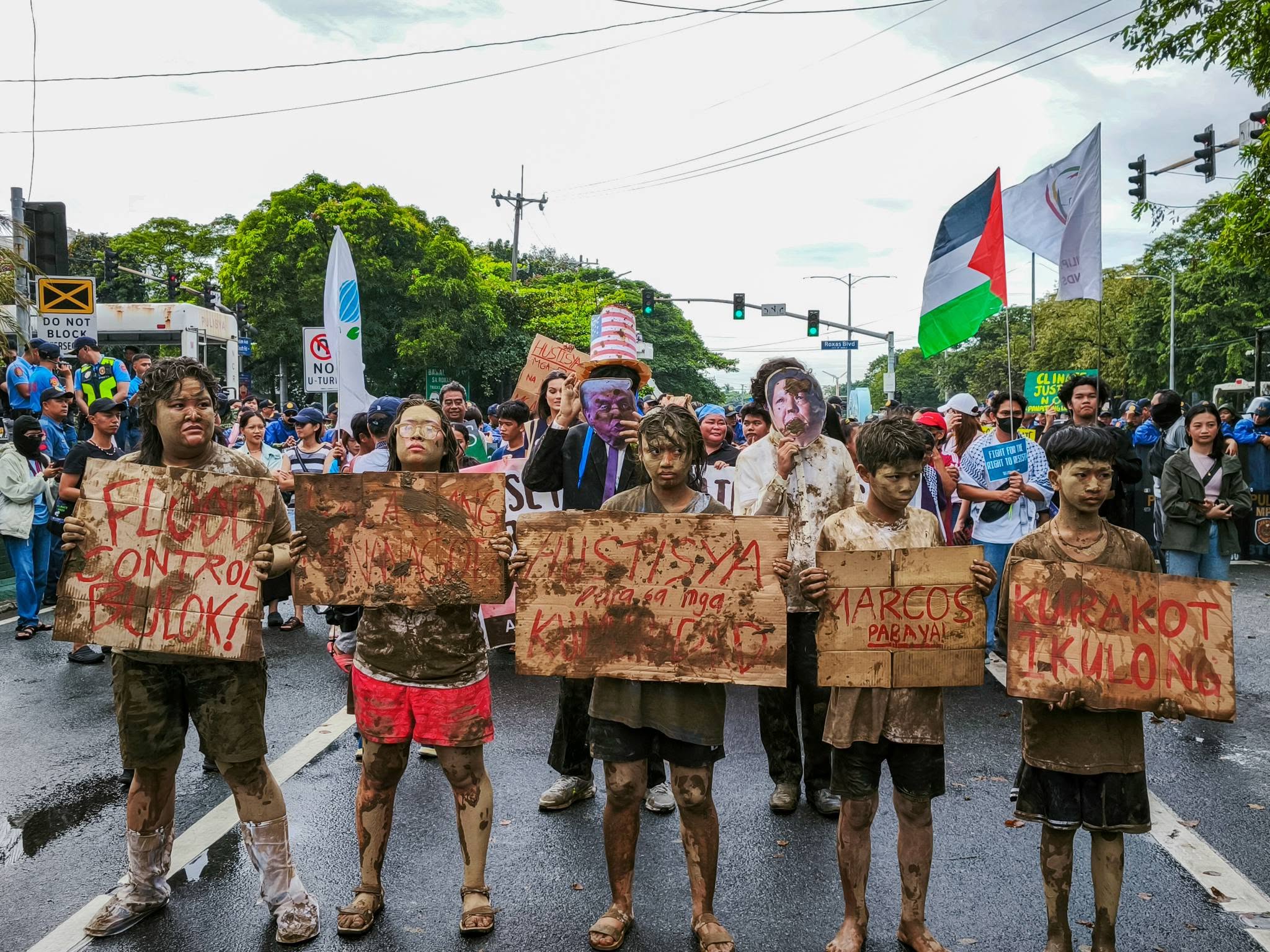
Climate activists brave the rains in Manila City for a protest commemorating the Global Day of Action for Climate Justice. Photo: Altermidya

The weakening of U.S. global dominance has often been interpreted as evidence that the international order is becoming more balanced. Yet a more multipolar world does not necessarily produce more just outcomes.

Azra Talaat Sayeed, anti-imperialist feminist activist, who serves as the Secretary General of the International League of Peoples’ Struggle (ILPS), member of the Asia Pacific Forum on Women Law and Development (APWLD)  and Executive Director of Roots for Equity, argues that today’s defining geopolitical dynamic is the growing competition between imperial powers.

The most critical power struggle happening right now is the inter-imperialist competition between the United States and China.”

Her analysis challenges movements to move beyond narratives that celebrate multipolarity as inherently emancipatory. Rather than choosing between competing imperial projects, she argues for an independent political analysis rooted in the struggles of workers, Indigenous Peoples, peasants, women, and communities defending land and life.

As Azra explains, imperialism remains fundamentally about “gaining control… over markets, the labor force, [and] our resources.”

The question is not simply how power is redistributed internationally, but how geopolitical competition continues to shape extraction, labor, and access to natural resources. The actors may change, but the underlying dynamics of capitalist accumulation often remain consistent.

These transformations are already reshaping the conditions under which movements organize across regions. They also help explain why violence has become an increasingly central mechanism for maintaining systems of accumulation and political control.

Rather than viewing violence as a breakdown of political order, participants examined forced displacement, militarization, criminalization of dissent, surveillance, settler colonialism, and extractive development as interconnected strategies for securing territory, labour, natural resources, and geopolitical influence. As Gustavo Castro summarizes: “As consensus declines, coercion increases.”

This perspective helps explain why communities confronting mining projects, defending land rights, resisting displacement, or challenging extractive development frequently experience similar forms of repression despite their very different contexts.

The Hidden Cost of the Energy Transition 

Salar_de_Atacama,_Chile_ESA386674
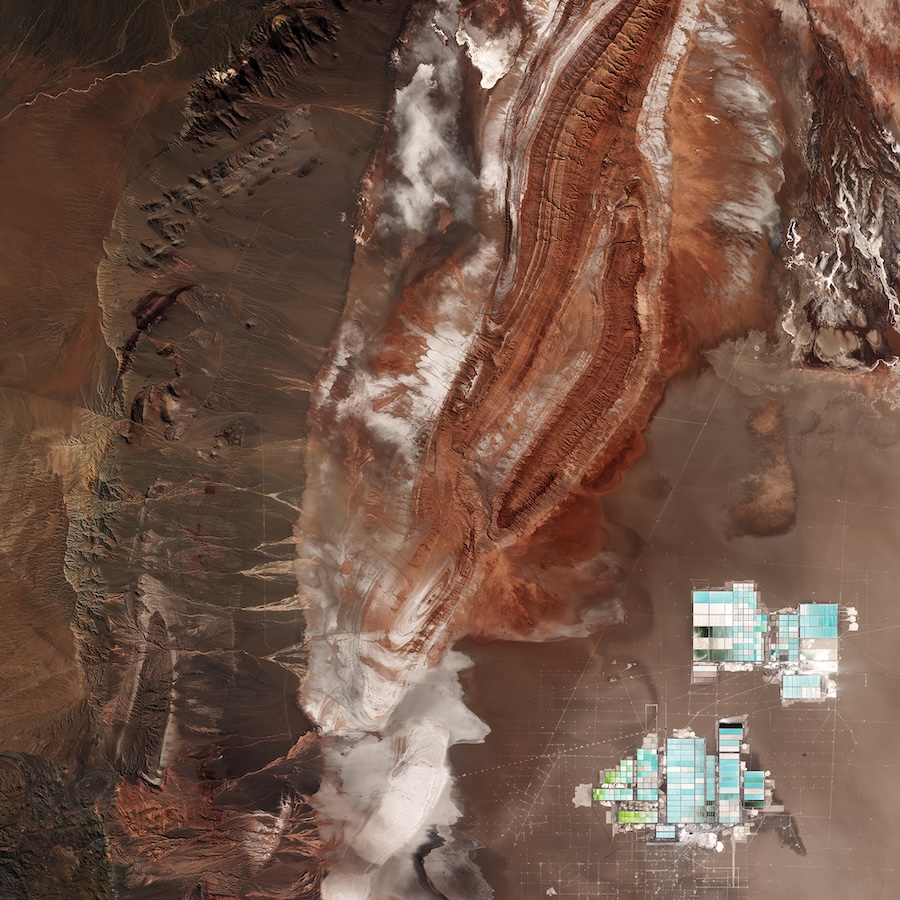
Lithium evaporation ponds in the Salar de Atacama, Chile. Growing demand for critical minerals is intensifying pressure on territories at the heart of the global energy and technological transitions. Photo: European Space Agency.

The growing dependence on critical minerals such as lithium, copper, cobalt, and rare earth elements has made them strategic resources for the development of artificial intelligence, renewable energy, digital infrastructure, and military technologies. Far from reducing geopolitical competition, technological change is creating new forms of violent extraction in territories where these resources are concentrated.

As Azra Talaat Sayeed observed, “critical minerals are now the oil of the twenty-first century.”

The comparison highlights an important shift in the global economy. Technologies frequently presented as innovative or essential to the green transition cannot be understood in isolation from the extractive economies on which they depend. The competition surrounding artificial intelligence, clean energy, and digital infrastructure is also a competition over land, resources, and geopolitical influence.

For Betty Vilca, of Red Chimpu in Bolivia, this connection is often dangerously overlooked. Artificial intelligence is not immaterial, as it depends on critical minerals such as lithium and copper, much of which is extracted from Indigenous territories in Bolivia, Chile, and Argentina. 

Connecting Struggles Across Movements

One of the central lessons to emerge from the first session of the Political Education Learning Series is that if the systems driving today’s crises are interconnected, our struggles cannot remain isolated from one another.  Housing, debt, militarization, migration, extractivism, climate justice, and the closing of democratic space are often treated as separate issues. Yet the forces shaping them—from corporate power and capitalist accumulation to geopolitical competition and militarization—frequently intersect. Understanding these connections can help movements identify common ground and build strategies across sectors and regions.

Participants repeatedly emphasized that movements do not necessarily lack information. Rather, the challenge lies in translating existing knowledge into accessible political education, strengthening collective analysis, and developing strategies that respond to today’s changing global landscape.

Building this shared understanding is not simply an intellectual exercise. It is essential for strengthening collective action in the face of rapidly shifting geopolitical and economic realities. As Azra Sayeed concluded,

Our collective power is the only way to survive, and we need to come together more and more.”

***

The next articles in this series will explore the systems driving today’s political economy of violence and examine how movements are building collective resistance, solidarity, and alternative pathways toward justice.