The International Network for Economic, Social and Cultural Rights (ESCR-Net), together with the Asociación Civil por la Igualdad y la Justicia (ACIJ) and the Centro de Estudios Legales y Sociales (CELS), formally requested that the United Nations Special Rapporteur on the Right to Education, Farida Shaheed, intervene as amicus curiae before Argentina’s Supreme Court in the case concerning public university funding.
The organizations argue that Argentina is undergoing a severe regression in economic, social and cultural rights, particularly regarding the right to higher education. According to the submission, the government of Javier Milei is pursuing a deliberate policy of defunding the public university system, in violation of constitutional and international obligations related to the right to education.
Since 2023, university funding has suffered a real-term reduction of 36.4%; transfers to national universities have declined by 45.6%; and teachers’ salaries have lost approximately 32% of their purchasing power.
The request represents an unusual step within the international human rights system: it not only denounces the dismantling of Argentina’s public university system, but also seeks to directly activate the voice of the United Nations within an ongoing domestic judicial dispute. While UN Special Procedures can intervene as amicus curiae, such interventions are rare. The organizations’ request reflects the depth of Argentina’s institutional crisis, marked by an Executive Branch unwilling to engage in dialogue and the increasing use of the courts as a last resort to compel the government to comply with the law. Argentina’s university crisis has escalated into an international controversy over democracy, austerity, and human rights.
The submission also denounces the extreme deterioration of student scholarships, the collapse of scientific funding, and the disproportionate impact of the cuts on low-income students, women with caregiving responsibilities, Indigenous Peoples, persons with disabilities, trans and non-binary people, migrants, and communities located far from major urban centers.
The Argentine Supreme Court is all set to rule on whether Congress’ apportionments intended to preserve the financial sustainability of public universities in Argentina must survive President Milei’s chainsaw. The ESCR-ecosystem cannot stand idle. The Argentine Supreme must not only counteract executive overreach in Argentina by reestablishing Congress’ apportionment authority, but more importantly, fully implement investment in public education as a tool to bolster social justice and human dignity,” Rodrigo Robles, attorney on the International Work Team at CELS.
At the center of the dispute is the government’s refusal to comply with Law No. 27.795 on University Funding and Salary Recovery. Although the law was approved by Congress and enacted after lawmakers rejected the presidential veto, the Executive Branch refused to implement it. Federal courts later ordered its enforcement through precautionary measures, yet the government continued to challenge the rulings and brought the case before the Supreme Court.
According to the organizations, this situation violates the International Covenant on Economic, Social and Cultural Rights (ICESCR), which prohibits retrogressive measures and obliges States to use the maximum of available resources to progressively realize economic, social and cultural rights. This is particularly significant given that the decision to cut university funding is taking place in a context where public debt servicing has increased dramatically — rising by 20.6% compared to 2025, amounting to more than double the total university budget — while the State has simultaneously chosen to eliminate existing sources of public revenue, thereby creating the very resource scarcity it later invokes to evade its obligations.
The petition further warns that the Argentine government is prioritizing austerity measures, tax cuts benefiting high-income sectors, and public debt payments while slashing resources allocated to higher education.
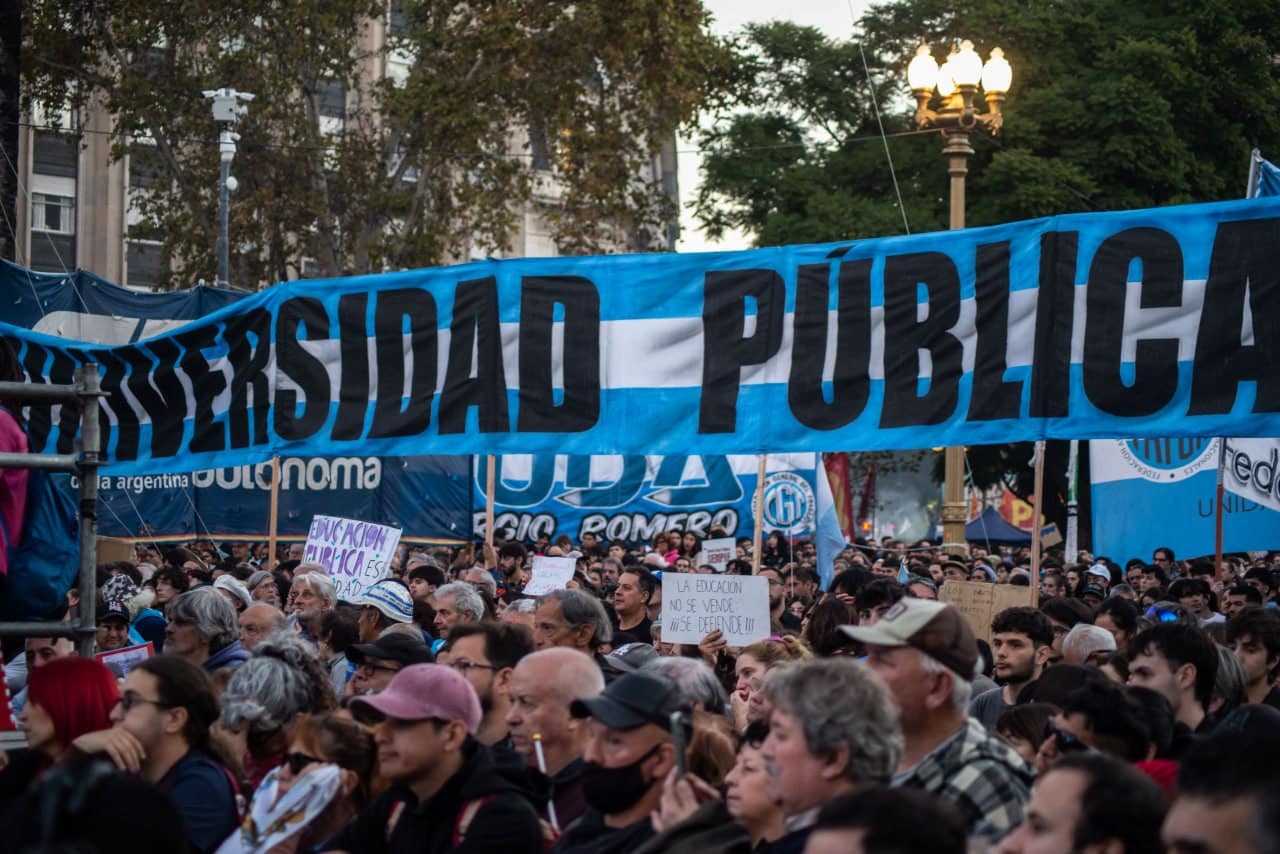
The proposed legal intervention does not emerge in a vacuum, but rather builds upon a growing climate of social mobilization, marked by four massive federal marches in defense of public education. In this sense, the Network seeks to connect national struggles against austerity and cuts to social rights with the mechanisms provided by international law in order to catalyze the disputes unfolding in the streets and within co-opted national institutions,” Felipe Mesel, Strategic Litigation Coordinator at ESCR-Net.
In light of this situation, ESCR-Net, ACIJ, and CELS urged the Special Rapporteur to clarify for Argentina’s Supreme Court the applicable international standards concerning the right to higher education and the prohibition of retrogression in human rights. The intervention is particularly urgent given that the Supreme Court will have the final word on the case while implementation of the law remains suspended pending a definitive ruling.
UN Receives New Complaints Over University Underfunding and Institutional Backsliding in Argentina
On 9 June 2026, the same organizations expanded their international advocacy efforts in defense of Argentina’s public university system by submitting a new communication to six additional United Nations Special Procedures, including the mandates on foreign debt, the independence of judges and lawyers, extreme poverty, and the right to development.
The new submission seeks to place the university funding crisis within a broader discussion about democracy, austerity, public debt, and the rule of law. According to the organizations, the dispute no longer concerns only the right to higher education, but also the functioning of democratic institutions and the implementation of decisions adopted by Congress and upheld by the courts.
The submission calls on the UN experts to request information from the Argentine government and to issue a joint communication urging the State to take urgent measures to comply with its international human rights obligations, including those related to the protection of public higher education and democratic governance.