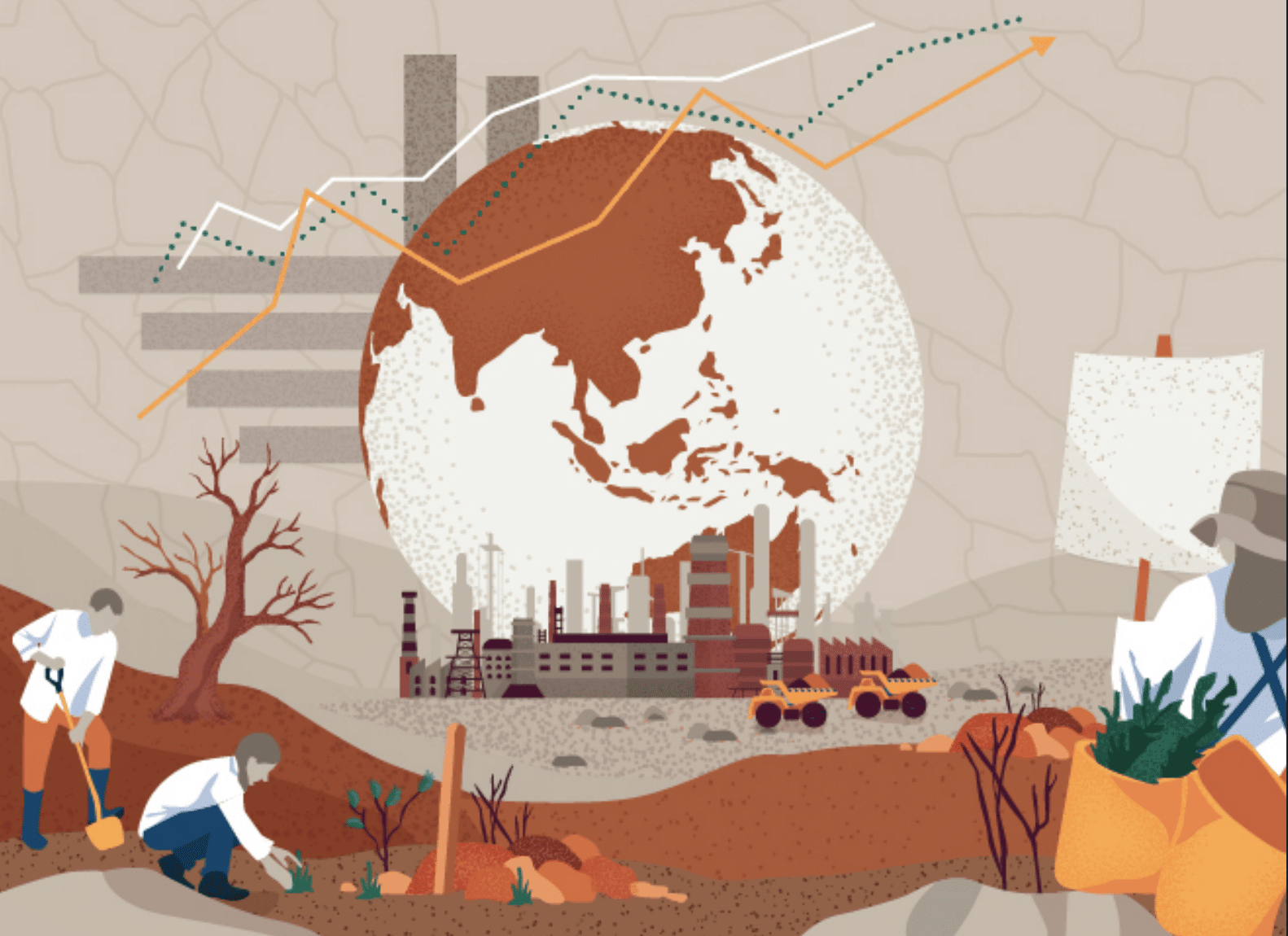
Environmental destruction caused by corporations is accelerating the triple crisis of climate change, pollution, and biodiversity loss. States must seize the coming round of negotiations on a UN legally binding instrument on business and human rights as an opportunity to anchor the right to a clean, healthy and sustainable environment in the text and ensure businesses can no longer act with impunity.
Communities around the world are affected by unchecked and unregulated transnational corporate power, leading to poisoned water supplies, lost farmland, destroyed food systems and lost livelihoods. Yet, too often, corporations escape accountability while communities are left without remedy or justice, as outlined in a new study focusing on environmental issues, No Profit Without Accountability – For People and the Planet, aimed at shaping UN discussions.
“No Profit Without Accountability: For People and the Planet” was prepared for the 11th session of the Open-Ended Intergovernmental Working Group on Transnational Corporations and Other Business Enterprises with Respect to Human Rights at the UN Human Rights Council in October 2025. It examines the urgent need to explicitly recognize the right to a clean, healthy, and sustainable environment within the international legally binding instrument (LBI) on business and human rights. It also presents concrete legal proposals aimed at strengthening environmental protections and preventing corporate-related environmental abuses and human rights violations.
“It’s very simple. If the LBI does not include strong environmental protections, it will fail the very communities it is meant to protect,” says Ayushi Kalyan, corporate accountability coordinator at FIAN International.
Enforceable international standards
Communities and human rights and environmental defenders have long campaigned for this addition to international human rights law.
In Latin America, families are still fighting for justice decades after Sweden’s Boliden Mineral dumped toxic waste in Arica, Chile, causing widespread health problems for people living near the dump site. In Palestine, corporations like Heidelberg Materials are alleged to have contributed to the pillaging of natural resources from occupied land. Across Africa and Asia, extractive projects are dispossessing Indigenous Peoples and rural communities of their territories and food systems. Each case highlights the urgent need for clear, enforceable international standards that prioritize human rights and environmental protection over corporate profit.
The International Court of Justice and the Inter-American Court of Human Rights have both affirmed states’ obligations to regulate private actors and prevent transboundary environmental harm. More than 80 percent of UN member states already legally recognize the right to a healthy environment.
“The LBI must explicitly recognize the right to a healthy environment, protect defenders from reprisals, and ensure that victims have real access to justice,” says Stephan Backes, extraterritorial obligations coordinator at FIAN International.
Close the gap
Negotiators now have the responsibility to close the gap at the global level by embedding this right in the heart of the LBI.
The study released today proposes concrete legal texts to states to strengthen the provisions in the LBI, ensuring, among other things, that it includes environmental due diligence, precautionary measures, and the primacy of human rights and environmental obligations over trade and investment agreements. States should carefully consider and integrate these recommendations in their submissions during the next round of negotiations in October and continue leveraging these proposals in their ongoing advocacy in relevant national, regional and international spaces and processes.
As the world edges closer to climate collapse, this LBI process is a critical opportunity to hold corporations accountable. States must not squander it.
For more information, please contact Ayushi Kalyan Kalyan@fian.org or Stephan Backes Backes@fian.org,