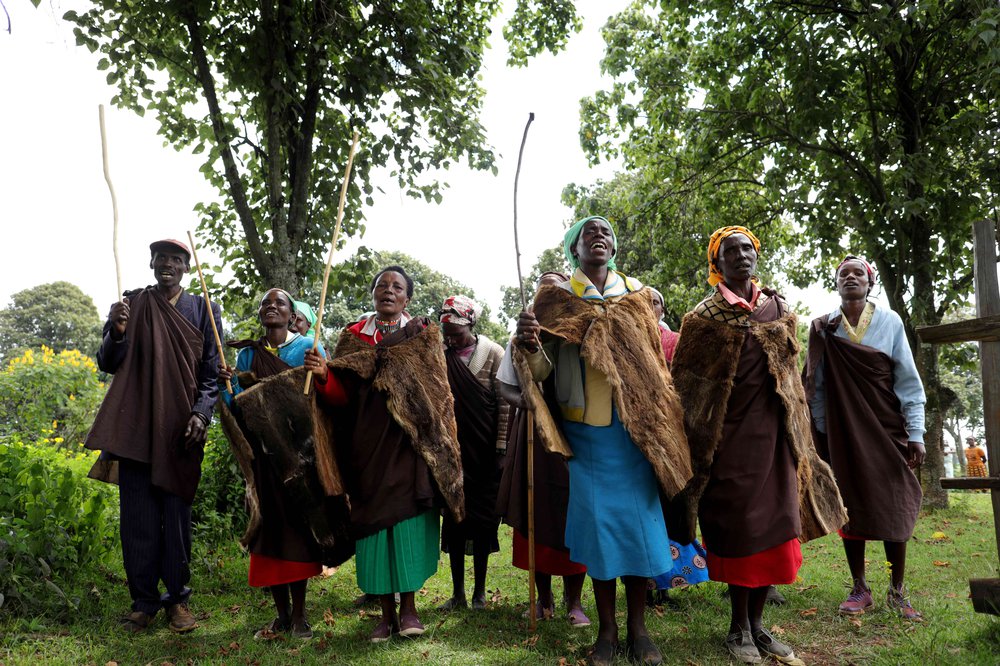
In this historic public interest case, the African Court on Human and Peoples’ Rights ruled in favor of the Ogiek Indigenous community of Kenya, finding that the Kenyan government had violated seven rights protected under the African Charter on Human and Peoples’ Rights. The decision significantly strengthened progressive jurisprudence on Indigenous Peoples’ rights and collective land rights.
Despite the binding nature of the Court’s judgments, more than a decade after the case was first initiated—and over seven years after the merits decision—Kenya has failed to implement any aspect of the Court’s rulings. This prolonged inaction led to renewed condemnation by the African Court in December 2025 for persistent non-compliance.
Summary
In October 2009, the Kenya Forestry Service issued an eviction notice requiring the Ogiek, a forest-dwelling community and one of Kenya’s most marginalized Indigenous Peoples, to vacate the Mau Forest within 30 days. In November 2009, the Ogiek Peoples’ Development Program (OPDP), joined by the Centre for Minority Rights Development (CEMIRIDE) and later by Minority Rights Group International (MRGI), submitted a communication to the African Commission on Human and Peoples’ Rights (the Commission). The communication argued that the eviction violated multiple provisions of the African Charter, including the right to property (Article 14), freedom from discrimination (Article 2), the right to life (Article 4), freedom of religion (Article 8), the right to culture (Articles 17(2) and (3)), the right to freely dispose of wealth and natural resources (Article 21), the right to development (Article 22), and Article 1.
For decades, the Ogiek have faced repeated and arbitrary forced evictions from their ancestral lands in the Mau Forest. This longstanding pattern of violations has had a devastating impact on their traditional way of life. The Ogiek rely on the forest for food, shelter, livelihood, and cultural identity. The October 2009 eviction notice was therefore characterized in the case as a continuation of historical injustices suffered by the Ogiek—grievances that had not been remedied by the Kenyan State, despite multiple domestic legal challenges and sustained advocacy efforts.
In a rare move in its institutional history, the Commission referred the case to the African Court on Human and Peoples’ Rights on the grounds that it involved evidence of serious or massive human rights violations. On 26 May 2017, following an eight-year process, the Court delivered a merits judgment affirming the Ogiek’s land-related rights and finding violations of all the claimed rights except the right to life.
With respect to the right to property, the Court affirmed that the Ogiek hold a communal right to their ancestral lands. It found that their expulsion without prior consultation and against their will constituted a violation of their property rights under the Charter, interpreted in light of the United Nations Declaration on the Rights of Indigenous Peoples.
The Court further found that the State’s failure to recognize the Ogiek as a distinct community, while extending such recognition to other groups, amounted to discrimination. It emphasized that environmental conservation objectives could not justify the denial of Ogiek land rights, nor could the Ogiek be held responsible for the degradation of the Mau Forest.
The Court also determined that the evictions interfered with the Ogiek’s freedom of religion and violated their right to culture, given the intrinsic link between their spiritual and cultural practices and their ancestral land. In addition, the Court found violations of the right to freely dispose of natural resources and the right to development.
The Court ordered the Government of Kenya to adopt all appropriate measures, within a reasonable timeframe, to remedy the violations.
In a follow-up decision issued in 2022, the Court determined the reparations owed. It ordered Kenya to pay nearly 160 million Kenyan shillings (approximately USD 1.3 million) in compensation, to restitute the Ogiek’s ancestral lands through delimitation, demarcation, and titling, and to establish a Community Development Fund with the participation of the Ogiek community.
The Court rejected the State’s argument that use and access to land constituted sufficient protection, holding instead that legal ownership by the community was necessary to safeguard the Ogiek from future violations.
The Court also ordered non-pecuniary reparations, including guarantees of effective consultation, respect for free, prior and informed consent in relation to development projects, and full recognition of the Ogiek as an Indigenous People, including protection of their language and religious practices.
However, by December 2025, the African Court found that Kenya had failed to implement any component of either the 2017 merits judgment or the 2022 reparations decision. The Ogiek community remains socioeconomically marginalized, and forced evictions have continued. These include the eviction of approximately 600 Ogiek in 2020 during the COVID-19 pandemic, and the eviction of around 700 community members in 2023, resulting in widespread homelessness and destruction of property.
In its December 2025 decision, the Court expressed clear frustration with Kenya’s persistent non-compliance and ordered the State to immediately adopt all necessary legislative, administrative, or other measures to remedy the violations established in the merits judgment. The Court reaffirmed that no State may invoke domestic law to justify a breach of its international obligations.
This ruling marks the first time the African Court has expressly addressed a State’s failure to implement a binding judgment, establishing an important new precedent in its jurisprudence.
Significance of the Case
This case implicates multiple, interrelated human rights, many of which have been substantively addressed through the Court’s rulings. Collectively, the decisions seek to remedy unlawful land dispossession through restitution and compensation, reinforce State obligations to consult Indigenous Peoples in accordance with the principle of free, prior and informed consent, and recognize the role of Indigenous Peoples as custodians of ecosystems.
The December 2025 decision further elevates the case as a landmark in international human rights law by subjecting State compliance with reparations orders to judicial scrutiny, affirming that remedies are not merely symbolic but legally binding and enforceable.
Taken together, the 2017, 2022, and 2025 decisions affirm Indigenous Peoples’ rights to land restitution, compensation for collective harm, meaningful participation in decision-making, and protection from conservation-based dispossession without consent—setting a powerful precedent for Indigenous land rights and reparations across Africa and beyond.
Content related:
- African Court on Human and Peoples’ Rights issues new orders to Kenya over non-compliance in the Ogiek case
- Violations against Kenya’s indigenous Ogiek condemned yet again by African Court (December 2025 | Minority Rights)
- The unfinished Ogiek fight (August 2025 | Minority Rights)
- A Milestone For Indigenous Rights: African Court Of Human And Peoples’ Rights Awards Reparations To Ogiek People Of Kenya, Human Rights Pulse (Oct. 16, 2022)
- African Commission on Human and Peoples’ Rights v. Republic of Kenya, ACtHPR, Application No. 006/2012 (2017), ESCR-Net (Oct. 29, 2017)
- African Commission on Human and Peoples’ Rights v. Republic of Kenya, Judgment, Application No. 006/212