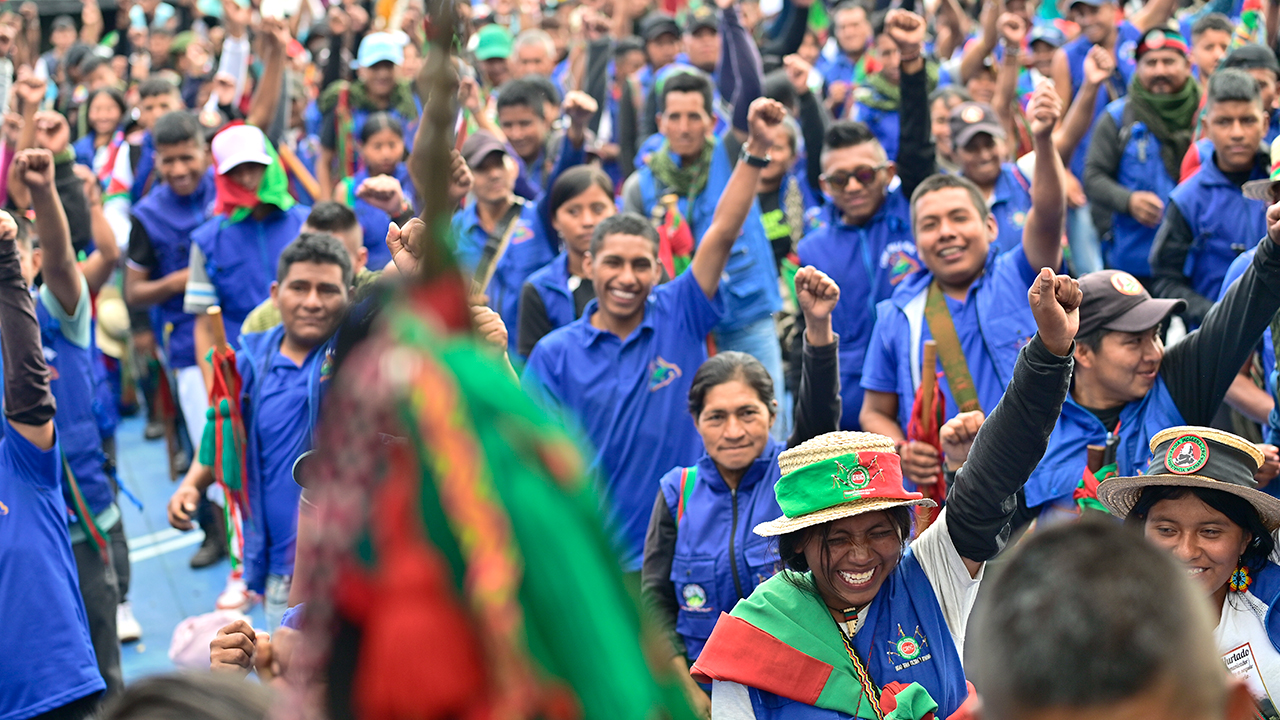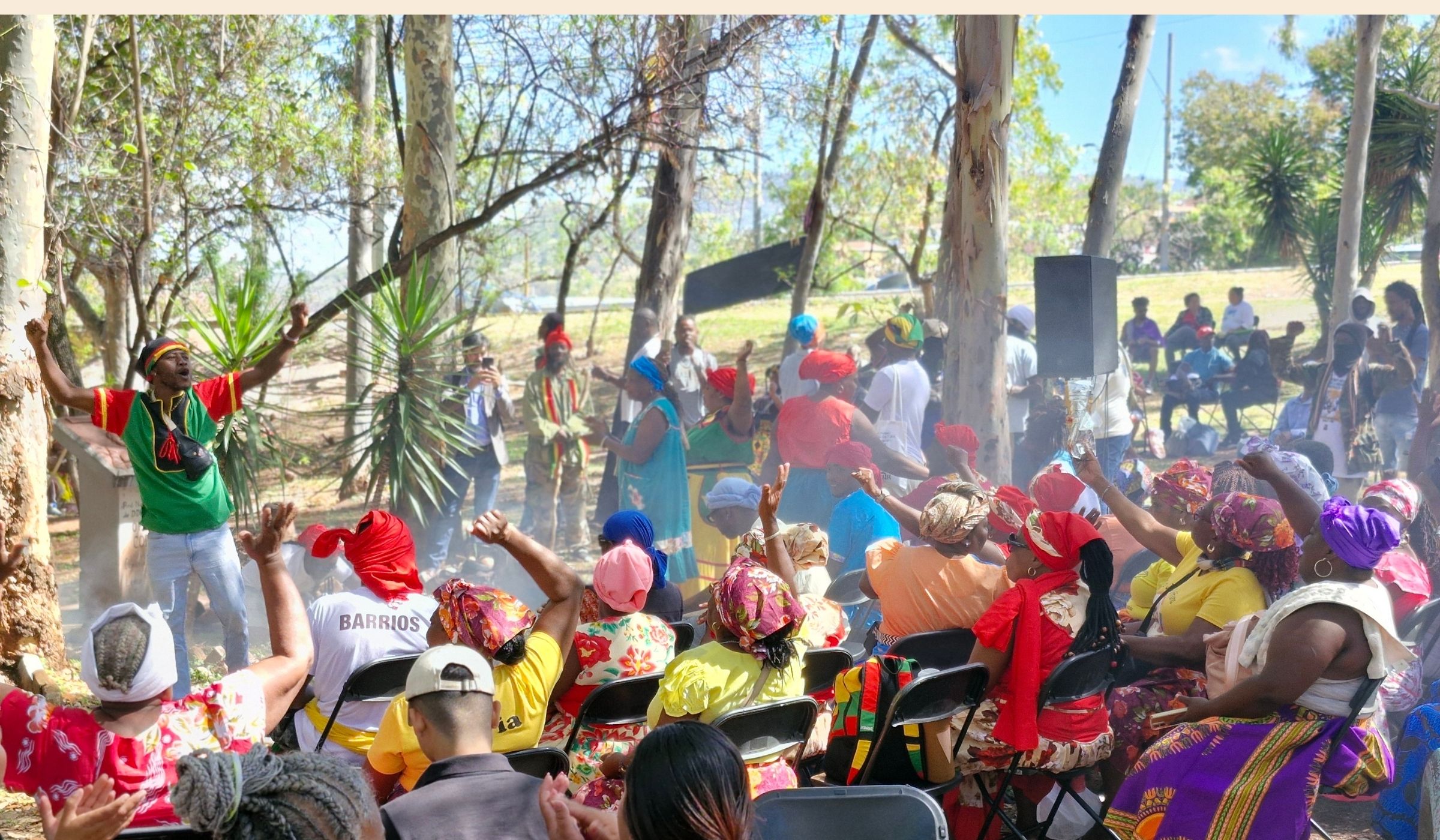
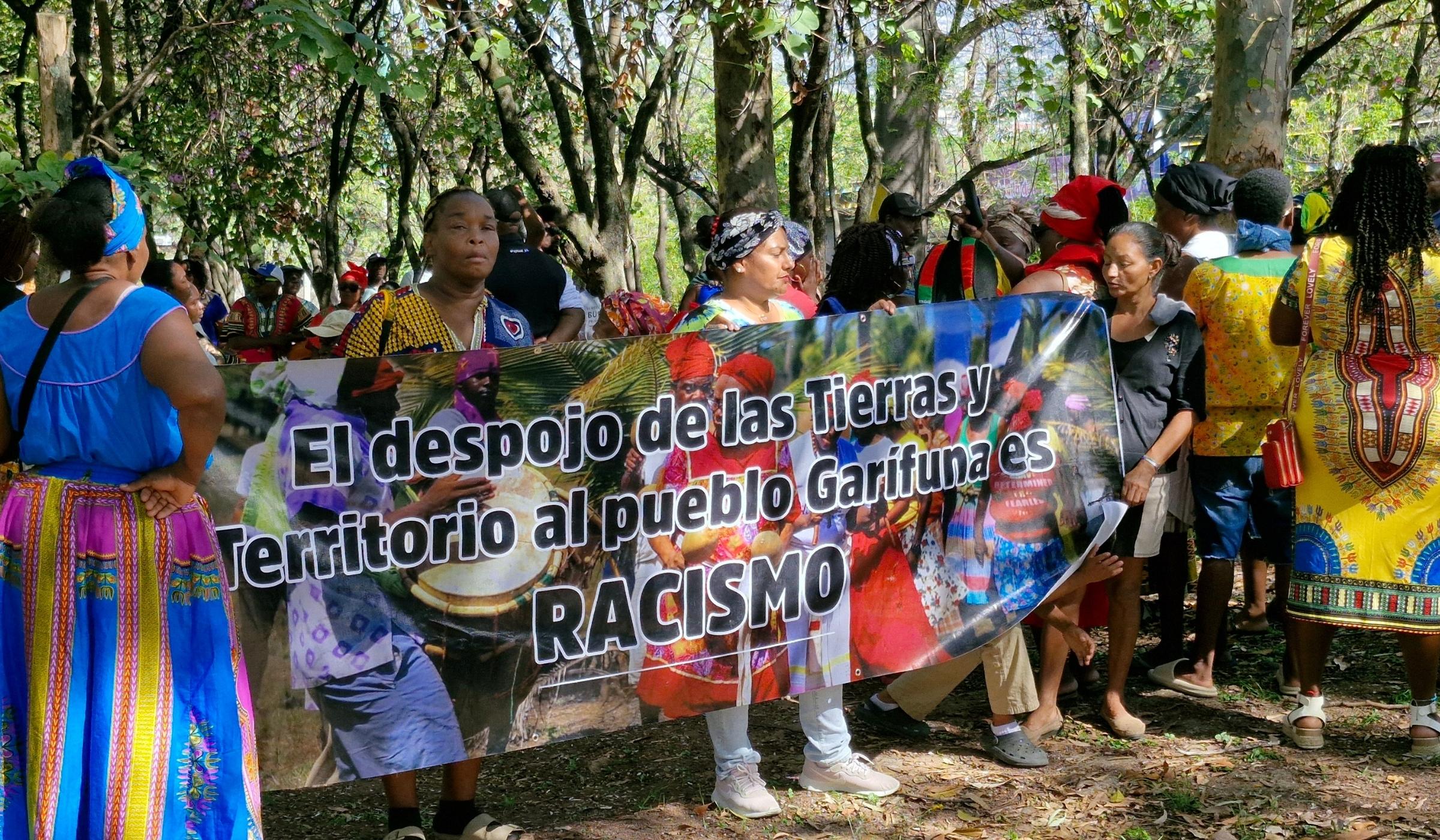
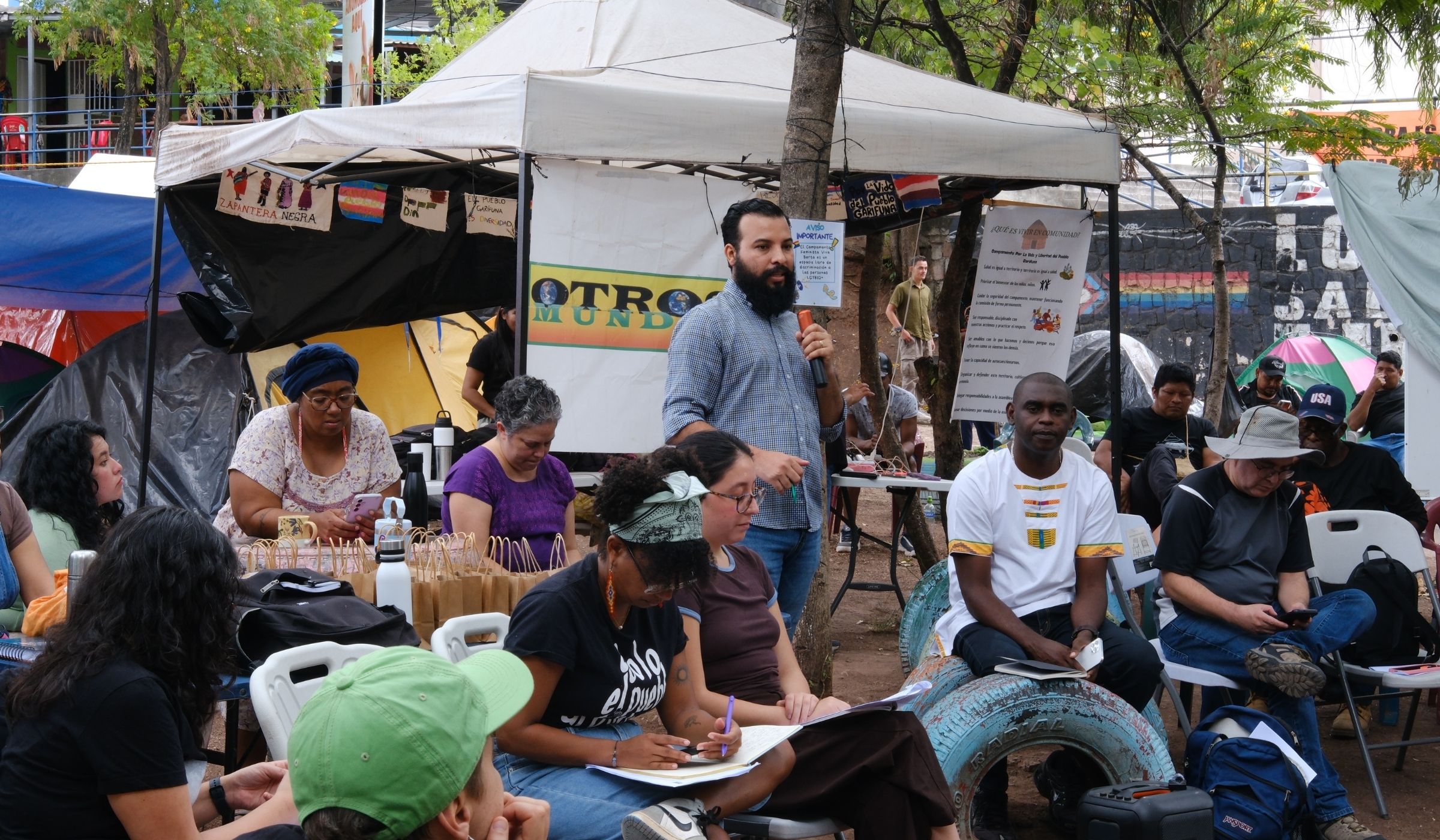
In September 2026, Amnesty International, Just Associates (JASS), the Mesoamerican Initiative of Women Human Rights Defenders (IM-Defensoras), Otros Mundos Chiapas, and the Civic Council of Popular and Indigenous Organizations of Honduras (COPINH)—all members of ESCR-Net—joined an international solidarity delegation convened by the Black Fraternal Organization of Honduras (OFRANEH) and IM-Defensoras.
The delegation brought together human rights defenders, organizations, and media representatives from across the Americas and Europe, with 13 additional organizations supporting the initiative remotely.
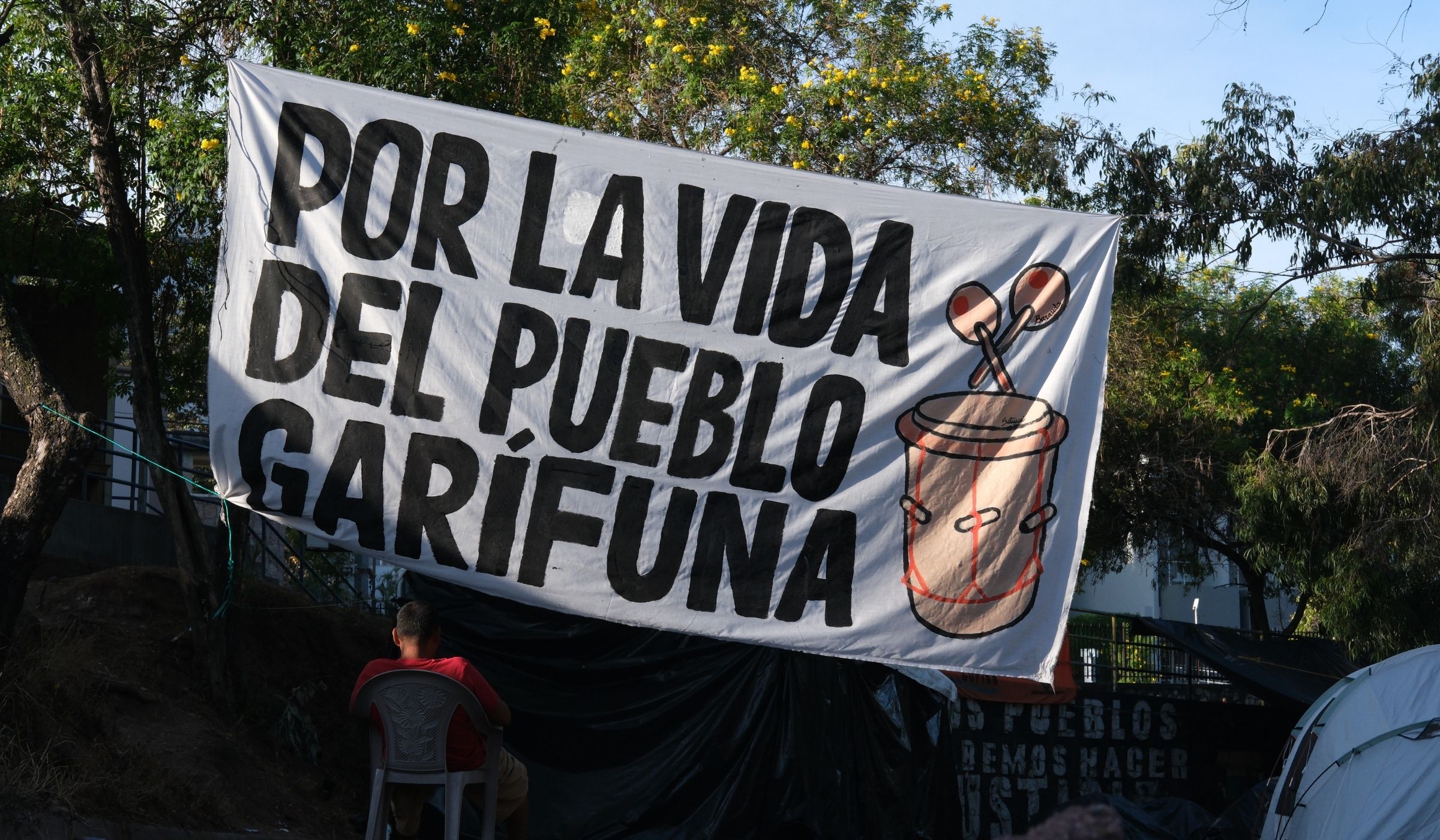
Between September 17 and 19, delegates visited the Campamento por la Vida del Pueblo Garífuna, known as Viva Berta, established outside the Supreme Court in Tegucigalpa following the violent eviction of the Garífuna community of San Juan on July 6 and the criminal prosecution of five territorial defenders accused of aggravated usurpation.
The criminalization of communities defending their own ancestral lands reflects a broader pattern of dispossession, racial discrimination, and institutional failure in Honduras.
Since 2015, the Inter-American Court of Human Rights has issued four judgments concerning the territorial rights of the Garífuna communities of Triunfo de la Cruz, Punta Piedra, San Juan, and Cayos Cochinos. Yet Honduras has failed to fully implement these rulings, including obligations to protect collective land rights.
International delegation demands an end to criminalization
Despite formal requests for dialogue, most Honduran State institutions declined to meet with the delegation, raising serious concerns about their willingness to engage with international human rights organizations and respond to the demands of affected communities. Following sustained pressure from participating organizations, the delegation secured a meeting with three magistrates of the Supreme Court of Justice, providing an opportunity to directly raise concerns about the ongoing criminalization of Garífuna territorial defenders and the State’s failure to uphold their collective rights.
In a September 19 public statement, the delegation called on Honduran authorities to immediately end the criminalization and persecution of Garífuna defenders, guarantee the protection of ancestral territories, investigate acts of violence and intimidation, and fully implement the binding judgments of the Inter-American Court of Human Rights.
The delegation also stood alongside OFRANEH in demanding the dismissal of criminal proceedings against the five Garífuna community members from San Juan, whose prosecution reflects the broader use of the criminal justice system to undermine legitimate struggles for territorial rights and self-determination.
Organized crime, corporate interests, and impunity threaten Garífuna territories
Garífuna communities along Honduras’s Caribbean coast continue to face escalating threats to their ancestral territories, as organized crime, extractive economic interests, land grabbing, and persistent State inaction converge to undermine their collective rights and self-determination. These pressures reflect a broader pattern of territorial dispossession in which communities defending their lands, livelihoods, and cultural survival are increasingly exposed to violence, intimidation, and criminalization.
A September 21 report by Criterio.hn raised concerns about Honduras’s new Agroindustrial Law, warning that it could accelerate territorial dispossession and facilitate the expansion of corporate control over land and natural resources. Marco von Borstel of Otros Mundos Chiapas connected these developments to the controversial Zones for Employment and Economic Development (ZEDE), whose legal framework was repealed in 2022 and subsequently declared unconstitutional by the Supreme Court in 2024. Drawing parallels with the fragmentation and displacement of Palestinian communities in the occupied West Bank, he warned of the growing risk of a “West Bank-ization of Latin America,” in which corporate-controlled enclaves fragment ancestral territories, undermine sovereignty, and erode communities’ collective rights.
These concerns are compounded by the growing presence of organized crime in Garífuna territories. An October 2 investigation by InSight Crime documented how drug trafficking networks and powerful economic interests are placing increasing pressure on Garífuna communities along Honduras’s Caribbean coast. A subsequent October 20 report described how communities are resisting the use of their ancestral lands as cocaine trafficking corridors while simultaneously confronting business interests seeking to expand palm oil plantations and tourism developments.
Yet amid these overlapping threats, Garífuna communities continue to organize and defend their territories. The October 20 report also offered a glimpse into life at the Viva Berta encampment, where communal kitchens, collective assemblies, cultural ceremonies, and grassroots organizing sustain a struggle rooted not only in resistance to dispossession, but also in the defense of collective life, identity, and self-determination.
The dangers facing these communities are neither new nor isolated. In July 2020, four young Garífuna men, including community leader Sneider Centeno, were forcibly disappeared from Triunfo de la Cruz. Their fate and whereabouts remain unknown. In 2023, two other community defenders were killed, underscoring the persistent violence and impunity surrounding struggles for territorial justice.
These interconnected threats reveal a broader struggle over who controls land, resources, and the future of Garífuna territories. The Honduran State must fulfill its obligations to protect Garífuna communities, independently investigate attacks, killings, and enforced disappearances, ensure accountability for those responsible, and guarantee the effective protection of ancestral land rights. Defending territory, collective identity, and self-determination must never come at the cost of communities’ lives, safety, or freedom.
Urgent alert: OFRANEH denounces police violence against territorial defender
On October 23, OFRANEH reported that Darwin Centeno, a Garífuna territorial defender from Triunfo de la Cruz, was violently beaten and detained by National Police officers in Tela. Darwin was released after thirteen hours of detention, following demands for his immediate release and guarantees for his physical safety.
According to OFRANEH, the detention occurred just hours after a group identified as DEPAT, reportedly linked to local business interests and the mayor of Tela, issued a statement containing threats against Garífuna leaders in the Bay of Tela.
OFRANEH condemned the incident as part of an escalating pattern of intimidation, violence, and criminalization targeting Garífuna communities defending their ancestral territories and collective rights.
While Darwin’s release is welcome, serious concerns remain regarding the reported police violence, the threats against Garífuna leaders, and the broader climate of repression facing territorial defenders in Honduras. Honduran authorities must ensure an independent investigation into the incident, guarantee Darwin Centeno’s safety, and take immediate measures to protect Garífuna communities and their legitimate struggle for territorial rights and self-determination.
Honduras must end criminalization and comply with international human rights rulings
The delegation’s findings and recent allegations expose the continuing failure to guarantee the rights and safety of Garífuna communities.
For ESCR-Net, international solidarity means supporting community-led struggles and demanding accountability from States and economic actors whose actions undermine human rights.
Honduran authorities must take immediate action to:
- End the criminalization and harassment of Garífuna territorial defenders and ensure accountability for reported abuses.
- Guarantee the safety and fundamental rights of Darwin Centeno and all defenders facing threats.
- Fully implement the four Inter-American Court judgments, including the protection of collective territorial rights.
- Investigate violence, killings, and enforced disappearances affecting Garífuna communities and ensure justice for victims and their families.
Defending ancestral territories is a human right, not a crime.
ESCR-Net stands in solidarity with OFRANEH and Garífuna communities, demanding justice, territorial protection, and an end to violence and impunity.