The first two articles in this series examined a world-system facing overlapping political, economic, and ecological crises, and the growing reliance on repression, militarization, and dispossession to sustain existing structures of power. But understanding these systems is only part of the challenge. Across regions, communities are not simply responding to violations of their rights. They are organizing, defending their territories, creating institutions, and developing alternatives.
For ESCR-Net members, the central question is: how can different forms of resistance can strengthen one another to build the collective power needed for systemic change?. The answer lies not in identifying a single strategy, but in connecting the legal, political, cultural, and community-based tools movements are already using.
Beyond Individual Victories: Tools for Building Lasting Power
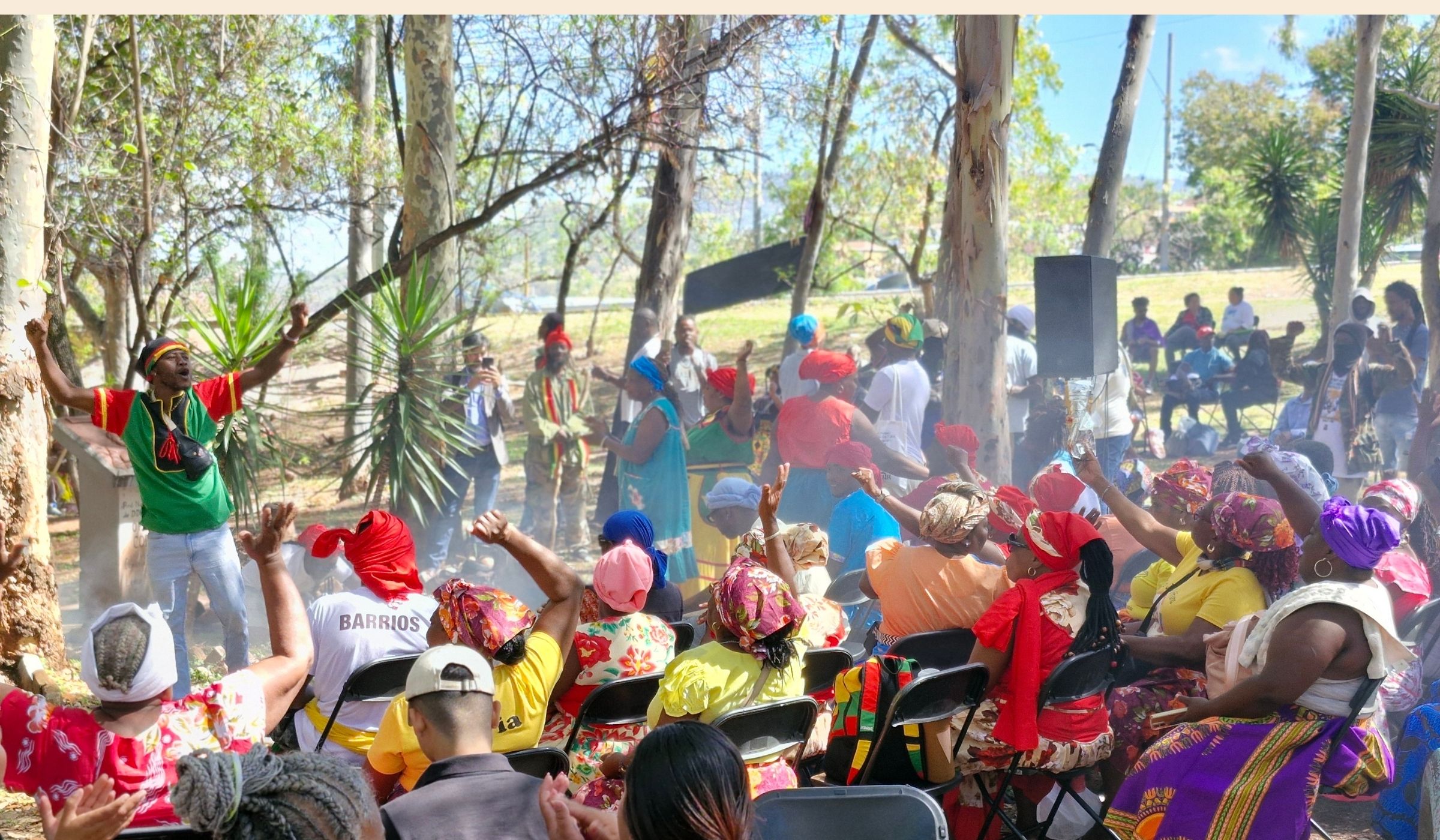
Legal victories can establish precedents, recognize collective rights, and create opportunities for accountability. Yet a favorable court ruling does not necessarily translate into justice on the ground. Indigenous communities such as the Kichwa People of Sarayaku in Ecuador and Garífuna communities organized through OFRANEH in Honduras continue mobilizing for the implementation of decisions issued by the Inter-American human rights system. Their experiences demonstrate that litigation must be accompanied by sustained organizing, documentation, political pressure, and international solidarity.
Documentation also serves purposes beyond gathering evidence. It strengthens litigation, preserves collective memory, supports political education, and challenges dominant narratives. Through community radio, murals, popular art, and independent communications, movements tell their own stories and build political identities rooted in their struggles. In the Philippines, Karapatan has been documenting widespread systemic human rights violations as a means to visibilize state violence while preserving collective memory.
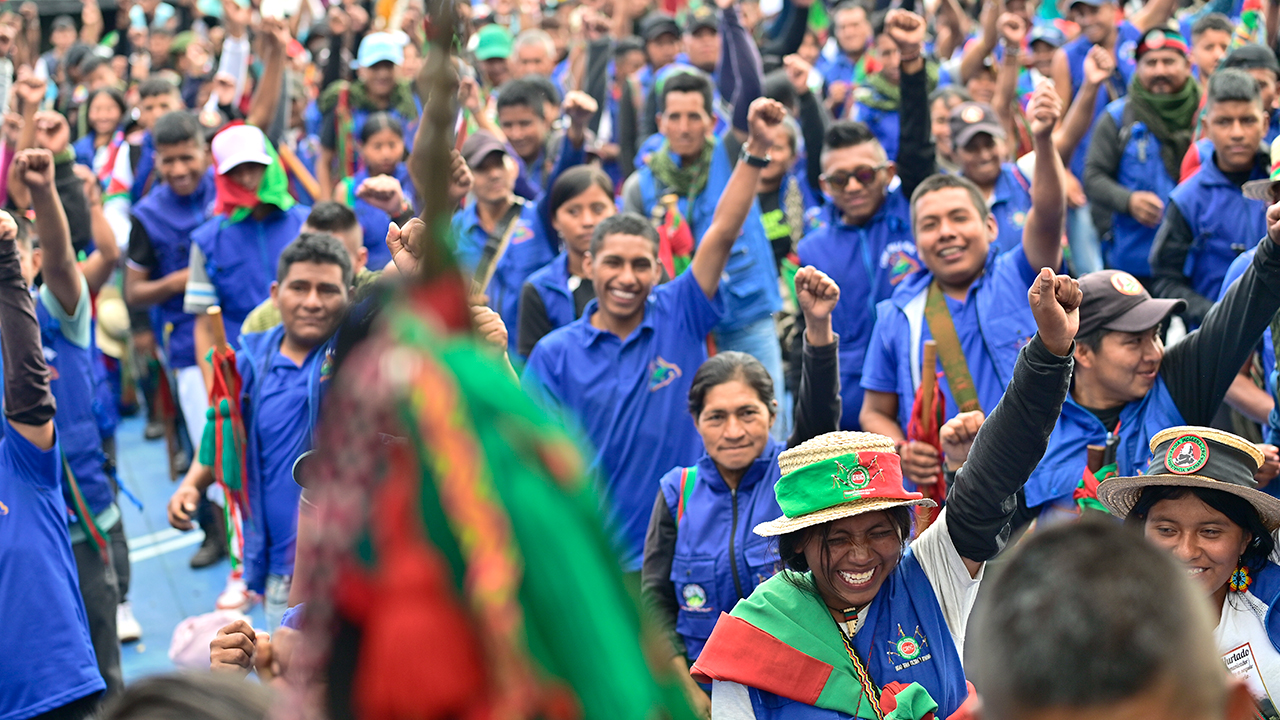
Other forms of collective organization are equally important. For example, Indigenous communities in Ecuador and Guatemala, alongside peasant movements in India, use popular assemblies to make decisions, organize resistance, and exercise self-determination. In places like Colombia, the Guardia Indígena and Guardia Cimarrona demonstrate alternative forms of territorial protection grounded in community legitimacy, collective organization, and ancestral knowledge of the land rather than militarized conservation.
Collective care is also a political strategy. Initiatives such as AMMAR’s Casa Roja in Argentina and La Casa Cole in Puerto Rico create spaces where people can access support, meet material needs, care for children, and remain connected to organizing. Together, these experiences show that movements are already building many of the practices and institutions needed for a different society. The challenge is to connect and strengthen them.
Changing Institutions Through Collective Struggle
The creation of the Catalan Centre for Business and Human Rights illustrates how sustained organizing can translate community demands into institutional change.
For years, communities affected by transnational corporations have demanded mechanisms capable of investigating human rights violations and environmental harm. Many corporations are headquartered in the Global North, while the consequences of their operations are experienced elsewhere, particularly in the Global South. Yet affected communities face significant barriers to holding them accountable.
In Catalonia, organizations responded by documenting the activities and impacts of companies linked to the region, challenging official narratives that portrayed corporate abuses as exceptional. This evidence supported a proposal for an independent public institution capable of receiving complaints, investigating alleged violations, and publishing findings.
Marta Rivera, Economic Justice Officer at Observatori DESCA, described the challenges of developing this institution within Catalonia’s legal and political constraints. The objective was not to create another voluntary corporate responsibility initiative. As she explained, “What we did not want was a centre that would simply hand out medals or certificates of good conduct to companies. We wanted it to be a courageous centre.”
The campaign required years of coalition building, documentation, and political negotiation. Around 22 organizations formed its core, while approximately 8,000 eventually supported the initiative. After three rounds through Parliament, the legislation was approved on 1 July 2026.
Yet the victory is only one step. The Centre still needs to be established and implemented, and its powers do not extend to imposing judicial remedies, fines, or mandatory reparations. As Rivera emphasized,
This regulation is only one grain of sand in the mountain we still need to build.”
The experience demonstrates that movements can transform institutions, but legal reforms alone cannot dismantle corporate impunity. Continued organizing remains essential to ensure that these mechanisms serve affected communities.
Solidarity Must Lead to Action
Confronting systems of power that operate across borders demands international solidarity. But solidarity cannot be reduced to public declarations. It must be grounded in shared political commitments and translated into concrete action.
For more than three decades, Brazil’s Movimento dos Atingidos por Barragens (MAB) has organized communities affected by dams, mining, and the energy model. Its struggle goes beyond securing remedies for individual violations: MAB seeks to defend affected people’s rights, transform Brazil’s energy system, and contribute to building a different society.
Moisés Borges, National Coordinator at MAB, challenges the assumption that renewable energy automatically delivers justice. Although hydropower supplies much of Brazil’s electricity, affected communities continue facing displacement and rights violations, while some lack reliable access to the energy produced in their own territories. The central question is therefore not simply how electricity is generated, but who controls it, who benefits, and who bears its social and environmental costs.
This political understanding shapes MAB’s approach to solidarity. As Borges argued,
Solidarity cannot be treated simply as a public statement. It also has to be backed by action.”
The experience of two MAB members criminalized during a land conflict in Bahia illustrates this approach. Facing imprisonment and serious criminal accusations, the movement combined legal defense, political mobilization, documentation, and international solidarity. Organizations including ESCR-Net helped bring international attention to the case and pressure for accountability. The defenders were released after two months, although efforts to close the criminal proceedings continued.
The experience demonstrated the importance of international solidarity in responding to immediate repression, but also its limitations when movements must confront one crisis after another. Without challenging the structures producing dispossession and violence, the cycle continues.
For MAB, solidarity must therefore contribute to a larger political project: connecting territorial struggles, strengthening movements, and building alternatives to systems that prioritize corporate profit over people’s rights. Its efforts to develop an international movement of people affected by corporate abuse and environmental crises reflect this ambition. As Borges warned, “If we struggle alone, we will probably lose.”
Political Education as a Strategy for Transformation
Building collective power requires spaces where communities can understand the systems shaping their lives and imagine alternatives together. Political education is not simply about transmitting information. It enables people to connect their experiences to broader structures of power, develop shared analysis, and strengthen their capacity to organize.
Andile Mapisa from the Zabalaza Pathways Institute in South Africa, emphasized the importance of political education when corporate media and dominant institutions shape much of the information people receive. This work can begin around a dinner table, through community radio, in neighborhood meetings, and in popular assemblies. His reference to the principle of Ubuntu or “I am because we are”, captures a central dimension of collective struggle: building power also means building relationships of mutual responsibility, care, and solidarity.
For our Network, this presents a strategic opportunity. Members across the globe possess diverse experiences in litigation, documentation, popular education, community protection, advocacy, and international mobilization. Connecting these capacities can strengthen struggles that might otherwise remain isolated or overwhelmed by immediate demands.
This includes sharing and translating political education materials, coordinating advocacy around the Binding Treaty on Business and Human Rights, supporting community-led documentation, and organizing solidarity visits and exchanges between territories. Such initiatives can connect local struggles with international advocacy while ensuring that affected communities define the priorities and direction of collective action.
As multilateral institutions face growing limitations in responding to movements’ political demands, strengthening independent spaces for organizing, exchanging knowledge, and developing collective strategies becomes increasingly important.
From Resistance to Transformation
The experiences and reflections shared throughout this series reveal not only the depth of the crises confronting social movements, but also the transformative possibilities emerging from their struggles. Across regions, communities are confronting interconnected systems of corporate power, militarization, authoritarianism, and the erosion of democratic and multilateral institutions. These forces transcend national borders, demanding responses that are firmly rooted in communities and territories while strengthened through international solidarity, collective organizing, and shared political strategies.
The discussions also reaffirmed that legal action, documentation, community protection, political education, collective care, and international solidarity are not separate or competing strategies. They are interconnected dimensions of building collective power. The experience of Observatori DESCA illustrates how sustained mobilization and advocacy can reshape public institutions and advance mechanisms for corporate accountability. The struggles of the Movement of People Affected by Dams (MAB) demonstrate how international solidarity can help protect communities facing repression while strengthening broader movements for systemic change. Across our Network, community assemblies, practices of collective care, and grassroots initiatives remind us that alternatives to the dominant political and economic system are not merely aspirations for the future; they are already being imagined, practiced, and defended in everyday struggles.
For ESCR-Net, the challenge and opportunity lie in deepening the connections between these struggles, transforming shared analysis into coordinated action, and mobilizing our collective knowledge, relationships, and capacities in support of social movements. This means moving beyond responding to individual crises toward building sustained solidarity, strengthening movement leadership, and advancing collective strategies capable of challenging the structures that reproduce inequality, dispossession, and violence.