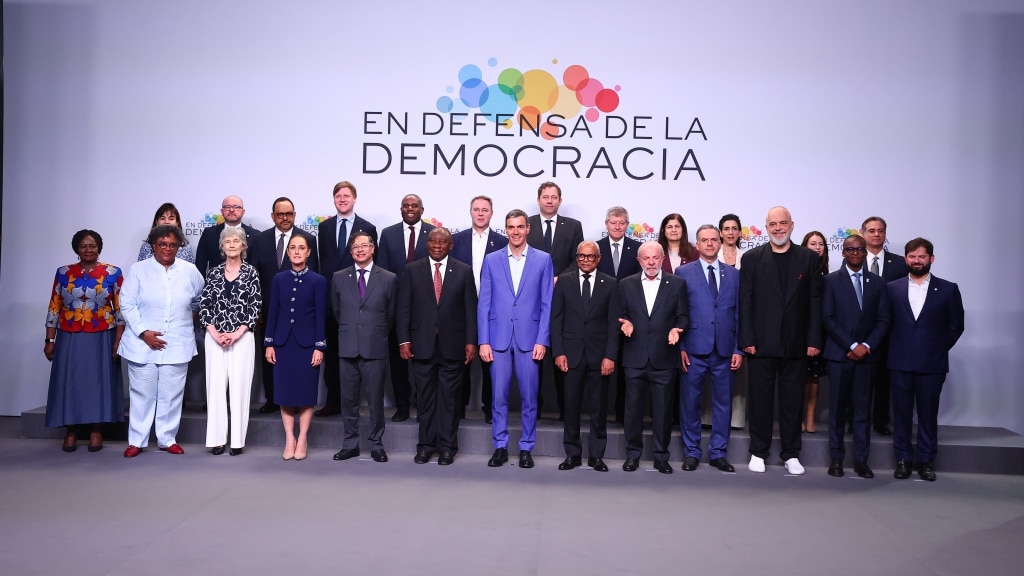
During his remarks, Sánchez warned of “attacks on the multilateral system,” the “normalization of the use of force,” and growing inequality that threatens to “hollow out democracy from within.” But there is another threat to governments’ ability to act in the public interest: the growing corporate capture of governments, international institutions, and multilateral decision-making spaces.
Corporations and economic elites today do not merely influence markets. They shape governments, public policy, and international negotiations. The image of Donald Trump’s 2025 inauguration captured this reality vividly: Elon Musk, Jeff Bezos, and Mark Zuckerberg seated beside the president of the United States. The alliance between concentrated wealth, Big Tech, and political power is no longer hidden; it is openly celebrated.
Fewer than 60,000 people — the richest 0.001% — now control three times more wealth than half of humanity combined. This is not only a question of inequality; it is a question of political power: the ability to shape laws, influence elections, and block reforms that threaten corporate interests.
If progressive leaders around the world truly want to consolidate an alternative to Donald Trump and the far right, they must also confront the political and economic conditions that allow concentrated corporate power to shape public life and increasingly turn social and environmental crises — and even war and genocide — into profitable business models.
The consequences of these alliances between authoritarian governments and corporate power are not abstract. In El Salvador, members of MUFRAS-32—a movement that opposed mining projects—have faced threats and persecution since Nayib Bukele reversed the country’s ban on metallic mining, forcing them into exile. Two members of the movement have recently been granted political asylum in Spain. The experience of one of the co-authors of this article reflects a global pattern affecting hundreds of human rights defenders worldwide.
The latest report from the Business & Human Rights Resource Centre documented 790 attacks against human rights defenders linked to their challenge to business activity in 2025 alone – the highest figure recorded since 2020. More than 6,400 attacks have been documented over the past decade. Most are connected to mining, agribusiness, and fossil fuels.
That is precisely why one of the most important and least known international negotiations of our time matters far beyond diplomatic circles: the United Nations binding treaty on business and human rights.
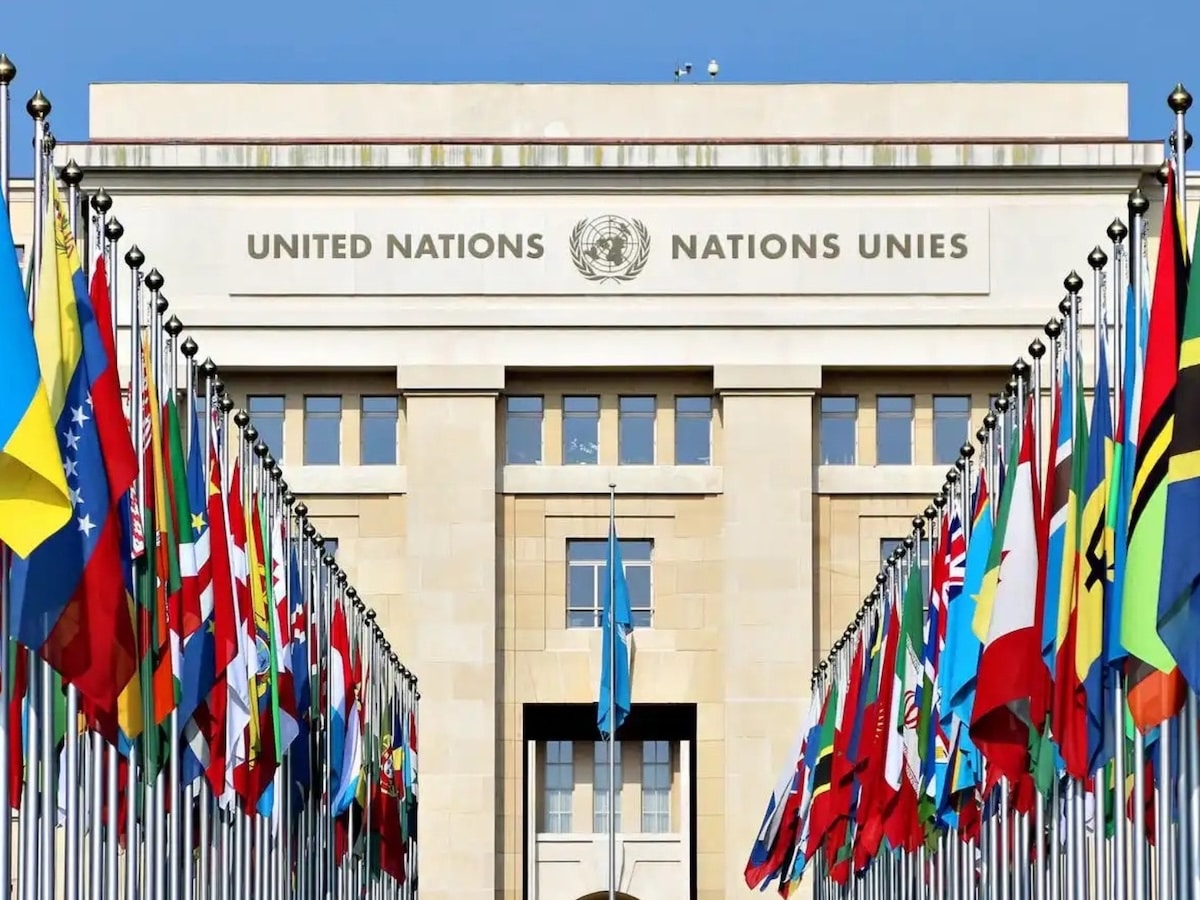
The latest round of meetings held in Geneva last week, ahead of the official October session, showed that negotiations have entered a decisive phase. But they also revealed that the negotiations themselves have become a battleground over the future of multilateralism. Social movements and civil society organizations have long warned that business groups are seeking to replace binding obligations with voluntary approaches that have repeatedly failed to prevent abuses and violations or ensure accountability. It is a dynamic reminiscent of the influence fossil fuel lobbyists have exerted for years over international climate negotiations, shaping their outcomes in line with their economic interests.
What is at stake goes far beyond corporate regulation. The question is whether governments still have the ability to impose effective limits on forms of economic power that can violate human and environmental rights, weaken regulation, and exert greater influence than many states.
The UN Binding Treaty will not, overnight, undo decades of corporate capture. But a robust treaty could strengthen cross-border justice and access to remedy for affected communities, protect environmental defenders and entire communities, and end corporations’ ability to capture public policy.
Yet while governments across Latin America, Africa, and parts of Asia have sustained these negotiations for more than a decade, much of Europe continues to act timidly or, at times, in alignment with business interests.
Spain should not remain on the sidelines. It could help build a strong alliance between progressive governments in Europe and Latin America around the regulation of corporate power, while contributing to repairing relationships historically shaped by extractivism and inequality.
The question is no longer whether we need global rules for corporations. The question is whether governments still have the political courage to impose them.