Many corporations today resemble states in their power, their influence, and in their ability to impact our rights. — Alreem Kamal, Syrian Legal Development Programme, ESCR-Net member
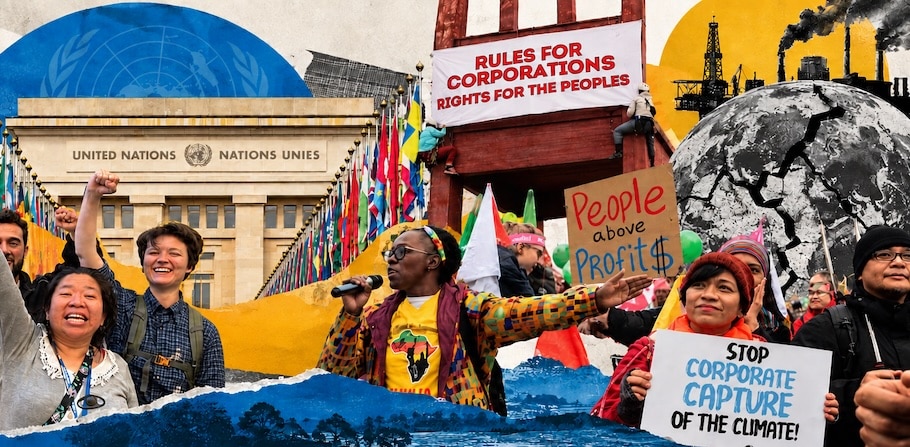
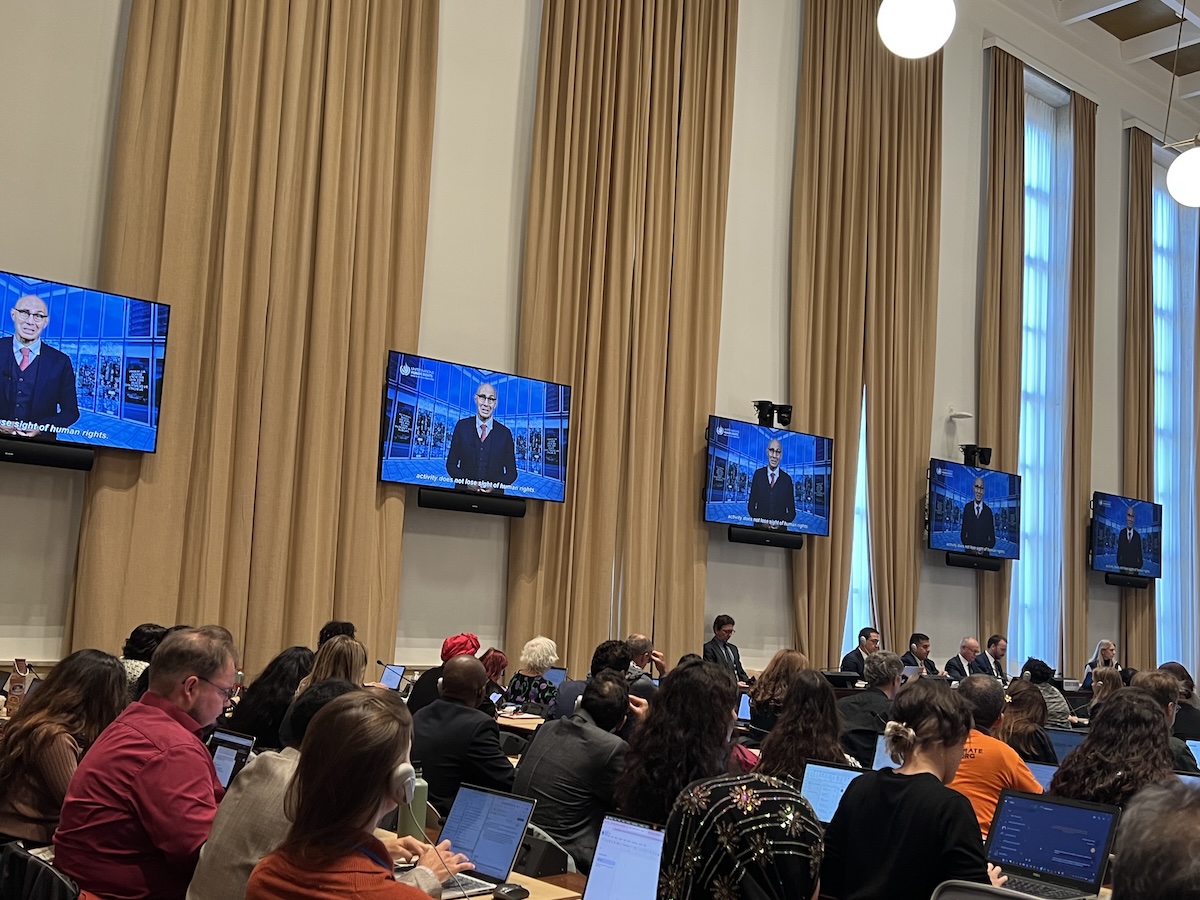
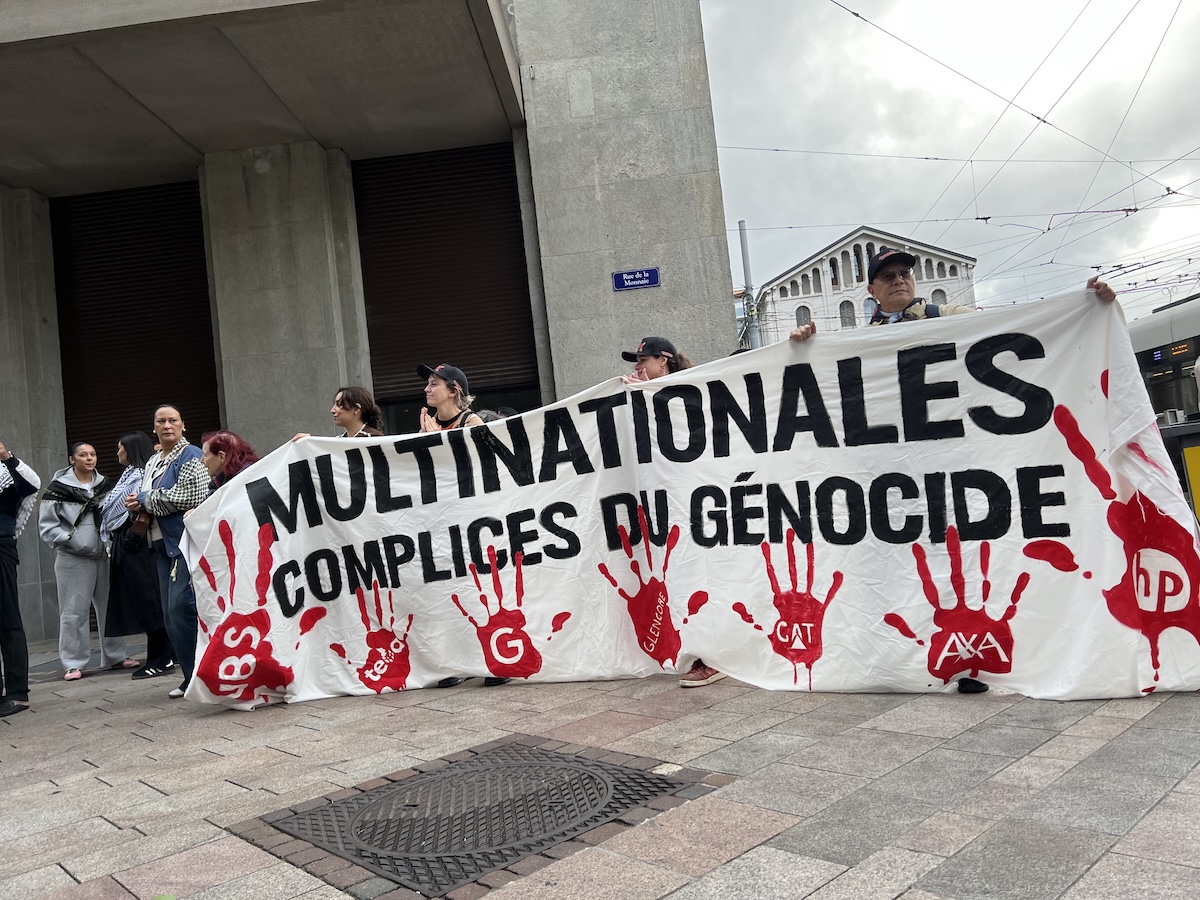
How did we reach a point where corporations wield power comparable to that of States, yet remain largely beyond accountability? This question was at the heart of the 12th session of UN negotiations on a binding treaty on business and human rights, held in Geneva from October 12 to 16. Amid deepening inequality, militarization, and environmental destruction, affected communities and civil society delivered a clear message: international law must establish binding rules to end corporate impunity and hold transnational corporations accountable, rather than continue relying on voluntary frameworks that leave their powers unchecked.
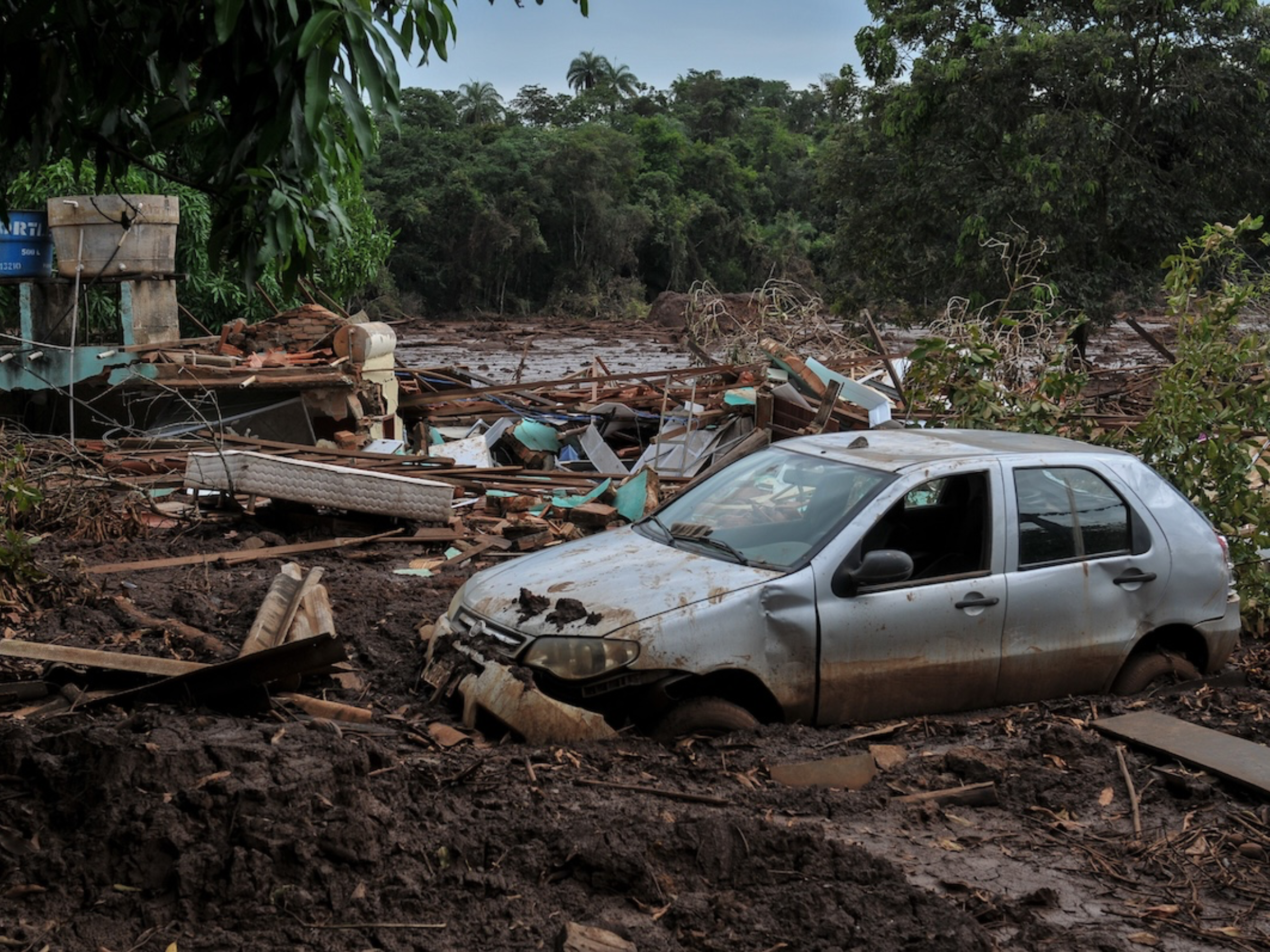
What is at stake goes far beyond the technical discussions in a Geneva negotiating room. Across Europe, students and workers were mobilizing for housing, education, health care, and public services. In Brazil, communities continued resisting destructive renewable energy and mining projects. In Sri Lanka, fishing communities were confronting the devastating consequences of corporate pollution and industrial aquaculture. Throughout the week, testimonies from affected communities exposed different manifestations of the same system: one that drives the relentless accumulation of corporate wealth and power through dispossession, the privatization of public services, and the criminalization of those who resist injustice and defend their rights.
Moisés Borges, from Brazil’s Movimento dos Atingidos por Barragens (MAB), expressed solidarity with European youth protests. Drawing on struggles against destructive megaprojects in Brazil, he warned:
Relying on voluntary measures and the goodwill of transnational corporations only serves to reveal the modern face of corporate colonialism against the peoples of the world.
Why do we Need a Binding Treaty to Hold Transnational Corporations Accountable?
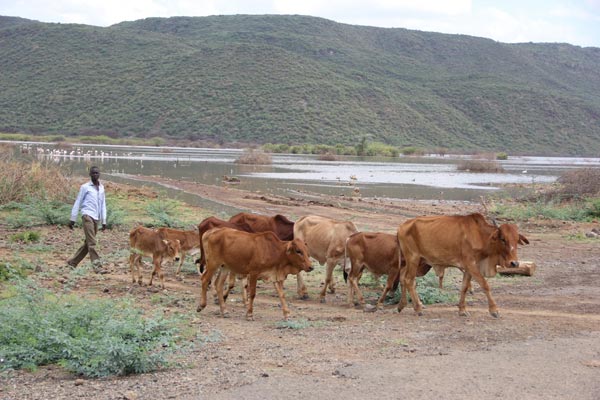
At the session’s opening, Herman Kumara of Sri Lanka’s National Fisheries Solidarity Movement (NAFSO) and the World Forum of Fisher Peoples (WFFP) described how pollution from the X-Press Pearl shipping disaster devastated fishing livelihoods and warned of industrial aquaculture destroying mangroves and coastal ecosystems across several countries.
This is not an isolated case. Transnational corporations operate across borders through complex networks of subsidiaries, suppliers, financial institutions, and contractors, while mechanisms to hold them accountable remain fragmented. This is largely due to the unregulated influence corporations hold over government decision-making. This has dangerously undermined peoples rights. As Kumara warned, corporate power now extends “from the extractive industry to the unregulated and dangerous use of AI, arms and surveillance technology.”
In its legal brief, ESCR-Net also warned of techno-colonialism, where technology corporations make decisions in one country and impose them on communities elsewhere through digital platforms and infrastructure. In Thailand, ESCR-Net member Manushya Foundation documented how Meta repeatedly suspended Tamtang’s Facebook page, a feminist organization with over 25,000 followers sharing lawful, life-saving reproductive health information, as a ripple effect of shifting US content moderation policies.
A strong treaty must address these evolving forms of transnational power, establishing direct corporate obligations across global operations and digital value chains.
A Global South-led Process
The treaty process, initiated in 2014 through UN Human Rights Council Resolution 26/9, has been largely led by Global South countries and sustained by mobilization from affected communities.
During the 12th session, countries including Brazil, South Africa, Palestine, Uruguay, and Costa Rica supported provisions to guarantee the primacy of human rights over business operations.
A central debate concerned Article 14, which addresses the treaty’s relationship to other international agreements. For ESCR-Net and its allies, human rights obligations must take precedence when trade and investment rules threaten people’s rights.
The discussions exposed a longstanding injustice: international rules protect foreign investors and corporations through mechanisms such as Investor-State Dispute Settlement (ISDS), which allow them to sue governments over measures protecting people and the environment.
For example, Shell and ExxonMobil pursued arbitration against the Netherlands following the closure of the Groningen gas field, despite decades of earthquake damage to local communities. Meanwhile, communities harmed by corporate activities often lack comparable avenues to seek justice.
Another key demand was the explicit recognition of the right to a clean, healthy and sustainable environment, strengthening protections against corporate-driven environmental destruction and prioritizing prevention over remedies after harm occurs.
What Would a Strong UN Binding Treaty Require?
Throughout the negotiations, ESCR-Net advocated three priorities.
- Direct corporate obligations and effective liability. Companies must be held accountable for human rights violations linked to their operations and business relationships, including across global value chains. Existing legislation, such as Germany’s Supply Chain Act and France’s Loi de Vigilance, demonstrates that binding corporate duties are possible, even as implementation gaps persist.
- Rules that reflect contemporary transnational corporate power. The treaty must address extractive industries, financial institutions, digital platforms, artificial intelligence, surveillance technologies, and cross-border corporate activities that violate international humanitarian law. While corporations operate globally, accountability for them remains critically restricted.
- Effective international enforcement and access to justice. Domestic legal systems alone cannot always deliver justice. ESCR-Net advocated stronger extraterritorial jurisdiction and a pathway toward an international enforcement mechanism capable of holding corporations accountable.
During discussions on Article 15, Brytnee Miller, speaking on behalf of ESCR-Net and Afrewatch, highlighted the need to move beyond documenting violations toward enforceable accountability. She pointed to existing UN mechanisms, including the OHCHR database of businesses involved in activities related to Israeli illegal settlements in occupied Palestine, as one example where accountability for corporate actors can be addressed at a global scale.
Who Gets to Write the Rules? Corporate Capture at the Negotiating Table
The negotiations continue to expose a fundamental conflict of interest: corporations are seeking to shape the very rules designed to hold them accountable.
Corporate lobby groups, including the International Organization of Employers (IOE) and the United States Council for International Business (USCIB), continued pushing for positions that civil society warned would weaken the treaty and perpetuate impunity. Their membership includes major companies in the arms, fossil fuel, and technology industries; sectors at the center of the human rights concerns driving these negotiations.
During discussions on Article 16.6, aimed at protecting public policies and decision-making from corporate interference, ESCR-Net and its allies demanded stronger safeguards against corporate capture, warning that narrow language could leave governments vulnerable to business interference.
Corporate capture is not an abstract concern. Fossil fuel companies shape and block climate policies, while arms manufacturers and technology corporations supply weapons, surveillance systems, and infrastructure used in wars and genocide. UN experts have exposed how corporate actors enable and profit from these systems, raising urgent questions about their responsibility for human rights violations. As Mona Sabella, ESCR-Net’s corporate accountability coordinator, stated during the negotiations, corporations have no right to dictate the rules designed to hold them accountable. As an intergovernmental process, corporate interests must not shape or undermine a treaty intended to protect people and their rights.
As ESCR-Net, the Treaty Alliance, the Global Campaign, and Feminists for a Binding Treaty warned:
An empty treaty may be ratified, but it will not change the reality of human rights violations and corporate impunity on the ground.
How Are Affected Communities Challenging Corporate Impunity?
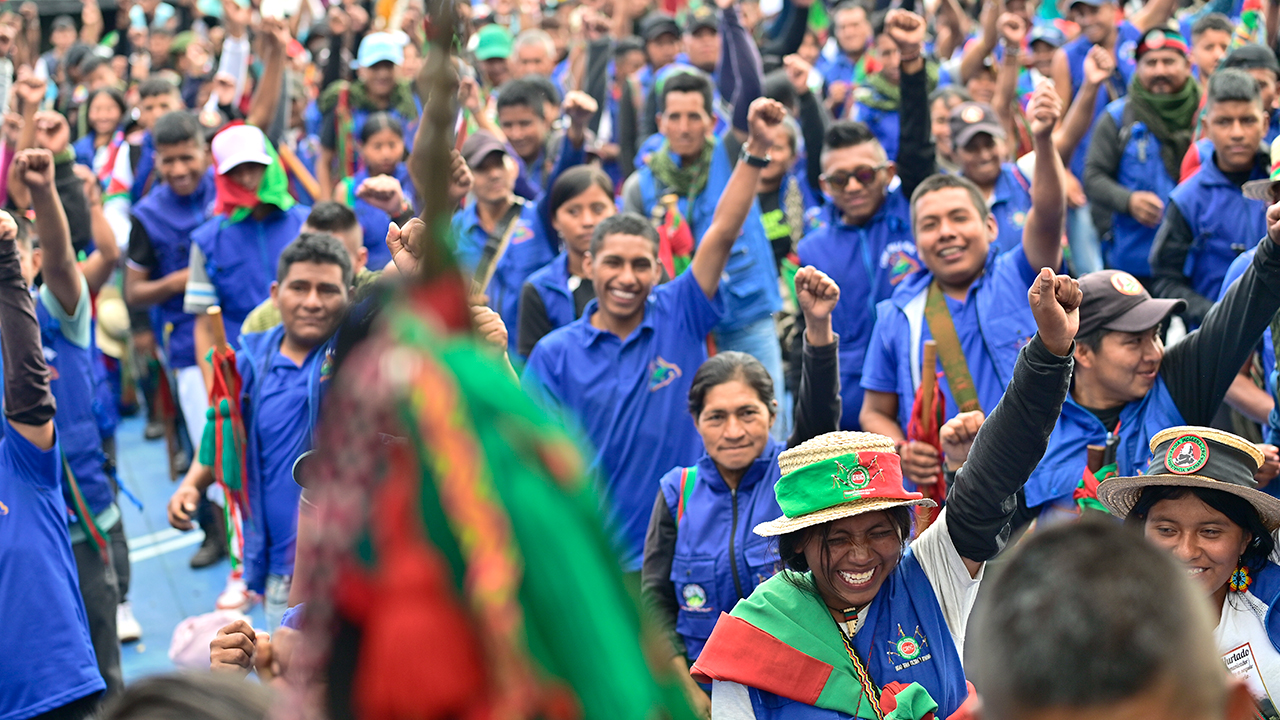
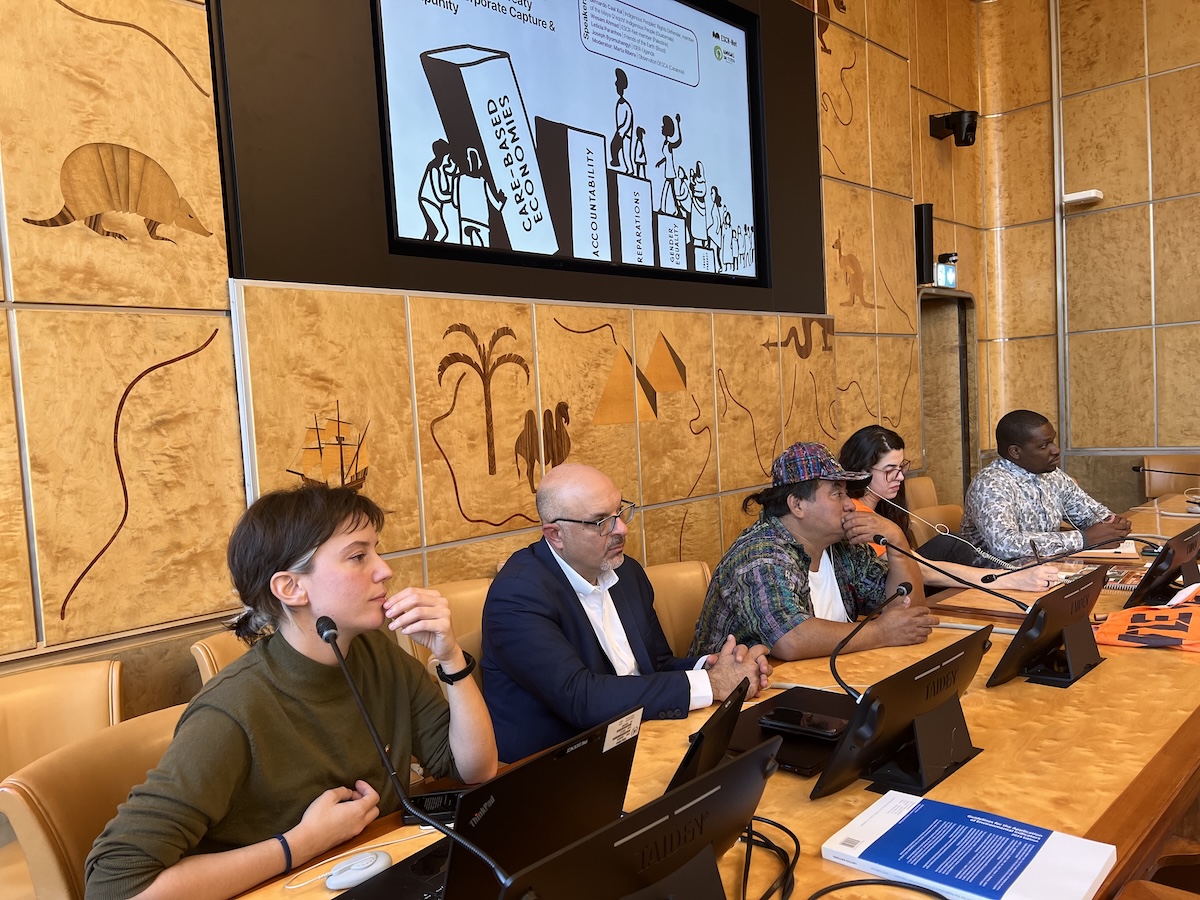
At ESCR-Net’s October 15 side event, People-Powered Solutions: Building a Strong Treaty Against Corporate Capture and Impunity, affected communities and civil society highlighted concrete initiatives to challenge corporate power.
Bernardo Caal Xol, Maya Q’eqchi’ Indigenous leader from Guatemala, was unjustly imprisoned for more than four years after challenging hydroelectric projects built on the Cahabón and Oxec rivers without the free, prior, and informed consultation of Indigenous communities. While he was imprisoned for defending his people’s rights, the corporations behind the projects continued operating without being held accountable for the violations he challenged. At the side event, he highlighted the importance of the newly approved Catalan Centre for Business and Human Rights to investigate corporate violations across borders.
Wesam Ahmad, Executive Director of Visualizing Palestine and an ESCR-Net member, presented Who’s Complicit?, a platform documenting corporate involvement in illegal Israeli settlements.
Connecting the genocide in Gaza to the broader economy of genocide, in which corporations profit from illegal occupation, militarization, and destruction, Ahmad warned that corporate impunity enables “the continuation of colonialism through various new means and methods.” He also denounced proposals to treat devastated Gaza as a new territory for investment.
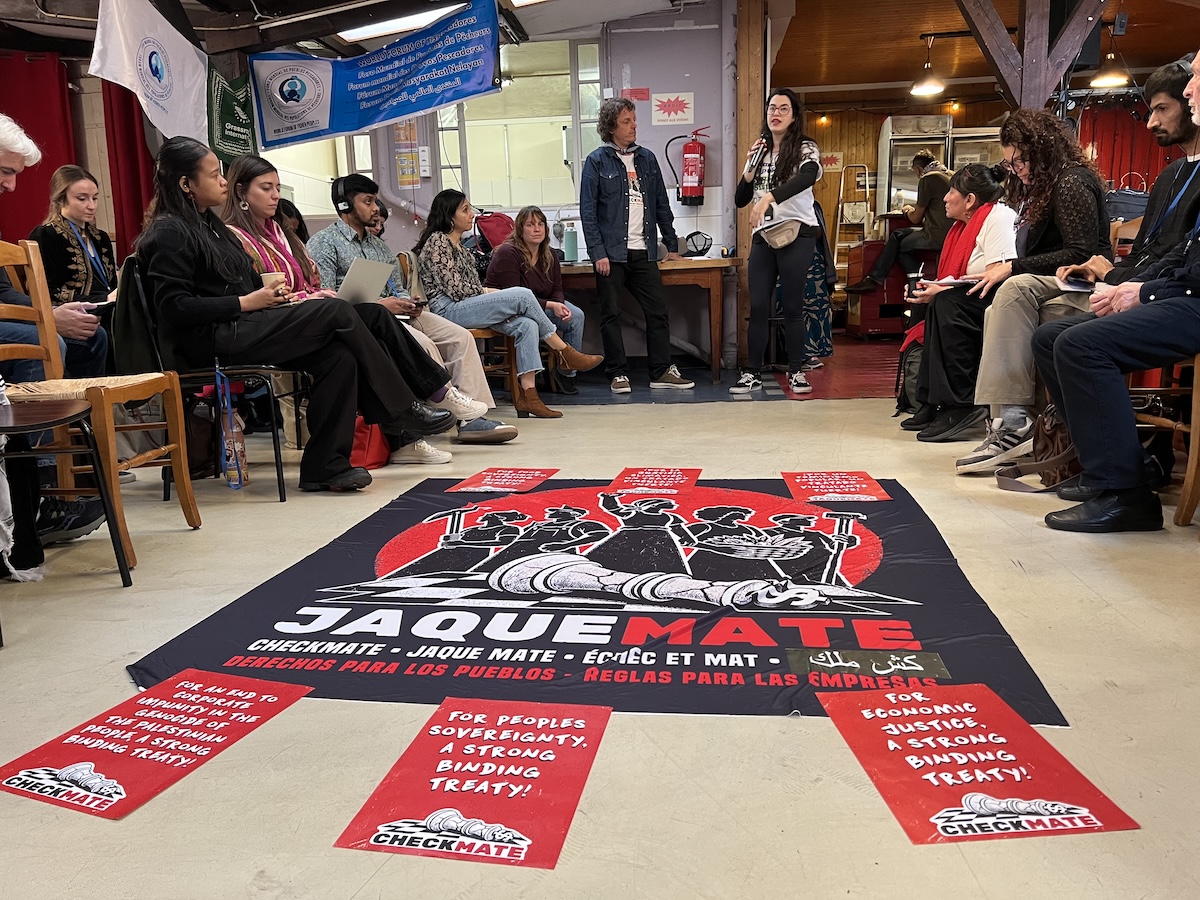
These initiatives, along with the Checkmate campaign, which ESCR-Net has joined, reflect a growing movement and an urgent call to advance a legal framework that could help us stop corporate impunity and end economic colonialism and the systems that sustain it.
What’s Next for the UN Binding Treaty on Business and Human Rights?
In their joint closing statements, the Treaty Alliance, ESCR-Net, Feminists for a Binding Treaty, and the Global Campaign called for the next draft to preserve the strongest human rights provisions and reflect proposals supported by States who have championed the purpose of the treaty throughout the negotiations.
They also demanded meaningful consultations with affected communities before publishing the next draft. High travel costs, visa restrictions, especially to Europe, and limited participation opportunities continue to exclude many of those most affected by corporate violations, particularly from the Global South.
As Nonhle Mbuthuma, from South Africa’s Amadiba Crisis Committee, declared on behalf of the Treaty Alliance:
The Treaty must demonstrate that the UN serves ‘the People’. A Treaty that fails to confront genocide, mass atrocities and corporate involvement in systemic human rights violations would betray its mandate.
At a time when international law and multilateralism are under attack, we cannot abandon them to economic elites. We need to dismantle the rules built to protect corporate profits, investments, and power across borders, while leaving communities struggling for remedy. We must pursue rules that work to improve our human rights. This binding treaty offers an opportunity to change those rules and show that multilateralism can serve people and the planet rather than corporate interests. But that will only happen if affected communities and social movements, not corporations, shape the process.
The joint civil society closing statement affirmed:
The treaty should ultimately be judged by its capacity to prevent violations and abuses, enforce accountability, and provide effective access to justice and remedy for those affected.